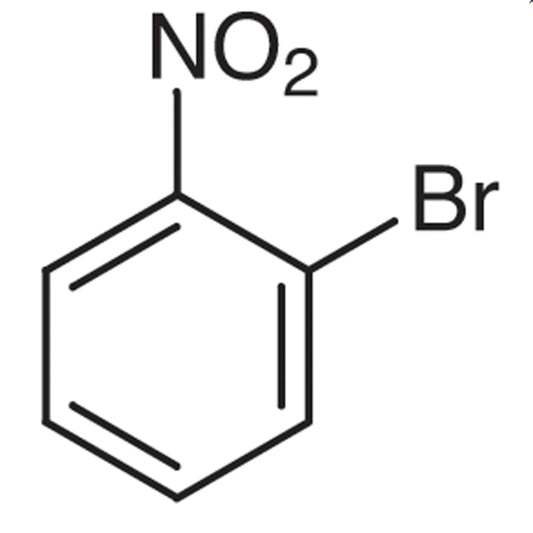
4-Bromo-1-chloro-2-nitrobenzene is a versatile organic compound widely used in laboratory settings as a building block for the synthesis of more complex organic molecules. Its aromatic structure, combined with the presence of bromo, chloro, and nitro functional groups, makes it a valuable reagent in chemical reactions. This compound is commonly employed in research and development processes where precise chemical transformations are required. Its reactivity and functional groups allow it to participate in various synthetic pathways, making it an essential component in many chemical laboratories.
The chemical properties of 4-Bromo-1-chloro-2-nitrobenzene, including its stability under certain conditions and its reactivity in electrophilic substitution reactions, make it a preferred choice for chemists. Its ability to undergo nitration, halogenation, and reduction reactions provides researchers with multiple synthetic options. These characteristics are particularly useful in the development of pharmaceuticals and other specialized chemical products. The compound’s predictable behavior in different reaction conditions enhances its reliability in laboratory applications.
In Indonesian laboratories, 4-Bromo-1-chloro-2-nitrobenzene is extensively used in scientific research and chemical development. It plays a key role in pharmacological studies, drug synthesis, and organic chemistry experiments. Its availability and chemical properties make it a go-to reagent for researchers working on complex molecular structures. Its use is widespread across academic and industrial research institutions in Indonesia.
- Used in pharmaceutical research for the synthesis of bioactive compounds due to its reactive functional groups and structural versatility.
- Applied in organic chemistry experiments for electrophilic substitution reactions because of its aromatic ring and substituents.
- Employed in drug development processes to create compounds with specific biological activities through chemical modifications.
- Utilized in academic research for teaching and experimental purposes due to its stability and predictable chemical behavior.
- Incorporated in industrial chemical synthesis to produce intermediates for various commercial applications.
| Brand | TCI |
|---|---|
| CAS number | 16588-24-2 |
| Molecular formula | — |
| Purity | — |
| Category | Chemistry > Building Blocks > Non-Heterocyclic Building Blocks |
| Pack sizes | Available in various quantities as per standard laboratory supply options |
| Physical form | Solid |
| Storage | Store in a cool, dry place away from direct sunlight and incompatible materials |
This compound should be stored in a cool, dry environment to maintain its chemical stability. It is recommended to use airtight containers to prevent exposure to moisture and air, which may affect its reactivity. Due to its potential reactivity, it should be kept away from incompatible substances such as strong bases or reducing agents. Proper labeling and storage conditions are essential to ensure safety in the laboratory. Always follow standard chemical handling procedures to minimize risks during use and storage.
—
Produk Terkait
-
1-Bromo-2-chloro-4-nitrobenzene TCI B5348
Regular price From Rp 1.298.850,00Regular priceRp 908.250,00Sale price From Rp 1.298.850,00 -
1-Bromo-4-chloro-2-nitrobenzene TCI B5696
Regular price From Rp 1.060.500,00Regular priceRp 741.300,00Sale price From Rp 1.060.500,00 -
4-Chloro-1-iodo-2-nitrobenzene TCI C2932
Regular price From Rp 717.150,00Regular priceRp 500.850,00Sale price From Rp 717.150,00 -
1-Chloro-3-nitrobenzene TCI C0221
Regular price From Rp 584.850,00Regular priceRp 408.450,00Sale price From Rp 584.850,00 -
1-Bromo-4-nitrobenzene TCI B0624
Regular price From Rp 1.908.900,00Regular priceRp 1.334.550,00Sale price From Rp 1.908.900,00 -
1-Bromo-3-nitrobenzene TCI B0623
Regular price From Rp 1.538.250,00Regular priceRp 1.075.200,00Sale price From Rp 1.538.250,00 -
1-Bromo-2-nitrobenzene TCI B0622
Regular price From Rp 1.936.200,00Regular priceRp 1.353.450,00Sale price From Rp 1.936.200,00 -
4-Bromo-2-iodo-1-nitrobenzene TCI B6925
Regular price From Rp 1.803.900,00Regular priceRp 1.261.050,00Sale price From Rp 1.803.900,00