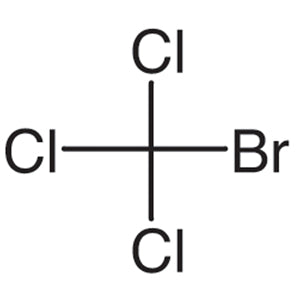
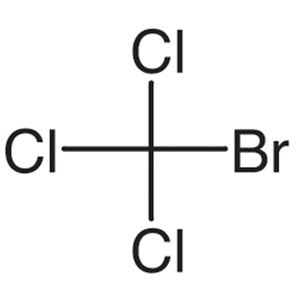
Bromotrichloromethane (BCM), with CAS number 75-62-7, is a chemical compound widely used in various synthetic reactions within laboratory settings. It is a halogenated hydrocarbon that contains one bromine atom and three chlorine atoms attached to a methane backbone. BCM plays a crucial role in halogen substitution reactions, particularly in the formation of C-X (halogen) bonds, which are fundamental in the synthesis of organic compounds. Its chemical structure allows it to participate in multiple reaction mechanisms, making it a versatile reagent for chemists.
BCM is valued for its chemical stability and reactivity in halogen substitution processes. It exhibits good solubility in organic solvents, which simplifies its use in solution-based reactions. Its high boiling point facilitates controlled heating during chemical reactions, ensuring optimal reaction conditions. These properties make BCM a preferred choice for researchers seeking reliable and effective reagents for synthetic chemistry.
In Indonesian laboratories, BCM is commonly used as a starting material for the synthesis of complex organic compounds. Its reactivity and solubility properties make it suitable for a wide range of chemical processes. It is particularly useful in pharmaceutical and chemical research, where the development of new compounds requires precise and efficient reagents. BCM’s role in laboratory applications is essential for advancing scientific research and industrial chemical production.
TCI brochures (PDF)
- Halogenation Reagents 2026-04-03 · p. 6
- Synthetic Organic Chemistry: BCM is ideal for halogen substitution reactions due to its reactivity and stability, enabling the synthesis of complex organic molecules.
- Pharmaceutical Research: BCM is used in the development of new drugs, where precise chemical reactions are required to create active pharmaceutical ingredients.
- Industrial Chemical Synthesis: BCM is a key reagent in the production of various chemical compounds used in manufacturing and material science.
- Analytical Chemistry: BCM serves as a standard reference material for qualitative and quantitative analysis in laboratory testing.
- Material Science Research: BCM is employed in the synthesis of polymers and other materials, where controlled chemical reactions are essential.
| Brand | TCI |
|---|---|
| CAS number | 75-62-7 |
| Molecular formula | — |
| Purity | — |
| Category | Chemistry > Synthetic Reagents > C-X(Halogen) Bond Formation [Synthetic Reagents] |
| Pack sizes | Available in various sizes as per standard laboratory requirements |
| Physical form | Liquid |
| Storage | Store in a cool, dry, and well-ventilated area away from direct sunlight |
BCM should be stored in a cool, dry, and well-ventilated area, away from direct sunlight and sources of heat. It is recommended to use sealed containers made of materials compatible with halogenated hydrocarbons, such as glass or high-density polyethylene. Due to its reactivity, BCM should be handled with care, using appropriate personal protective equipment like gloves and safety goggles. It is important to ensure proper ventilation when working with BCM to avoid inhalation of vapors. In laboratory settings, BCM should be stored separately from incompatible substances to prevent any potential chemical interactions. Always follow standard safety protocols to ensure safe handling and storage practices.
—
Produk Terkait
-
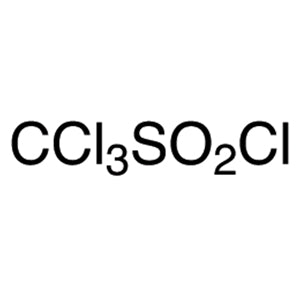
TrichloromethanesulfonylChloride TCI T0611
Regular price From Rp 2.174.550,00Regular priceRp 1.520.400,00Sale price From Rp 2.174.550,00 -
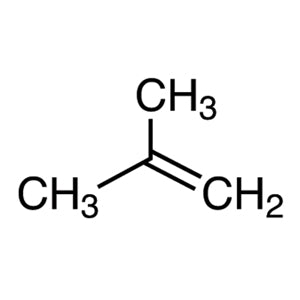
Isobutene(ca.8%inDichloromethane) TCI I0909
Regular price From Rp 1.060.500,00Regular priceRp 741.300,00Sale price From Rp 1.060.500,00 -
alpha-(Trichloromethyl)benzylAcetate TCI T3122
Regular price From Rp 795.900,00Regular priceRp 556.500,00Sale price From Rp 795.900,00