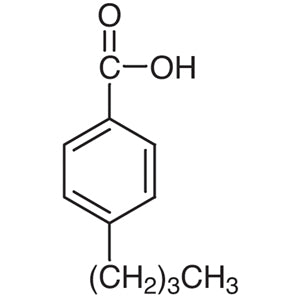
4-Tert-Butylbenzoic Acid is a chemical compound widely used as a foundational building block in various chemical reactions and the synthesis of complex molecules. Its aromatic structure, combined with a carboxylic acid group, allows for high reactivity under different chemical conditions. This compound plays a crucial role in laboratory settings, serving as a precursor for the development of pharmaceuticals, industrial chemicals, and other specialized compounds. Due to its predictable chemical behavior and stability, it is a reliable choice for researchers aiming to achieve consistent results in their experiments.
The compound’s molecular structure, featuring a tert-butyl group, contributes to its chemical stability and resistance to degradation. These properties make it ideal for use in reactions that require long-term stability and reproducibility. Its reactivity can be controlled and manipulated in various synthetic pathways, making it a versatile tool in organic chemistry. The compound’s consistent performance and ease of handling further enhance its appeal for both academic and industrial research applications.
In Indonesian laboratories, 4-Tert-Butylbenzoic Acid is commonly used in chemical research, particularly in the development of new compounds and the optimization of synthetic processes. Its availability in multiple packaging formats ensures that it can be easily integrated into both small-scale and large-scale experiments. This accessibility, combined with its reliable performance, makes it a preferred choice for researchers working in diverse chemical fields.
- Pharmaceutical research utilizes 4-Tert-Butylbenzoic Acid as a key intermediate in the synthesis of drug molecules due to its predictable reactivity and structural versatility.
- Industrial chemical synthesis benefits from this compound’s stability and ease of handling, allowing for the production of complex organic compounds with high purity.
- Organic chemistry experiments rely on this material for its consistent performance in various reaction conditions, making it ideal for teaching and research purposes.
- Analytical chemistry applications use it as a standard reference material for testing and calibration of analytical instruments.
- Polymer science research employs it in the development of functional polymers, where its chemical stability and reactivity are essential for creating advanced materials.
| Brand | TCI |
|---|---|
| CAS number | 98-73-7 |
| Molecular formula | — |
| Purity | — |
| Category | Chemistry > Building Blocks > Non-Heterocyclic Building Blocks |
| Pack sizes | Available in various quantities to suit different experimental needs |
| Physical form | Solid, crystalline appearance |
| Storage | Store in a cool, dry place away from direct sunlight and moisture |
4-Tert-Butylbenzoic Acid should be stored in a cool, dry environment to maintain its chemical stability and prevent degradation. It is recommended to keep it in airtight containers to minimize exposure to moisture and air, which could affect its performance. Due to its solid form, it is typically stored in sealed glass or plastic containers that are resistant to chemical corrosion. In a laboratory setting, it is important to handle the compound with care, using appropriate personal protective equipment such as gloves and safety goggles. Proper labeling and storage conditions ensure the safety of laboratory personnel and the integrity of the compound during use.
—
Produk Terkait
-
4-ButylbenzoicAcid TCI B0241
Regular price From Rp 530.250,00Regular priceRp 386.400,00Sale price From Rp 530.250,00 -
3,5-Di-tert-butylbenzoicAcid TCI D2663
Regular price From Rp 955.500,00Regular priceRp 683.550,00Sale price From Rp 955.500,00 -
4-tert-Butylbenzohydrazide TCI B2886
Regular price From Rp 822.150,00Regular priceRp 590.100,00Sale price From Rp 822.150,00 -
Methyl4-tert-Butylbenzoate TCI M1693
Regular price From Rp 637.350,00Regular priceRp 460.950,00Sale price From Rp 637.350,00 -
4-IsobutylbenzoicAcid TCI I0437
Regular price From Rp 5.062.050,00Regular priceRp 3.555.300,00Sale price From Rp 5.062.050,00 -
4,4'-Di-tert-butylbenzophenone TCI D5308
Regular price Rp 3.605.700,00Regular priceRp 2.521.050,00Sale price Rp 3.605.700,00 -
Methyl3,5-Di-tert-butylbenzoate TCI D2695
Regular price Rp 3.683.400,00Regular priceRp 2.591.400,00Sale price Rp 3.683.400,00 -
4-tert-Butylbenzaldehyde TCI B1760
Regular price From Rp 1.936.200,00Regular priceRp 1.353.450,00Sale price From Rp 1.936.200,00