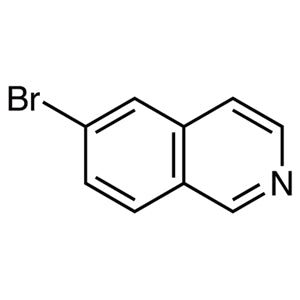
4-Bromoisoquinoline is a chemical compound widely used as a building block in the synthesis of complex heterocyclic compounds. This compound features a unique molecular structure consisting of an isoquinoline ring substituted with a bromo group at the 4-position. Its versatility makes it a valuable resource in laboratory settings where high reactivity and functional group compatibility are essential. The compound is particularly useful in synthetic chemistry due to its ability to participate in various reaction mechanisms, including electrophilic substitution and coupling reactions.
The chemical properties of 4-Bromoisoquinoline, including its stability and reactivity, make it a preferred choice for researchers in both organic and pharmaceutical fields. Its ability to undergo reactions such as Suzuki, Sonogashira, and Stille coupling makes it an essential tool for the development of new compounds with specific biological activities. The compound's structural complexity also opens up numerous possibilities for the synthesis of novel molecules with tailored properties.
In Indonesian laboratories, 4-Bromoisoquinoline is commonly used in scientific research, especially in the fields of organic chemistry and pharmacology. Its role in the synthesis of bioactive compounds has made it a sought-after material for academic and industrial research. The compound's reliability and effectiveness in various synthetic pathways ensure its continued use in chemical experimentation and innovation.
- Organic synthesis: 4-Bromoisoquinoline is ideal for constructing complex heterocyclic structures due to its reactive bromo group and stable isoquinoline core.
- Pharmaceutical research: The compound is used in the development of new drugs, as its structure can be modified to create bioactive molecules with therapeutic potential.
- Coupling reactions: It is a key reagent in Suzuki, Sonogashira, and Stille reactions, enabling the formation of carbon-carbon bonds with high efficiency.
- Functional group modification: Its bromo substituent allows for selective substitution reactions, making it useful in the synthesis of diverse chemical derivatives.
- Material science: The compound's structural versatility makes it applicable in the creation of new organic materials with unique properties.
| Brand | TCI |
|---|---|
| CAS number | 1532-97-4 |
| Molecular formula | — |
| Purity | — |
| Category | Chemistry > Building Blocks > Heterocyclic Building Blocks |
| Pack sizes | Available in various quantities as per supplier specifications |
| Physical form | Solid |
| Storage | Store in a cool, dry place away from light and moisture |
4-Bromoisoquinoline should be stored in a cool, dry place away from light and moisture to maintain its chemical integrity. It is recommended to use airtight containers made of glass or polyethylene to prevent contamination and degradation. Due to its reactivity, it should be handled in a well-ventilated laboratory environment, preferably under a fume hood. Proper personal protective equipment, including gloves and safety goggles, should be worn when handling the compound. Avoid direct contact with skin and inhalation of vapors. Ensure that the compound is kept away from incompatible materials such as strong oxidizing agents to prevent unwanted reactions.
—
Produk Terkait
-
7-Bromoisoquinoline TCI B5071
Regular price From Rp 1.565.550,00Regular price -
6-Bromoisoquinoline TCI B4715
Regular price Rp 1.431.150,00Regular price -
8-Bromoisoquinoline TCI B4144
Regular price From Rp 955.500,00Regular price -
1-Bromoisoquinoline TCI B3445
Regular price From Rp 3.630.900,00Regular price -
5-Bromoisoquinoline TCI B3313
Regular price From Rp 1.115.100,00Regular price -
1-Iodoisoquinoline TCI I0750
Regular price From Rp 4.584.300,00Regular price -
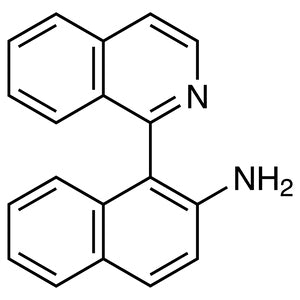
1-(2-Amino-1-naphthyl)isoquinoline TCI A2221
Regular price Rp 7.446.600,00Regular price -
Isoquinoline-3-carboxylicAcid TCI I1246
Regular price From Rp 2.809.800,00Regular price