![53744-42-6 Bathophenanthrolinedisulfonic Acid Disodium Salt Hydrate [for Determination of Ferrous Ion] - AMI Scientific](http://amiscientific.com/cdn/shop/files/TCI2510B0989.jpg?v=1768193262&width=1946)
![53744-42-6 Bathophenanthrolinedisulfonic Acid Disodium Salt Hydrate [for Determination of Ferrous Ion] - AMI Scientific](http://amiscientific.com/cdn/shop/files/TCI2510B0989.jpg?v=1768193262&width=1445)
Bathophenanthrolinedisulfonic Acid Disodium Salt Hydrate is a chemical compound used in laboratory analysis for the detection of ferrous ions (Fe²⁺). It is commonly found in chemical reagents and serves as a quantitative indicator in both qualitative and quantitative analytical processes. This compound is particularly valued for its strong chelating properties toward metal ions, especially iron, making it a crucial tool in chemical analysis. Its ability to form colored complexes with ferrous ions enables visual detection and accurate measurement of ion concentration.
The compound's unique chemical structure, featuring two sulfonate groups acting as electron donor ligands, enhances its effectiveness in binding with ferrous ions. Its stability under specific conditions and good solubility in both organic solvents and water further contribute to its reliability in laboratory settings. These properties make it a preferred choice for analytical chemists requiring high sensitivity and accuracy in their work.
In Indonesian laboratories, Bathophenanthrolinedisulfonic Acid Disodium Salt Hydrate is widely used for determining the concentration of ferrous ions in various samples. It is commonly applied in environmental, industrial, and medical analysis, where precise detection of iron ions is essential. Its role in supporting analytical procedures underscores its importance in both academic and industrial research settings.
TCI brochures (PDF)
- Ligands Accelerating Click Reaction 2022-11-29 · p. 2
- Bipyridine/Terpyridine Ligands Bearing Phosphonate Ester Moieties 2025-08-07 · p. 1
- Click Chemistry 2026-09-08 · p. 7
- Ligands 2025-12-01 · p. 15
Related TCI products
- TCI B0985 52698-84-7 Disodium Bathocuproinedisulfonate [for Determination of Cu in Blood]
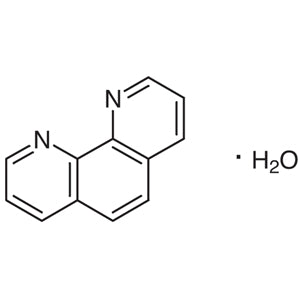
- TCI P0221 5144-89-8 1,10-Phenanthroline Monohydrate
- TCI P0081 18851-33-7 1,10-Phenanthroline Hydrochloride Monohydrate
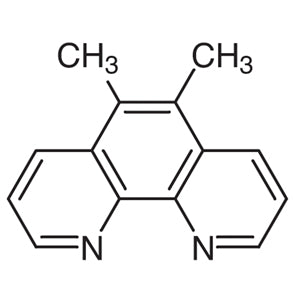
- TCI D1559 3002-81-1 5,6-Dimethyl-1,10-phenanthroline
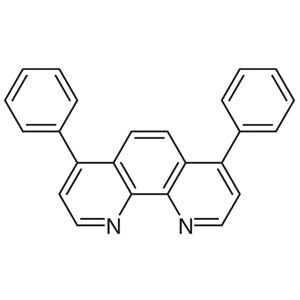
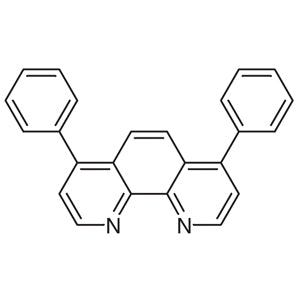
- TCI D0905 1662-01-7 Bathophenanthroline
- TCI M0300 3002-78-6 5-Methyl-1,10-phenanthroline [for Colorimetric Determination of Iron]
- Environmental analysis for detecting trace levels of ferrous ions in water and soil samples due to its high sensitivity and selectivity.
- Industrial quality control to monitor iron content in metal processing and manufacturing processes for consistency and safety.
- Medical diagnostics for assessing iron levels in biological fluids, aiding in the detection of anemia and other iron-related disorders.
- Research applications in inorganic chemistry for studying metal-ligand interactions and coordination complex formation.
- Educational laboratories for teaching analytical chemistry techniques and the principles of complexation reactions.
From the TCI brochure
- CuAAC of benzyl azide and phenylacetylene with CuSO4 (cat.) and sodium ascorbate in EtOH/H2O
| Brand | TCI |
|---|---|
| CAS number | 53744-42-6 |
| Molecular formula | — |
| Purity | — |
| Category | Chemistry > Catalysis and Inorganic Chemistry > Nitrogen-Donor Ligands [Catalysis] |
| Pack sizes | Available in standard laboratory quantities as specified by the supplier |
| Physical form | Hydrate powder or crystalline solid, depending on packaging |
| Storage | — |
This compound should be stored in a cool, dry place away from direct sunlight and moisture to maintain its stability and effectiveness. It is recommended to use airtight containers to prevent exposure to air and humidity, which may affect its chemical integrity. Since it is a chemical reagent, it should be handled with appropriate personal protective equipment, such as gloves and safety goggles, to ensure laboratory safety. Proper labeling of containers is essential for safe handling and to prevent accidental contamination. Regular monitoring of storage conditions ensures the compound remains suitable for analytical use. Always follow standard laboratory safety protocols when working with chemical reagents to minimize risks and maintain a safe working environment.
References cited in the TCI brochure
- Warren G. Lewis. Discovery and Characterization of Catalysts for Azide−Alkyne Cycloaddition by Fluorescence Quenching Journal of the American Chemical Society, 2004. doi:10.1021/ja048425z
Product Categories
Produk Terkait
-
DisodiumBathocuproinedisulfonate[forDeterminationofCuinBlood] TCI B0985
Regular price From Rp 1.485.750,00Regular price -
1,10-PhenanthrolineMonohydrate TCI P0221
Regular price From Rp 505.050,00Regular price -
1,10-PhenanthrolineHydrochlorideMonohydrate TCI P0081
Regular price Rp 1.644.300,00Regular price -
5,6-Dimethyl-1,10-phenanthroline TCI D1559
Regular price From Rp 1.220.100,00Regular price -
Bathophenanthroline TCI D0905
Regular price From Rp 3.155.250,00Regular price -
5-Methyl-1,10-phenanthroline[forColorimetricDeterminationofIron] TCI M0300
Regular price From Rp 1.060.500,00Regular price -
2-Bromo-1,10-phenanthroline TCI B4456
Regular price From Rp 3.312.750,00Regular price -
Bathophenanthroline(purifiedbysublimation) TCI B2695
Regular price Rp 5.432.700,00Regular price
![52698-84-7 Disodium Bathocuproinedisulfonate [for Determination of Cu in Blood] - AMI Scientific](http://amiscientific.com/cdn/shop/files/TCI2510B0985_83228026-b61a-4ecc-a297-f4efaf5cf802.jpg?v=1767230689&width=533)

![3002-78-6 5-Methyl-1,10-phenanthroline [for Colorimetric Determination of Iron] - AMI Scientific](http://amiscientific.com/cdn/shop/files/TCI2510M0300.jpg?v=1767122633&width=533)