![3002-78-6 5-Methyl-1,10-phenanthroline [for Colorimetric Determination of Iron] - AMI Scientific](http://amiscientific.com/cdn/shop/files/TCI2510M0300.jpg?v=1767122633&width=1946)
![3002-78-6 5-Methyl-1,10-phenanthroline [for Colorimetric Determination of Iron] - AMI Scientific](http://amiscientific.com/cdn/shop/files/TCI2510M0300.jpg?v=1767122633&width=1445)
5-Methyl-1,10-phenanthroline is a chemical compound widely used in quantitative metal analysis, particularly for the detection and measurement of iron in samples. This reagent plays a crucial role in colorimetric methods, where it forms a complex with iron ions, resulting in a visible color change that can be measured using spectroscopy. Its high specificity for iron ions makes it an essential tool in various analytical processes. In laboratory settings, this compound is valued for its reliability and accuracy in determining iron concentrations across different sample types.
The compound's heterocyclic structure provides stability and reactivity, allowing it to interact effectively with metal ions. Its high sensitivity and accuracy in iron detection make it a preferred choice for analytical chemists. The compound also exhibits good chemical resistance, which simplifies handling and storage in laboratory environments. These properties ensure consistent results and reduce the risk of experimental errors, making it a trusted reagent in both academic and industrial laboratories.
In Indonesian laboratories, 5-Methyl-1,10-phenanthroline is commonly used in chemical research, environmental analysis, and pharmaceutical testing. It is particularly useful for analyzing iron content in water, soil, and other materials. Its application extends to quality control processes in industries that require precise metal detection. The compound's versatility and reliability have made it a standard reagent in many research institutions and laboratories across Indonesia.
TCI brochures (PDF)
- Ligands 2025-12-01 · p. 14
Related TCI products
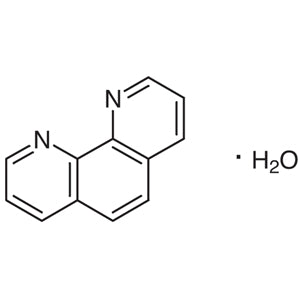
- TCI P0221 5144-89-8 1,10-Phenanthroline Monohydrate
- TCI P0081 18851-33-7 1,10-Phenanthroline Hydrochloride Monohydrate
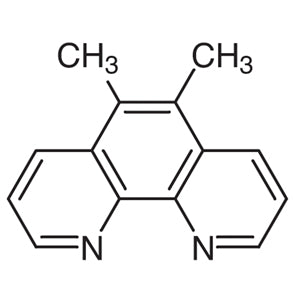
- TCI D1559 3002-81-1 5,6-Dimethyl-1,10-phenanthroline
- TCI A2977 54258-41-2 5-Amino-1,10-phenanthroline
- TCI T0847 1660-93-1 3,4,7,8-Tetramethyl-1,10-phenanthroline
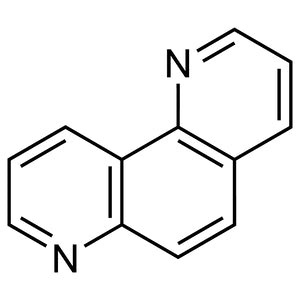
- TCI P3288 230-46-6 1,7-Phenanthroline
- Environmental analysis for detecting iron in water and soil samples due to its high sensitivity and specificity for iron ions.
- Pharmaceutical testing to measure iron content in drug formulations and raw materials for quality assurance.
- Industrial quality control in manufacturing processes where iron contamination needs to be monitored.
- Academic research in analytical chemistry for studying metal complex formation and colorimetric reactions.
- Routine laboratory testing in environmental and health sciences for assessing iron levels in biological and environmental samples.
| Brand | TCI |
|---|---|
| CAS number | 3002-78-6 |
| Molecular formula | — |
| Purity | — |
| Category | Chemistry > Building Blocks > Heterocyclic Building Blocks |
| Pack sizes | Available in various quantities as per supplier specifications |
| Physical form | Solid (crystalline or powder, depending on formulation) |
| Storage | Store in a cool, dry place away from light and moisture |
This compound should be stored in a cool, dry place, away from direct light and moisture to maintain its chemical stability. It is recommended to use airtight containers to prevent exposure to air and humidity, which could affect its reactivity. In laboratory settings, it should be handled with care, using appropriate personal protective equipment such as gloves and safety goggles. Due to its reactivity with metal ions, it should be stored separately from strong oxidizing agents or incompatible substances. Proper labeling and storage conditions are essential to ensure safe handling and long-term usability. Regular inspection of storage conditions is advised to maintain the compound's integrity and effectiveness in analytical procedures.
—
Product Categories
Produk Terkait
-
1,10-PhenanthrolineMonohydrate TCI P0221
Regular price From Rp 505.050,00Regular price -
1,10-PhenanthrolineHydrochlorideMonohydrate TCI P0081
Regular price Rp 1.644.300,00Regular price -
5,6-Dimethyl-1,10-phenanthroline TCI D1559
Regular price From Rp 1.220.100,00Regular price -
5-Amino-1,10-phenanthroline TCI A2977
Regular price Rp 3.738.000,00Regular price -
3,4,7,8-Tetramethyl-1,10-phenanthroline TCI T0847
Regular price From Rp 2.094.750,00Regular price -
1,7-Phenanthroline TCI P3288
Regular price From Rp 1.565.550,00Regular price -
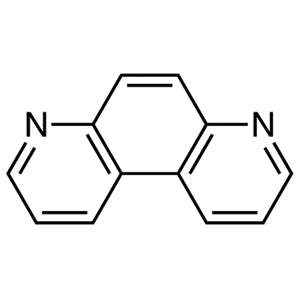
4,7-Phenanthroline TCI P2684
Regular price From Rp 2.466.450,00Regular price -
1,10-Phenanthroline-5,6-dione TCI P1973
Regular price From Rp 3.419.850,00Regular price