5-Amino-1,10-phenanthroline is a versatile chemical compound widely used in both organic and inorganic chemical reactions. As a heterocyclic building block, it plays a crucial role in the synthesis of complex molecules, particularly in substitution and redox reactions. Its unique structure, combining a phenanthrene ring with an amino group, makes it a valuable reagent in laboratory settings. This compound is commonly utilized in research and development processes to create new chemical entities and functional materials. Its stability and controlled reactivity contribute to its popularity among chemists working in various fields.
The compound’s ability to coordinate with heavy metals and act as a ligand in metal complexes makes it highly sought after in coordination chemistry and analytical applications. Its solubility in organic solvents further enhances its utility, enabling efficient separation and purification processes. These properties ensure that it remains a reliable and effective reagent in both qualitative and quantitative analyses. Its chemical stability and predictable behavior under different reaction conditions make it a preferred choice for laboratory use.
In Indonesian laboratories, 5-Amino-1,10-phenanthroline is frequently used in organic chemistry research, analytical testing, and the synthesis of complex compounds. It supports a wide range of experimental procedures, including metal complex formation, spectroscopic analysis, and reaction optimization. Its presence in research facilities across Indonesia underscores its importance in advancing chemical studies and industrial applications.
TCI brochures (PDF)
- Ligands 2025-12-01 · p. 14
- Building Blocks for Organic Semiconductor 2026-03-24 · p. 23
Related TCI products
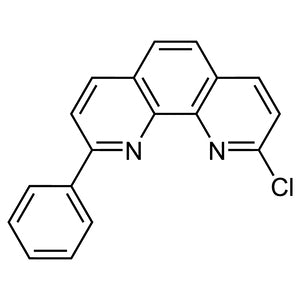
- TCI C4161 1937210-90-6 2-Chloro-9-phenyl-1,10-phenanthroline
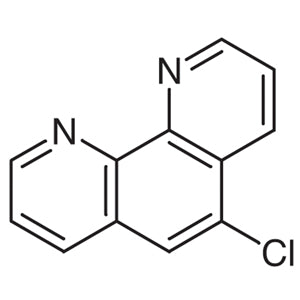
- TCI C0786 4199-89-7 5-Chloro-1,10-phenanthroline
- TCI B4456 22426-14-8 2-Bromo-1,10-phenanthroline
- TCI B2632 66127-01-3 3-Bromo-1,10-phenanthroline
- TCI T0847 1660-93-1 3,4,7,8-Tetramethyl-1,10-phenanthroline
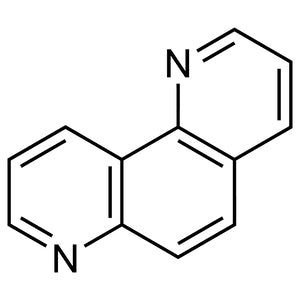
- TCI P3288 230-46-6 1,7-Phenanthroline
- Organic synthesis where it serves as a key intermediate in the creation of complex molecules due to its reactivity and structural versatility.
- Coordination chemistry experiments where it acts as a ligand for metal ions, facilitating the formation of stable metal complexes.
- Analytical chemistry applications where it is used in qualitative and quantitative analysis due to its ability to bind with heavy metals.
- Research in metal-based catalysts where its coordination properties enhance catalytic efficiency and reaction selectivity.
- Environmental testing where it is employed to detect and analyze trace metal contaminants in water and soil samples.
| Brand | TCI |
|---|---|
| CAS number | 54258-41-2 |
| Molecular formula | — |
| Purity | — |
| Category | Chemistry > Building Blocks > Heterocyclic Building Blocks |
| Pack sizes | Available in various quantities as per supplier specifications |
| Physical form | Solid (as per standard product description) |
| Storage | Store in a cool, dry place away from direct sunlight |
5-Amino-1,10-phenanthroline should be stored in a cool, dry environment to maintain its chemical stability and prevent degradation. It is recommended to keep the compound in a tightly sealed container to minimize exposure to moisture and air. Due to its potential reactivity, it should be handled in a well-ventilated area, preferably under a fume hood. Avoid contact with strong oxidizing agents to prevent unwanted side reactions. Proper personal protective equipment, such as gloves and safety goggles, should always be worn when handling this compound. Regular inspection of storage conditions ensures the compound remains in optimal condition for laboratory use.
—
Product Categories
Produk Terkait
-
2-Chloro-9-phenyl-1,10-phenanthroline TCI C4161
Regular price Rp 2.835.000,00Regular priceRp 1.998.150,00Sale price Rp 2.835.000,00 -
5-Chloro-1,10-phenanthroline TCI C0786
Regular price From Rp 610.050,00Regular priceRp 442.050,00Sale price From Rp 610.050,00 -
2-Bromo-1,10-phenanthroline TCI B4456
Regular price From Rp 3.365.250,00Regular priceRp 2.368.800,00Sale price From Rp 3.365.250,00 -
3-Bromo-1,10-phenanthroline TCI B2632
Regular price Rp 3.735.900,00Regular priceRp 2.628.150,00Sale price Rp 3.735.900,00 -
3,4,7,8-Tetramethyl-1,10-phenanthroline TCI T0847
Regular price From Rp 2.147.250,00Regular priceRp 1.517.250,00Sale price From Rp 2.147.250,00 -
1,7-Phenanthroline TCI P3288
Regular price From Rp 1.618.050,00Regular priceRp 1.146.600,00Sale price From Rp 1.618.050,00 -
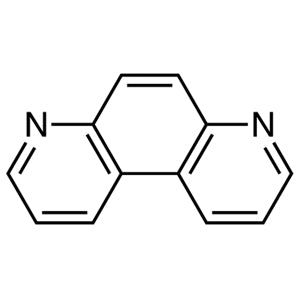
4,7-Phenanthroline TCI P2684
Regular price From Rp 2.518.950,00Regular priceRp 1.776.600,00Sale price From Rp 2.518.950,00 -
1,10-Phenanthroline-5,6-dione TCI P1973
Regular price From Rp 3.472.350,00Regular priceRp 2.443.350,00Sale price From Rp 3.472.350,00