3,4,7,8-Tetramethyl-1,10-phenanthroline is a versatile chemical compound widely used in laboratory settings for its unique structural and functional properties. As a heterocyclic building block, it serves as a key reagent in organic synthesis and complexation reactions. Its modified phenanthroline structure, with methyl groups at specific positions, makes it highly reactive and suitable for a variety of chemical processes. This compound is particularly valuable in analytical and synthetic applications due to its stability and controlled reactivity.
The compound’s chemical properties, including its solubility in organic solvents such as ethyl acetate and acetone, make it a preferred choice for researchers. Its ability to form stable complexes with heavy metals like copper, silver, and lead enhances its utility in spectroscopic analysis and coordination chemistry. These characteristics contribute to its widespread use in both qualitative and quantitative analyses. Additionally, its role as a ligand in metal complex formation expands its applicability in coordination chemistry and advanced synthetic pathways.
In Indonesian laboratories, 3,4,7,8-Tetramethyl-1,10-phenanthroline is commonly used in chemical research, especially in analytical chemistry and organic synthesis. It plays a crucial role in studies involving metal detection, complexation reactions, and the development of new compounds. Its reliability and effectiveness make it a staple in both academic and industrial research environments.
TCI brochures (PDF)
- Ligands 2025-12-01 · p. 14
- Used in metal ion detection and analysis due to its ability to form stable complexes with heavy metals like copper, silver, and lead.
- Applied in spectroscopic analysis for its strong absorption properties, aiding in quantitative and qualitative assessments.
- Employed in organic synthesis as a building block for creating complex heterocyclic compounds with tailored properties.
- Utilized in coordination chemistry research for studying ligand-metal interactions and complex formation mechanisms.
- Integrated into analytical procedures for determining metal content in environmental and industrial samples.
| Brand | TCI |
|---|---|
| CAS number | 1660-93-1 |
| Molecular formula | — |
| Purity | — |
| Category | Chemistry > Building Blocks > Heterocyclic Building Blocks |
| Pack sizes | Available in various quantities as per supplier specifications |
| Physical form | Solid |
| Storage | Store in a cool, dry place away from light and moisture |
This compound should be stored in a cool, dry environment, away from direct light and moisture to maintain its chemical integrity. It is recommended to use airtight containers to prevent exposure to air and potential degradation. Due to its reactivity, it should be handled with care, using appropriate personal protective equipment such as gloves and safety goggles. It is important to ensure that storage conditions are stable and free from contaminants that could affect its performance. Proper labeling and storage practices help in maintaining the compound's effectiveness for laboratory use.
—
Product Categories
Produk Terkait
-
5-Amino-1,10-phenanthroline TCI A2977
Regular price Rp 3.738.000,00Regular price -
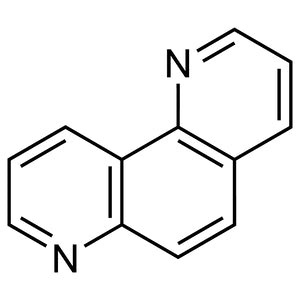
1,7-Phenanthroline TCI P3288
Regular price From Rp 1.565.550,00Regular price -
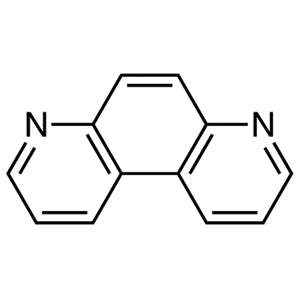
4,7-Phenanthroline TCI P2684
Regular price From Rp 2.466.450,00Regular price -
1,10-Phenanthroline-5,6-dione TCI P1973
Regular price From Rp 3.419.850,00Regular price -
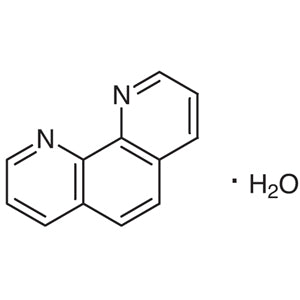
1,10-PhenanthrolineMonohydrate TCI P0879
Regular price Rp 1.458.450,00Regular price -
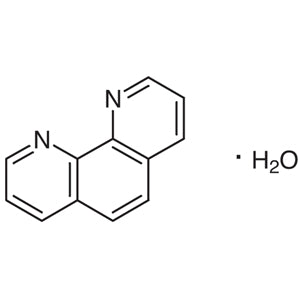
1,10-PhenanthrolineMonohydrate TCI P0221
Regular price From Rp 505.050,00Regular price -
1,10-PhenanthrolineHydrochlorideMonohydrate TCI P0081
Regular price Rp 1.644.300,00Regular price -
2-Methyl-1,10-phenanthroline TCI M2512
Regular price Rp 6.070.050,00Regular price