3-Bromo-1,10-phenanthroline is a chemical compound widely used in laboratory settings for various chemical reactions and catalytic processes. It belongs to the category of nitrogen-donor ligands, which are essential in coordination chemistry and catalysis. This compound is known for its ability to form stable complexes with transition metals, making it a valuable tool in synthetic and analytical chemistry. Its role in catalytic systems is particularly significant, as it can modify the electronic properties of metal centers, thereby enhancing reaction efficiency and selectivity.
The compound's unique molecular structure and reactivity make it a preferred choice for researchers. The presence of a bromo group adds to its chemical versatility, allowing it to participate in substitution and redox reactions. This reactivity, combined with its stability under certain conditions, ensures that it remains effective in a wide range of experimental setups. Its chemical stability and reactivity are key factors that contribute to its widespread use in both organic and inorganic chemistry research.
In Indonesian laboratories, 3-Bromo-1,10-phenanthroline is commonly used in organic and inorganic chemistry research. It is particularly relevant for studies involving nitrogen-based ligands, especially in coordination chemistry and heterogeneous catalysis. Due to its specific chemical properties, it is a go-to material for experiments requiring precise and stable catalytic agents. Its application is broad, making it an essential component in many research projects.
TCI brochures (PDF)
- Ligands 2025-12-01 · p. 14
- Building Blocks for Organic Semiconductor 2026-03-24 · p. 23
Related TCI products
- Organic synthesis applications benefit from its ability to form stable metal complexes, enhancing reaction efficiency and selectivity.
- In inorganic chemistry, it is used to study transition metal coordination, offering insights into complex formation and reactivity.
- Heterogeneous catalysis research utilizes it as a ligand to modify metal surface properties and improve catalytic performance.
- Analytical chemistry applications leverage its reactivity for redox and substitution reactions, aiding in compound identification.
- Coordination chemistry studies rely on its nitrogen-donor properties to investigate metal-ligand interactions and complex stability.
| Brand | TCI |
|---|---|
| CAS number | 66127-01-3 |
| Molecular formula | — |
| Purity | — |
| Category | Chemistry > Catalysis and Inorganic Chemistry > Nitrogen-Donor Ligands [Catalysis] |
| Pack sizes | Available in various quantities as per supplier specifications |
| Physical form | Solid, typically in crystalline form |
| Storage | Store in a cool, dry place away from light and moisture |
3-Bromo-1,10-phenanthroline should be stored in a cool, dry place, away from direct light and moisture to maintain its chemical stability. It is recommended to use airtight containers to prevent exposure to air and humidity, which could affect its reactivity. Due to its bromo group, it may react with certain substances, so it should be handled with care in a well-ventilated area. Laboratory personnel should wear appropriate personal protective equipment, such as gloves and safety goggles, when handling this compound. Proper storage and handling are essential to ensure its effectiveness and safety in experimental settings.
—
Product Categories
Produk Terkait
-
2-Bromo-1,10-phenanthroline TCI B4456
Regular price From Rp 3.365.250,00Regular priceRp 2.368.800,00Sale price From Rp 3.365.250,00 -
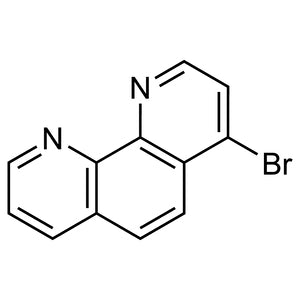
4-Bromo-1,10-phenanthroline TCI B6939
Regular price From Rp 3.285.450,00Regular priceRp 2.313.150,00Sale price From Rp 3.285.450,00 -
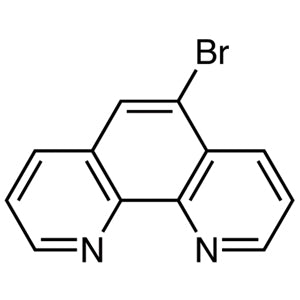
5-Bromo-1,10-phenanthroline TCI B5567
Regular price From Rp 1.643.250,00Regular priceRp 1.164.450,00Sale price From Rp 1.643.250,00 -
5-Amino-1,10-phenanthroline TCI A2977
Regular price Rp 3.790.500,00Regular priceRp 2.665.950,00Sale price Rp 3.790.500,00 -
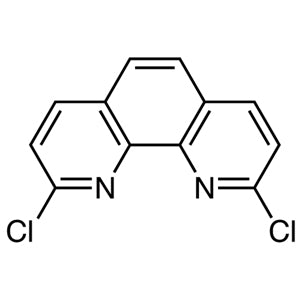
2,9-Dichloro-1,10-phenanthroline TCI D4186
Regular price From Rp 2.942.100,00Regular priceRp 2.072.700,00Sale price From Rp 2.942.100,00 -
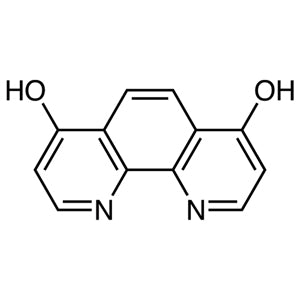
4,7-Dihydroxy-1,10-phenanthroline TCI D3869
Regular price Rp 3.763.200,00Regular priceRp 2.647.050,00Sale price Rp 3.763.200,00 -
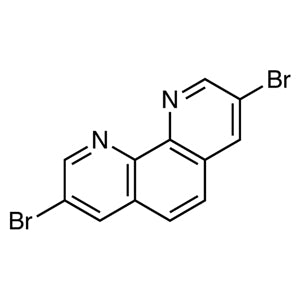
3,8-Dibromo-1,10-phenanthroline TCI D3209
Regular price From Rp 1.801.800,00Regular priceRp 1.275.750,00Sale price From Rp 1.801.800,00 -
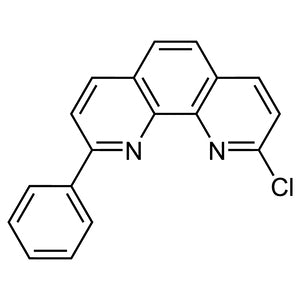
2-Chloro-9-phenyl-1,10-phenanthroline TCI C4161
Regular price Rp 2.835.000,00Regular priceRp 1.998.150,00Sale price Rp 2.835.000,00