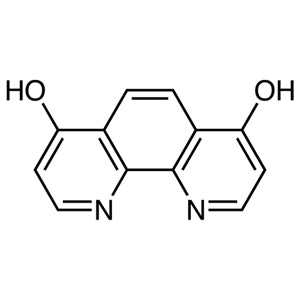
4,7-Dihydroxy-1,10-phenanthroline is a chemical compound widely used in catalytic reactions and organic synthesis within laboratory settings. As a nitrogen-donor ligand, it plays a crucial role in the coordination chemistry of transition metals, enabling the formation of stable metal complexes. This compound is particularly valuable in catalysis due to its ability to modulate reaction pathways and enhance catalytic efficiency. Its structural characteristics allow for versatile interactions with various metal ions, making it a key reagent in both inorganic and organometallic chemistry.
The compound's unique properties make it a preferred choice for researchers in the field of catalysis. It exhibits excellent solubility in organic solvents, which simplifies its handling and integration into synthetic protocols. Additionally, its capacity to form stable complexes with metals such as cobalt, nickel, and silver enhances its utility in both homogeneous and heterogeneous catalytic systems. These characteristics contribute to its growing popularity in chemical research, especially in studies involving redox reactions and chemical activation.
In Indonesian laboratories, 4,7-Dihydroxy-1,10-phenanthroline is commonly used in academic and research institutions for both fundamental and applied chemical studies. Its role in the synthesis of metal complexes and its application in catalytic processes make it a valuable resource for chemists working on advanced materials and reaction mechanisms. Its reliability and performance in various experimental conditions further solidify its position as a preferred reagent in chemical research.
TCI brochures (PDF)
- Ligands 2025-12-01 · p. 14
- Building Blocks for Organic Semiconductor 2026-03-24 · p. 23
Related TCI products
- TCI B4456 22426-14-8 2-Bromo-1,10-phenanthroline
- TCI B2632 66127-01-3 3-Bromo-1,10-phenanthroline
- TCI A2977 54258-41-2 5-Amino-1,10-phenanthroline
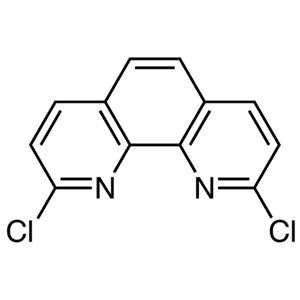
- TCI D4186 29176-55-4 2,9-Dichloro-1,10-phenanthroline
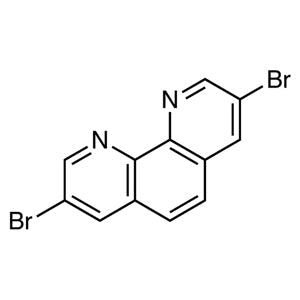
- TCI D3209 100125-12-0 3,8-Dibromo-1,10-phenanthroline
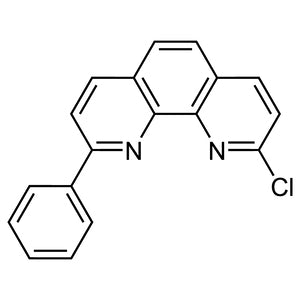
- TCI C4161 1937210-90-6 2-Chloro-9-phenyl-1,10-phenanthroline
- Metal Complex Synthesis: This compound is ideal for creating stable metal complexes due to its strong ligand properties and compatibility with transition metals.
- Catalytic Reaction Optimization: Its ability to modulate reaction pathways makes it suitable for enhancing catalytic efficiency in organic synthesis.
- Redox Chemistry Studies: The compound's participation in redox reactions makes it valuable for investigating electron transfer mechanisms.
- Homogeneous Catalysis: Its solubility in organic solvents allows for effective use in homogeneous catalytic systems where solution-phase reactions are required.
- Heterogeneous Catalysis Research: It supports the development of supported catalysts by forming stable complexes with metal surfaces in heterogeneous environments.
| Brand | TCI |
|---|---|
| CAS number | 3922-40-5 |
| Molecular formula | — |
| Purity | — |
| Category | Chemistry > Catalysis and Inorganic Chemistry > Nitrogen-Donor Ligands [Catalysis] |
| Pack sizes | Available in various quantities as per standard chemical supply practices |
| Physical form | Solid (as per typical chemical compound presentation) |
| Storage | Store in a cool, dry place away from light and moisture |
This compound should be stored in a cool, dry environment, away from direct light and moisture to maintain its chemical integrity. It is recommended to use airtight containers made of glass or polyethylene to prevent contamination and degradation. Due to its chemical nature, it should be handled with appropriate personal protective equipment, including gloves and safety goggles. In laboratory settings, it should be kept in a designated chemical storage area that is well-ventilated and accessible only to authorized personnel. Regular monitoring of storage conditions is advised to ensure the compound remains in optimal condition for use in research applications.
—
Product Categories
Produk Terkait
-
2-Bromo-1,10-phenanthroline TCI B4456
Regular price Rp 3.365.250,00Regular priceRp 2.368.800,00Sale price Rp 3.365.250,00 -
3-Bromo-1,10-phenanthroline TCI B2632
Regular price Rp 3.735.900,00Regular priceRp 2.628.150,00Sale price Rp 3.735.900,00 -
5-Amino-1,10-phenanthroline TCI A2977
Regular price Rp 3.790.500,00Regular priceRp 2.665.950,00Sale price Rp 3.790.500,00 -
2,9-Dichloro-1,10-phenanthroline TCI D4186
Regular price Rp 2.942.100,00Regular priceRp 2.072.700,00Sale price Rp 2.942.100,00 -
3,8-Dibromo-1,10-phenanthroline TCI D3209
Regular price Rp 1.801.800,00Regular priceRp 1.275.750,00Sale price Rp 1.801.800,00 -
2-Chloro-9-phenyl-1,10-phenanthroline TCI C4161
Regular price Rp 2.835.000,00Regular priceRp 1.998.150,00Sale price Rp 2.835.000,00 -
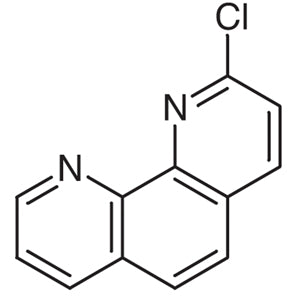
2-Chloro-1,10-phenanthroline TCI C1560
Regular price Rp 557.550,00Regular priceRp 405.300,00Sale price Rp 557.550,00 -
5-Chloro-1,10-phenanthroline TCI C0786
Regular price Rp 610.050,00Regular priceRp 442.050,00Sale price Rp 610.050,00