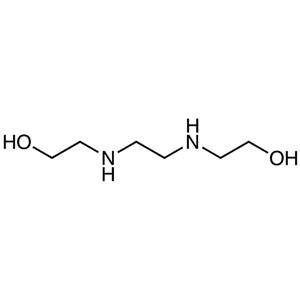
3,9-Bis(1,1-dimethyl-2-hydroxyethyl)-2,4,8,10-tetraoxaspiro[5.5]undecane is a specialized chemical compound used in complex laboratory reactions. This compound plays a crucial role in organic synthesis, particularly in the development of compounds with intricate structures or specific reactivity. Its unique molecular structure, featuring a spiro system connected to protected hydroxyl groups, makes it a valuable tool for chemists working on advanced synthetic pathways. It is frequently employed in research settings where precise molecular manipulation is required.
The compound is known for its chemical stability and resistance to degradation, which ensures reliable performance in various experimental conditions. Its non-reactive nature under certain conditions simplifies handling and storage, making it a preferred choice for researchers. The well-defined molecular structure allows for consistent results in chemical reactions, contributing to the accuracy and reproducibility of laboratory experiments. This reliability is essential in environments where precision and consistency are paramount.
In Indonesian laboratories, this compound is widely used in organic chemistry research. It is a key component in the synthesis of complex organic molecules and is often utilized in academic and industrial research settings. Its application spans across various fields, including pharmaceutical development and material science, where its unique properties provide significant advantages. The compound’s role in these contexts underscores its importance as a fundamental building block in chemical research.
TCI brochures (PDF)
- Biomaterials Research Reagents 2025-02-19 · p. 19
- Monomers 2025-05-28 · p. 23
Related TCI products
- TCI B3807 4439-20-7 N,N'-Bis(2-hydroxyethyl)ethylenediamine
- TCI H1253 74058-21-2 4-(2-Hydroxyethyl)cyclohexanol (cis- and trans- mixture)
- TCI D1167 110-03-2 2,5-Dimethyl-2,5-hexanediol
- TCI U0178 765-04-8 Undecane-1,11-diol
- TCI D1027 78-19-3 3,9-Divinyl-2,4,8,10-tetraoxaspiro[5.5]undecane
- TCI B3384 821-11-4 trans-2-Butene-1,4-diol
- Organic synthesis applications benefit from this compound's stable molecular structure, allowing precise control over reaction outcomes.
- It is ideal for complex molecule construction due to its unique spiro framework and protected hydroxyl groups.
- In pharmaceutical research, it supports the development of novel compounds with specific reactivity and structural features.
- It is used in material science for creating polymers and other advanced materials with tailored properties.
- Its non-reactive nature under certain conditions makes it suitable for controlled chemical transformations in laboratory settings.
| Brand | TCI |
|---|---|
| CAS number | 1455-42-1 |
| Molecular formula | — |
| Purity | — |
| Category | Chemistry > Building Blocks > Non-Heterocyclic Building Blocks |
| Pack sizes | Available in various quantities as per standard laboratory supply |
| Physical form | Liquid |
| Storage | Store in a cool, dry place away from direct sunlight |
This compound should be stored in a cool, dry environment, away from direct sunlight and sources of heat. It is recommended to keep it in a tightly sealed container to prevent moisture absorption and maintain its chemical integrity. Due to its non-reactive nature, it does not require special handling under normal laboratory conditions. However, it is important to ensure that the storage area is well-ventilated to avoid any potential accumulation of volatile components. Proper labeling of containers is essential for safe handling and to prevent accidental misuse. Always follow standard laboratory safety protocols when working with this compound to ensure a safe and efficient research environment.
—
Product Categories
Produk Terkait
-
N,N'-Bis(2-hydroxyethyl)ethylenediamine TCI B3807
Regular price Rp 3.498.600,00Regular priceRp 2.446.500,00Sale price Rp 3.498.600,00 -
4-(2-Hydroxyethyl)cyclohexanol(cis-andtrans-mixture) TCI H1253
Regular price From Rp 3.048.150,00Regular priceRp 2.147.250,00Sale price From Rp 3.048.150,00 -
2,5-Dimethyl-2,5-hexanediol TCI D1167
Regular price From Rp 557.550,00Regular priceRp 405.300,00Sale price From Rp 557.550,00 -
Undecane-1,11-diol TCI U0178
Regular price From Rp 1.033.200,00Regular priceRp 738.150,00Sale price From Rp 1.033.200,00 -
3,9-Divinyl-2,4,8,10-tetraoxaspiro[5.5]undecane TCI D1027
Regular price From Rp 2.730.000,00Regular priceRp 1.924.650,00Sale price From Rp 2.730.000,00 -
trans-2-Butene-1,4-diol TCI B3384
Regular price From Rp 2.809.800,00Regular priceRp 1.980.300,00Sale price From Rp 2.809.800,00 -
2,2'-Bis(hydroxymethyl)diphenylEther TCI B1643
Regular price From Rp 3.815.700,00Regular priceRp 2.683.800,00Sale price From Rp 3.815.700,00 -
4,4'-Bicyclohexanol(mixtureofisomers) TCI B1621
Regular price From Rp 1.618.050,00Regular priceRp 1.146.600,00Sale price From Rp 1.618.050,00