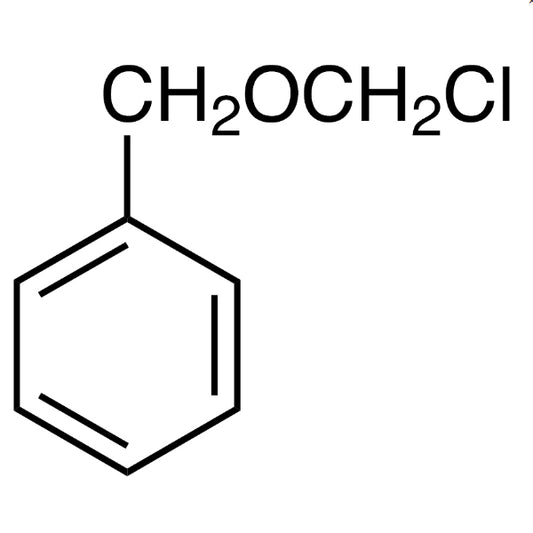
Benzyl Isopropenyl Ether (BIE) is a chemical compound used as a hydroxyl-protecting agent in various chemical reactions. It plays a crucial role in laboratory settings by shielding hydroxyl groups from unwanted reactions such as oxidation or hydrolysis. This compound is particularly valuable in the synthesis of complex molecules, especially in the formation of heterocyclic or aromatic structures. Its protective function ensures the integrity of molecular frameworks during multi-step synthetic processes.
BIE is favored for its chemical stability and controlled reactivity, making it a reliable choice in diverse chemical applications. It remains stable under normal conditions and is resistant to degradation in aqueous environments, which is essential for maintaining the consistency of experimental results. Its solubility in organic solvents simplifies mixing and separation processes, enhancing the efficiency of laboratory workflows. Additionally, its non-toxic and non-volatile nature ensures a safer working environment for researchers.
In Indonesian laboratories, BIE is widely used in chemical research, particularly in pharmaceutical and industrial chemistry. It supports the development of high-stability organic compounds and is integral to the synthesis of pharmacological agents. Its reliability and versatility make it a preferred material for researchers aiming to achieve precise chemical outcomes in their experiments.
TCI brochures (PDF)
- Protecting Agents 2025-03-25 · p. 8
Related TCI products
- TCI B1207 3587-60-8 Benzyl Chloromethyl Ether
- TCI B1151 57842-27-0 1,3-Benzodithiolylium Tetrafluoroborate [Hydroxyl-Protecting Agent]
- TCI T1071 86610-66-4 4,4',4''-Tris(benzoyloxy)trityl Bromide [Hydroxyl Protecting Agent]
- TCI M0790 14470-28-1 4-Methoxytrityl Chloride [Hydroxyl Protecting Agent]
- TCI F0197 28920-43-6 9-Fluorenylmethyl Chloroformate [N-Protecting Agent for Peptides Research]
- TCI D1612 40615-36-9 4,4'-Dimethoxytrityl Chloride [Hydroxyl Protecting Agent]
- Pharmaceutical synthesis where hydroxyl group protection is essential to maintain molecular integrity during complex reactions.
- Organic chemistry research involving the formation of heterocyclic structures where controlled reactivity is required.
- Industrial chemical production requiring stable intermediates for the synthesis of aromatic compounds.
- Analytical chemistry applications where the compound's solubility in organic solvents aids in sample preparation and purification.
- Environmental testing where the compound's resistance to degradation in aqueous environments ensures accurate results.
| Brand | TCI |
|---|---|
| CAS number | 32783-20-3 |
| Molecular formula | — |
| Purity | — |
| Category | Chemistry > Building Blocks > Non-Heterocyclic Building Blocks |
| Pack sizes | Available in standard laboratory quantities as per supplier specifications |
| Physical form | Liquid |
| Storage | Store in a cool, dry place away from direct sunlight and incompatible materials |
Benzyl Isopropenyl Ether should be stored in a cool, dry place, away from direct sunlight and sources of heat. It is recommended to use sealed containers made of glass or inert plastic to prevent contamination and evaporation. Since it is non-volatile and non-toxic, it poses minimal risk in standard laboratory conditions, but handling should still follow general chemical safety protocols. Avoid exposure to strong oxidizing agents and ensure proper ventilation when working with the compound. Regular monitoring of storage conditions is advised to maintain its stability and effectiveness in chemical applications.
—
Produk Terkait
-
BenzylChloromethylEther TCI B1207
Regular price From Rp 1.353.450,00Regular priceRp 946.050,00Sale price From Rp 1.353.450,00 -
1,3-BenzodithiolyliumTetrafluoroborate[Hydroxyl-ProtectingAgent] TCI B1151
Regular price Rp 2.782.500,00Regular priceRp 1.945.650,00Sale price Rp 2.782.500,00 -
4,4',4''-Tris(benzoyloxy)tritylBromide[HydroxylProtectingAgent] TCI T1071
Regular price From Rp 5.883.150,00Regular priceRp 4.129.650,00Sale price From Rp 5.883.150,00 -
4-MethoxytritylChloride[HydroxylProtectingAgent] TCI M0790
Regular price From Rp 2.837.100,00Regular priceRp 1.983.450,00Sale price From Rp 2.837.100,00 -
9-FluorenylmethylChloroformate[N-ProtectingAgentforPeptidesResearch] TCI F0197
Regular price From Rp 1.801.800,00Regular priceRp 1.275.750,00Sale price From Rp 1.801.800,00 -
4,4'-DimethoxytritylChloride[HydroxylProtectingAgent] TCI D1612
Regular price From Rp 1.035.300,00Regular priceRp 723.450,00Sale price From Rp 1.035.300,00 -
Benzyl6-BromohexylEther TCI B2820
Regular price From Rp 4.559.100,00Regular priceRp 3.187.800,00Sale price From Rp 4.559.100,00 -
Benzyl5-BromoamylEther TCI B2819
Regular price Rp 3.896.550,00Regular priceRp 2.724.750,00Sale price Rp 3.896.550,00