N-alpha-(tert-Butyloxycarbonyl)-L-arginine 4-nitroanilide hydrochloride is a specialized chemical compound used in laboratory settings for advanced chemical and biochemical experiments. This compound is particularly valuable in peptide chemistry due to its role as a protected amino acid derivative. It serves as a key intermediate in the synthesis of complex peptides and proteins, enabling researchers to manipulate and study molecular interactions with precision. Its unique structure allows for controlled chemical reactions, making it an essential tool in modern biochemical research.
The compound’s chemical properties, including its hydrochloride group and tert-butyloxycarbonyl (Boc) functionality, contribute to its stability and reactivity under specific laboratory conditions. These features make it a preferred choice for applications requiring precise control over reaction pathways. The presence of functional groups also enhances its utility in various synthetic processes, allowing for the selective modification of amino acid residues. Its reliability and consistency in performance are critical for reproducible results in research environments.
In Indonesian laboratories, this compound is widely used in chemical, biochemical, and pharmacological research. It supports the development of new synthetic methods and the investigation of molecular interactions. Many research institutions and universities in Indonesia rely on this compound to advance their studies in peptide chemistry and related fields. Its availability through AMI Scientific ensures that researchers have access to high-quality materials for their experiments.
TCI brochures (PDF)
- Amino Acids and Peptide Synthesis Reagents 2025-08-14 · p. 12
Related TCI products
- TCI B4184 109425-55-0 Ndelta-(tert-Butoxycarbonyl)-Nalpha-[(9H-fluoren-9-ylmethoxy)carbonyl]-L-ornithine
- TCI B3915 4587-33-1 Nalpha-(tert-Butoxycarbonyl)-L-asparagine 4-Nitrophenyl Ester
- TCI B3789 132388-68-2 Nalpha-tert-Butoxycarbonyl-Ngamma-trityl-L-asparagine
- TCI B3072 71989-26-9 Nepsilon-(tert-Butoxycarbonyl)-Nalpha-[(9H-fluoren-9-ylmethoxy)carbonyl]-L-lysine
- TCI B3071 92122-45-7 Nepsilon-(tert-Butoxycarbonyl)-Nalpha-[(9H-fluoren-9-ylmethoxy)carbonyl]-D-lysine
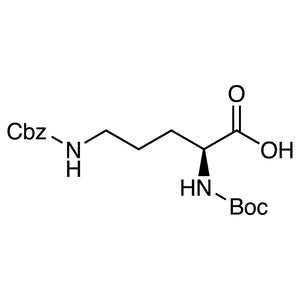
- TCI B2253 2480-93-5 Nalpha-(tert-Butoxycarbonyl)-Ndelta-benzyloxycarbonyl-L-ornithine
- Peptide Synthesis: This compound is ideal for synthesizing complex peptides due to its protected amino acid functionality, enabling controlled coupling reactions.
- Molecular Interaction Studies: Its unique structure allows researchers to investigate specific molecular interactions and reactivity patterns in biochemical systems.
- Drug Development Research: The compound is used in pharmacological studies to develop and test new therapeutic agents by mimicking peptide-based drug structures.
- Chemical Modification Experiments: Its reactivity and functional groups make it suitable for experiments involving selective chemical modifications of amino acid residues.
- Biochemical Reagent Testing: It serves as a standard reagent for testing reaction conditions and optimizing biochemical processes in laboratory settings.
| Brand | TCI |
|---|---|
| CAS number | 99306-64-6 |
| Molecular formula | — |
| Purity | — |
| Category | Chemistry > Chemical Biology > Peptide Chemistry |
| Pack sizes | Available in various quantities as per supplier specifications |
| Physical form | Solid powder |
| Storage | Store in a cool, dry place away from moisture and light |
This compound should be stored in a cool, dry environment to maintain its chemical integrity and prevent degradation. It is recommended to use airtight containers to protect it from moisture and light exposure. Due to its chemical nature, it should be handled with appropriate personal protective equipment, such as gloves and safety goggles, to ensure laboratory safety. It is important to keep it away from incompatible substances to avoid any potential chemical reactions. Proper labeling and storage conditions help maintain its stability and effectiveness for research applications. Always follow standard laboratory safety protocols when working with this compound to ensure safe and efficient use.
—
Product Categories
Produk Terkait
-
Ndelta-(tert-Butoxycarbonyl)-Nalpha-[(9H-fluoren-9-ylmethoxy)carbonyl]-L-ornithine TCI B4184
Regular price Rp 1.934.100,00Regular priceRp 1.368.150,00Sale price Rp 1.934.100,00 -
Nalpha-(tert-Butoxycarbonyl)-L-asparagine4-NitrophenylEster TCI B3915
Regular price Rp 1.351.350,00Regular priceRp 960.750,00Sale price Rp 1.351.350,00 -
Nalpha-tert-Butoxycarbonyl-Ngamma-trityl-L-asparagine TCI B3789
Regular price From Rp 1.643.250,00Regular priceRp 1.164.450,00Sale price From Rp 1.643.250,00 -
Nepsilon-(tert-Butoxycarbonyl)-Nalpha-[(9H-fluoren-9-ylmethoxy)carbonyl]-L-lysine TCI B3072
Regular price Rp 1.167.600,00Regular priceRp 831.600,00Sale price Rp 1.167.600,00 -
Nepsilon-(tert-Butoxycarbonyl)-Nalpha-[(9H-fluoren-9-ylmethoxy)carbonyl]-D-lysine TCI B3071
Regular price From Rp 1.272.600,00Regular priceRp 905.100,00Sale price From Rp 1.272.600,00 -
Nalpha-(tert-Butoxycarbonyl)-Ndelta-benzyloxycarbonyl-L-ornithine TCI B2253
Regular price From Rp 928.200,00Regular priceRp 664.650,00Sale price From Rp 928.200,00 -
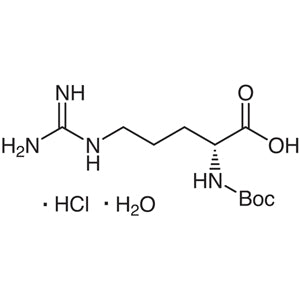
Nalpha-(tert-Butoxycarbonyl)-D-arginineHydrochlorideMonohydrate TCI B2204
Regular price From Rp 848.400,00Regular priceRp 609.000,00Sale price From Rp 848.400,00 -
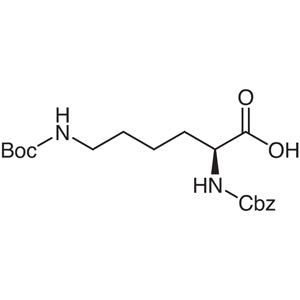
Nepsilon-(tert-Butoxycarbonyl)-Nalpha-carbobenzoxy-L-lysine TCI B1862
Regular price From Rp 2.623.950,00Regular priceRp 1.850.100,00Sale price From Rp 2.623.950,00