TCI B1615, with the CAS number 109306-21-0, is a specialized organocatalyst used in various chemical reactions to accelerate reaction processes without participating in the chemical reaction itself. This compound is designed to enhance reaction efficiency by interacting with substrates and lowering activation energy. It is particularly valuable in asymmetric synthesis, where precise control over product formation is essential. Its molecular structure features two hydroxyl groups attached to a carbon atom, along with two phenyl rings, which contribute to its stability and reactivity. These structural characteristics make it a versatile tool for synthetic chemists seeking to optimize reaction conditions.
The compound's ability to remain chemically unchanged after catalyzing a reaction makes it an ideal choice for repeated use in laboratory settings. Its stability under various conditions allows for long-term storage and consistent performance. Additionally, its physical properties ensure compatibility with a wide range of experimental setups, making it a reliable option for both research and industrial applications. This combination of reactivity, stability, and reusability positions it as a preferred catalyst in modern chemical synthesis.
In Indonesian laboratories, TCI B1615 is commonly used in organic chemistry research, especially in the synthesis of complex compounds and the development of more efficient reaction methods. Its role in asymmetric catalysis is particularly significant, as it enables the production of chiral compounds with high enantiomeric purity. This makes it a valuable resource for researchers working on pharmaceutical and material science projects. Its widespread application in both academic and industrial settings underscores its importance in contemporary chemical research.
TCI brochures (PDF)
- Chiral Ligands 2024-12-13 · p. 4
- Asymmetric Organocatalysts 2025-06-12 · p. 10
- Asymmetric Synthesis 2026-03-18 · p. 5
- Ligands 2025-12-01 · p. 4
Related TCI products
- TCI B2048 93379-49-8 (+)-4,5-Bis[hydroxy(diphenyl)methyl]-2,2-dimethyl-1,3-dioxolane
- TCI B1614 93379-48-7 (-)-4,5-Bis[hydroxy(diphenyl)methyl]-2,2-dimethyl-1,3-dioxolane
- TCI H0784 144119-12-0 (R)-(-)-2-[Hydroxy(diphenyl)methyl]-1-methylpyrrolidine
- TCI H0768 110529-22-1 (S)-(+)-2-[Hydroxy(diphenyl)methyl]-1-methylpyrrolidine
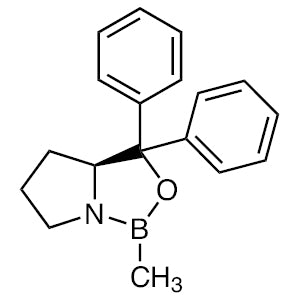
- TCI D5912 112022-81-8 (S)-5,5-Diphenyl-2-methyl-3,4-propano-1,3,2-oxazaborolidine (ca. 1mol/L in Toluene)
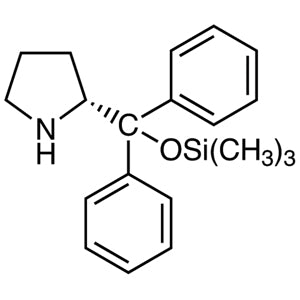
- TCI D3867 943757-71-9 (R)-(+)-alpha,alpha-Diphenyl-2-pyrrolidinemethanol Trimethylsilyl Ether
- Asymmetric synthesis in pharmaceutical research due to its ability to control stereochemistry and produce enantiomerically pure compounds.
- Organic synthesis of complex molecules where precise reaction control and catalyst reusability are essential for cost-effective and efficient processes.
- Development of green chemistry methods by reducing the need for harsh reagents and minimizing waste through the use of reusable catalysts.
- Catalytic processes in industrial-scale chemical manufacturing where stability and performance under varied conditions are critical.
- Teaching and research applications in academic institutions for demonstrating catalytic mechanisms and reaction optimization techniques.
| Brand | TCI |
|---|---|
| CAS number | 109306-21-0 |
| Molecular formula | — |
| Purity | — |
| Category | Chemistry > Catalysis and Inorganic Chemistry > Organocatalysts [Catalysis] |
| Pack sizes | Available in various quantities as per standard supplier offerings |
| Physical form | Solid or liquid, depending on formulation and supplier specifications |
| Storage | — |
TCI B1615 should be stored in a cool, dry, and well-ventilated area away from direct sunlight and sources of heat. It is recommended to use airtight containers made of glass or high-density polyethylene to prevent contamination and maintain chemical integrity. The compound is generally stable under normal laboratory conditions, but it should be kept in a sealed container to avoid moisture exposure. Proper labeling and storage in a designated chemical storage cabinet are essential for safety and compliance with laboratory protocols. Always ensure that personal protective equipment is worn when handling this material to minimize exposure risks.
—
Produk Terkait
-
(+)-4,5-Bis[hydroxy(diphenyl)methyl]-2,2-dimethyl-1,3-dioxolane TCI B2048
Regular price From Rp 1.881.600,00Regular priceRp 1.331.400,00Sale price From Rp 1.881.600,00 -
(-)-4,5-Bis[hydroxy(diphenyl)methyl]-2,2-dimethyl-1,3-dioxolane TCI B1614
Regular price From Rp 1.140.300,00Regular priceRp 812.700,00Sale price From Rp 1.140.300,00 -
(R)-(-)-2-[Hydroxy(diphenyl)methyl]-1-methylpyrrolidine TCI H0784
Regular price From Rp 1.246.350,00Regular priceRp 887.250,00Sale price From Rp 1.246.350,00 -
(S)-(+)-2-[Hydroxy(diphenyl)methyl]-1-methylpyrrolidine TCI H0768
Regular price From Rp 1.272.600,00Regular priceRp 905.100,00Sale price From Rp 1.272.600,00 -
(S)-5,5-Diphenyl-2-methyl-3,4-propano-1,3,2-oxazaborolidine(ca.1mol/LinToluene) TCI D5912
Regular price From Rp 2.411.850,00Regular priceRp 1.702.050,00Sale price From Rp 2.411.850,00 -
(R)-(+)-alpha,alpha-Diphenyl-2-pyrrolidinemethanolTrimethylsilylEther TCI D3867
Regular price From Rp 3.472.350,00Regular priceRp 2.443.350,00Sale price From Rp 3.472.350,00 -
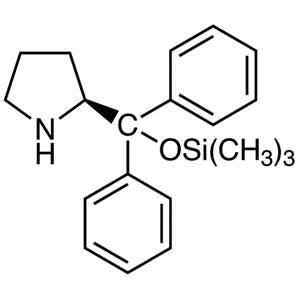
(S)-(-)-alpha,alpha-Diphenyl-2-pyrrolidinemethanolTrimethylsilylEther TCI D3843
Regular price From Rp 4.001.550,00Regular priceRp 2.814.000,00Sale price From Rp 4.001.550,00 -
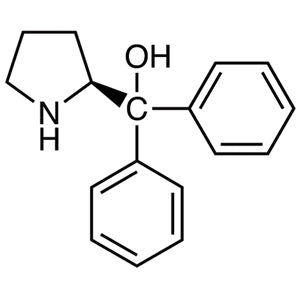
(S)-(-)-alpha,alpha-Diphenyl-2-pyrrolidinemethanol TCI D2735
Regular price From Rp 1.696.800,00Regular priceRp 1.202.250,00Sale price From Rp 1.696.800,00