
![(S)-(+)-2-[Hydroxy(diphenyl)methyl]-1-methylpyrrolidine (CAS 110529-22-1) - TCI H0768 - AMI Scientific](http://amiscientific.com/cdn/shop/files/TCI2510H0768.jpg?v=1767116955&width=1946)
![(S)-(+)-2-[Hydroxy(diphenyl)methyl]-1-methylpyrrolidine (CAS 110529-22-1) - TCI H0768 - AMI Scientific](http://amiscientific.com/cdn/shop/files/TCI2510H0768.jpg?v=1767116955&width=1445)
TCI H0768 110529-22-1, also known as (S)-(+)-2-[Hydroxy(diphenyl)methyl]-1-methylpyrrolidine, is a chiral reagent used in asymmetric synthesis. This compound plays a crucial role in laboratories where precise control over stereochemistry is required. It is a key component in the production of enantiomerically pure compounds, which are essential in pharmaceutical and chemical industries. Its unique structure allows it to act as a chiral catalyst or ligand, enabling the selective formation of specific stereoisomers.
The compound’s chiral nature and high catalytic activity make it a preferred choice for researchers aiming to achieve high enantioselectivity. Its molecular structure is complex, allowing it to interact effectively with various substrates in asymmetric reactions. The compound’s consistency and purity ensure reliable results, making it a trusted material in both academic and industrial settings. Its ability to produce specific stereochemical configurations is vital for the development of new drugs and complex organic molecules.
In Indonesian laboratories, this compound is widely used in organic chemistry research, particularly in asymmetric synthesis and the development of new compounds. It is a common reagent in pharmaceutical and chemical research institutions, where it supports the creation of enantiomerically pure products. Its application is also seen in academic research, where it is used to study stereoselective reactions and improve synthetic methodologies.
TCI brochures (PDF)
- Proline-type Organocatalysts 2025-01-30 · p. 1
- Asymmetric Organocatalysts 2025-06-12 · p. 7
- Asymmetric Synthesis 2026-03-18 · p. 6
Related TCI products
- TCI H0784 144119-12-0 (R)-(-)-2-[Hydroxy(diphenyl)methyl]-1-methylpyrrolidine
- TCI B2048 93379-49-8 (+)-4,5-Bis[hydroxy(diphenyl)methyl]-2,2-dimethyl-1,3-dioxolane
- TCI B1614 93379-48-7 (-)-4,5-Bis[hydroxy(diphenyl)methyl]-2,2-dimethyl-1,3-dioxolane
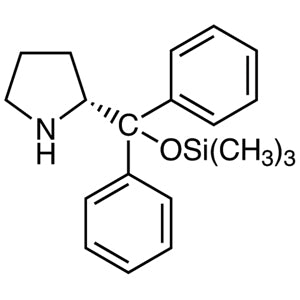
- TCI D3867 943757-71-9 (R)-(+)-alpha,alpha-Diphenyl-2-pyrrolidinemethanol Trimethylsilyl Ether
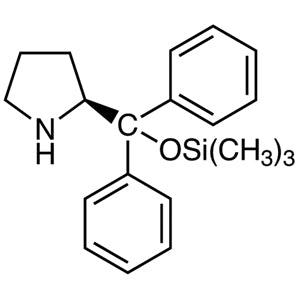
- TCI D3843 848821-58-9 (S)-(-)-alpha,alpha-Diphenyl-2-pyrrolidinemethanol Trimethylsilyl Ether
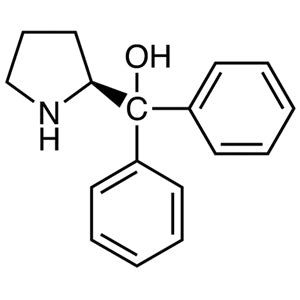
- TCI D2735 112068-01-6 (S)-(-)-alpha,alpha-Diphenyl-2-pyrrolidinemethanol
- Asymmetric Synthesis: This compound is ideal for asymmetric reactions due to its chiral structure and high catalytic activity, enabling the selective formation of specific stereoisomers.
- Pharmaceutical Research: It is used in drug development to produce enantiomerically pure compounds, which are critical for the efficacy and safety of pharmaceutical products.
- Organic Chemistry Experiments: It supports the synthesis of complex organic molecules with controlled stereochemistry, making it a valuable tool in chemical research.
- Chiral Catalyst Development: Its unique properties make it suitable for the design and testing of new chiral catalysts in industrial and academic settings.
- Academic Research: It is frequently used in universities and research institutions for studying stereoselective reactions and improving synthetic methodologies.
| Brand | TCI |
|---|---|
| CAS number | 110529-22-1 |
| Molecular formula | — |
| Purity | — |
| Category | Chemistry > Asymmetric Synthesis > Chiral Catalysts, Chiral Ligands, Chiral Reagents |
| Pack sizes | — |
| Physical form | — |
| Storage | Store in a cool, dry place away from light |
This compound should be stored in a cool, dry place away from direct light to maintain its stability and effectiveness. It is recommended to use airtight containers to prevent moisture absorption and contamination. Proper labeling of containers is essential to ensure safe handling and prevent accidental exposure. Due to its chiral nature, it should be handled with care to avoid cross-contamination. In laboratory settings, personal protective equipment such as gloves and safety goggles should be worn when handling this material. Regular monitoring of storage conditions is advised to ensure the compound remains in optimal condition for use.
—
Produk Terkait
-
(R)-(-)-2-[Hydroxy(diphenyl)methyl]-1-methylpyrrolidine TCI H0784
Regular price From Rp 1.193.850,00Regular price -
(+)-4,5-Bis[hydroxy(diphenyl)methyl]-2,2-dimethyl-1,3-dioxolane TCI B2048
Regular price From Rp 1.829.100,00Regular price -
(-)-4,5-Bis[hydroxy(diphenyl)methyl]-2,2-dimethyl-1,3-dioxolane TCI B1614
Regular price From Rp 1.087.800,00Regular price -
(R)-(+)-alpha,alpha-Diphenyl-2-pyrrolidinemethanolTrimethylsilylEther TCI D3867
Regular price From Rp 3.419.850,00Regular price -
(S)-(-)-alpha,alpha-Diphenyl-2-pyrrolidinemethanolTrimethylsilylEther TCI D3843
Regular price From Rp 3.949.050,00Regular price -
(S)-(-)-alpha,alpha-Diphenyl-2-pyrrolidinemethanol TCI D2735
Regular price From Rp 1.644.300,00Regular price -
(R)-(+)-alpha,alpha-Diphenyl-2-pyrrolidinemethanol TCI D2365
Regular price From Rp 4.108.650,00Regular price -
(+)-4,5-Bis[hydroxy(diphenyl)methyl]-2-methyl-2-phenyl-1,3-dioxolane TCI B1615
Regular price Rp 5.009.550,00Regular price
![(R)-(-)-2-[Hydroxy(diphenyl)methyl]-1-methylpyrrolidine (CAS 144119-12-0) - TCI H0784 - AMI Scientific](http://amiscientific.com/cdn/shop/files/TCI2510H0784.jpg?v=1767116984&width=533)
![93379-49-8 (+)-4,5-Bis[hydroxy(diphenyl)methyl]-2,2-dimethyl-1,3-dioxolane - AMI Scientific](http://amiscientific.com/cdn/shop/files/TCI2510B2048_ca66ec29-76e5-43e7-9f7b-9d16d3c27d2d.jpg?v=1767330617&width=533)
![93379-48-7 (-)-4,5-Bis[hydroxy(diphenyl)methyl]-2,2-dimethyl-1,3-dioxolane - AMI Scientific](http://amiscientific.com/cdn/shop/files/TCI2510B1614_834fd19e-0321-4868-b028-1261dabc7fec.jpg?v=1767327573&width=533)
![109306-21-0 (+)-4,5-Bis[hydroxy(diphenyl)methyl]-2-methyl-2-phenyl-1,3-dioxolane - AMI Scientific](http://amiscientific.com/cdn/shop/files/TCI2510B1615.jpg?v=1767087519&width=533)