

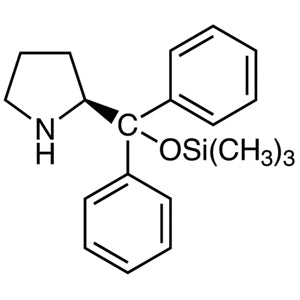
The TCI D3843, with CAS number 848821-58-9, is a chiral reagent known as (S)-(-)-alpha,alpha-Diphenyl-2-pyrrolidinemethanol Trimethylsilyl Ether. This compound plays a crucial role in asymmetric synthesis, where it acts as a chiral catalyst or ligand to facilitate the formation of chiral molecules. In laboratory settings, it is widely used to produce enantiomerically pure compounds, which are essential in pharmaceutical and biochemical research. Its ability to control stereochemistry makes it a valuable tool for researchers aiming to develop new drugs and bioactive compounds.
This reagent is preferred due to its high chiral purity and structural complexity, which enhance its reactivity in various synthetic conditions. The presence of the trimethylsilyl group contributes to its stability and solubility, making it suitable for a wide range of reaction environments. Additionally, its well-defined stereochemistry ensures consistent results in asymmetric reactions, which is vital for reproducibility in scientific research. These properties make it an ideal choice for applications requiring precise control over the stereochemical outcome of chemical reactions.
In Indonesian laboratories, this compound is commonly used by chemists, pharmacologists, and biochemists working in academic and research institutions. It supports the development of new pharmaceuticals and bioactive compounds by enabling the synthesis of molecules with specific stereochemical configurations. Its application is particularly relevant in drug discovery and the creation of compounds with targeted biological activities.
Advantages (TCI brochure)
- Gives ~ 98% ee and dr 11:1 in the depicted reaction
TCI brochures (PDF)
- Proline-type Organocatalysts 2025-01-30 · p. 1
- Asymmetric Organocatalysts 2025-06-12 · p. 4
- Asymmetric Synthesis 2026-03-18 · p. 6
- Please inquire for pricing and availability of listed products to our local sales representatives. Si Si Et 2026-07-16 · p. 12
Related TCI products
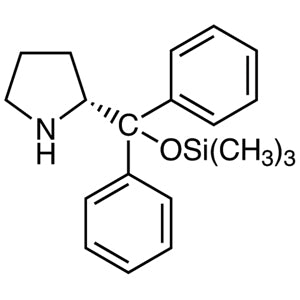
- TCI D3867 943757-71-9 (R)-(+)-alpha,alpha-Diphenyl-2-pyrrolidinemethanol Trimethylsilyl Ether
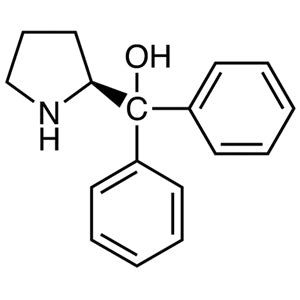
- TCI D2735 112068-01-6 (S)-(-)-alpha,alpha-Diphenyl-2-pyrrolidinemethanol
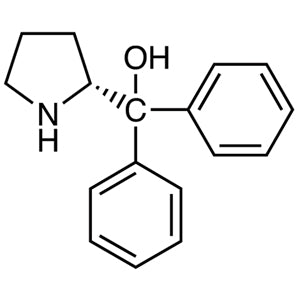
- TCI D2365 22348-32-9 (R)-(+)-alpha,alpha-Diphenyl-2-pyrrolidinemethanol
- TCI B5701 848821-76-1 (S)-alpha,alpha-Bis[3,5-bis(trifluoromethyl)phenyl]-2-pyrrolidinemethanol
- TCI B6611 848821-61-4 (2S)-2-[Bis[3,5-bis(trifluoromethyl)phenyl][(trimethylsilyl)oxy]methyl]pyrrolidine
- TCI H0784 144119-12-0 (R)-(-)-2-[Hydroxy(diphenyl)methyl]-1-methylpyrrolidine
- Asymmetric synthesis for producing enantiomerically pure compounds due to its chiral structure and catalytic properties.
- Pharmaceutical research to develop drugs with specific stereochemistry for enhanced biological activity and reduced side effects.
- Biochemical studies to synthesize chiral molecules with potential therapeutic applications in medicine and biotechnology.
- Organic chemistry experiments requiring precise control over reaction stereochemistry for academic and industrial research.
- Ligand development in asymmetric catalysis to improve reaction efficiency and selectivity in complex chemical processes.
From the TCI brochure
- Reaction of a vinyl-substituted beta-keto ester type reagent with an alpha,beta-unsaturated aldehyde, using benzoic acid as co-catalyst
| Brand | TCI |
|---|---|
| CAS number | 848821-58-9 |
| Molecular formula | — |
| Purity | — |
| Category | Chemistry > Asymmetric Synthesis > Chiral Catalysts, Chiral Ligands, Chiral Reagents |
| Pack sizes | Available in various quantities as per standard laboratory supply practices |
| Physical form | Liquid or solid, depending on formulation and supplier specifications |
| Storage | Store in a cool, dry place away from light and moisture |
Data from the TCI brochure
| Yield | ~ 69% (10 mol% D3843, PhCO2H (10 mol%), toluene, rt) |
|---|---|
| dr | 11:1 (10 mol% D3843, PhCO2H (10 mol%), toluene, rt) |
| ee | ~ 98% ee (10 mol% D3843, PhCO2H (10 mol%), toluene, rt) |
Source: TCI brochure RR101 (2025-01-30)
This compound should be stored in a cool, dry environment, away from direct sunlight and moisture to maintain its chemical integrity. It is recommended to use airtight containers made of glass or high-density polyethylene to prevent contamination and degradation. In laboratory settings, proper personal protective equipment, such as gloves and safety goggles, should be worn when handling this material. Due to its chiral nature and potential reactivity, it should be kept in a secure location to prevent accidental exposure. Regular monitoring of storage conditions ensures the compound remains effective for its intended applications in chemical synthesis and research.
—
Produk Terkait
-
(R)-(+)-alpha,alpha-Diphenyl-2-pyrrolidinemethanolTrimethylsilylEther TCI D3867
Regular price From Rp 3.419.850,00Regular price -
(S)-(-)-alpha,alpha-Diphenyl-2-pyrrolidinemethanol TCI D2735
Regular price From Rp 1.644.300,00Regular price -
(R)-(+)-alpha,alpha-Diphenyl-2-pyrrolidinemethanol TCI D2365
Regular price From Rp 4.108.650,00Regular price -
(S)-alpha,alpha-Bis[3,5-bis(trifluoromethyl)phenyl]-2-pyrrolidinemethanol TCI B5701
Regular price Rp 3.155.250,00Regular price -
(2S)-2-[Bis[3,5-bis(trifluoromethyl)phenyl][(trimethylsilyl)oxy]methyl]pyrrolidine TCI B6611
Regular price Rp 7.129.500,00Regular price -
(R)-(-)-2-[Hydroxy(diphenyl)methyl]-1-methylpyrrolidine TCI H0784
Regular price From Rp 1.193.850,00Regular price -
(S)-(+)-2-[Hydroxy(diphenyl)methyl]-1-methylpyrrolidine TCI H0768
Regular price From Rp 1.220.100,00Regular price -
(+)-4,5-Bis[hydroxy(diphenyl)methyl]-2,2-dimethyl-1,3-dioxolane TCI B2048
Regular price From Rp 1.829.100,00Regular price
![(S)-alpha,alpha-Bis[3,5-bis(trifluoromethyl)phenyl]-2-pyrrolidinemethanol (CAS 848821-76-1) - TCI B5701 - AMI Scientific](http://amiscientific.com/cdn/shop/files/TCI2510B5701.jpg?v=1767092687&width=533)
![(2S)-2-[Bis[3,5-bis(trifluoromethyl)phenyl][(trimethylsilyl)oxy]methyl]pyrrolidine (CAS 848821-61-4) - TCI B6611 - AMI Scientific](http://amiscientific.com/cdn/shop/files/TCI2510B6611.jpg?v=1767094028&width=533)
![(R)-(-)-2-[Hydroxy(diphenyl)methyl]-1-methylpyrrolidine (CAS 144119-12-0) - TCI H0784 - AMI Scientific](http://amiscientific.com/cdn/shop/files/TCI2510H0784.jpg?v=1767116984&width=533)
![(S)-(+)-2-[Hydroxy(diphenyl)methyl]-1-methylpyrrolidine (CAS 110529-22-1) - TCI H0768 - AMI Scientific](http://amiscientific.com/cdn/shop/files/TCI2510H0768.jpg?v=1767116955&width=533)
![93379-49-8 (+)-4,5-Bis[hydroxy(diphenyl)methyl]-2,2-dimethyl-1,3-dioxolane - AMI Scientific](http://amiscientific.com/cdn/shop/files/TCI2510B2048_ca66ec29-76e5-43e7-9f7b-9d16d3c27d2d.jpg?v=1767330617&width=533)