

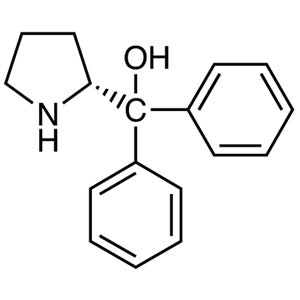
(R)-(+)-alpha,alpha-Diphenyl-2-pyrrolidinemethanol is a chiral compound widely used in asymmetric synthesis to produce molecules with specific optical properties. This reagent plays a crucial role in organic chemistry laboratories, where precise control over stereochemistry is essential. Its unique structure allows it to act as a chiral catalyst or ligand, guiding chemical reactions toward desired enantiomers. This makes it indispensable in applications requiring high selectivity and specificity.
The compound’s chiral nature and molecular complexity make it a preferred choice for researchers aiming to achieve high optical purity in their products. Its two phenyl groups contribute to its distinct optical properties, enhancing its effectiveness in asymmetric reactions. This reagent is particularly favored in scenarios where controlling the stereochemistry of the final product is critical. Its reliability and performance in various synthetic pathways have made it a staple in advanced chemical research.
In Indonesian laboratories, this compound is commonly used in pharmaceutical, biochemical, and material science research. It supports the development of new drugs, bioactive compounds, and functional materials by enabling precise stereochemical control. Its application in both academic and industrial research settings highlights its importance in advancing chemical innovation within the region.
TCI brochures (PDF)
- Asymmetric Organocatalysts 2025-06-12 · p. 7
- Asymmetric Synthesis 2026-03-18 · p. 6
Related TCI products
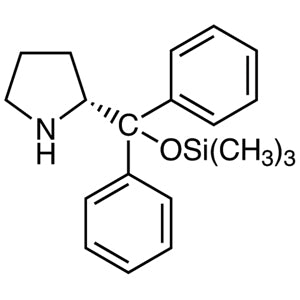
- TCI D3867 943757-71-9 (R)-(+)-alpha,alpha-Diphenyl-2-pyrrolidinemethanol Trimethylsilyl Ether
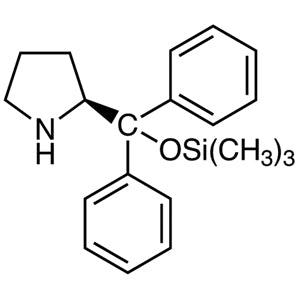
- TCI D3843 848821-58-9 (S)-(-)-alpha,alpha-Diphenyl-2-pyrrolidinemethanol Trimethylsilyl Ether
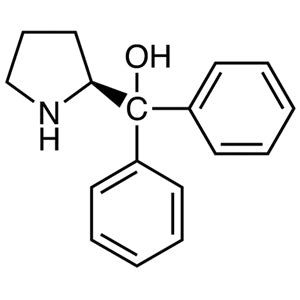
- TCI D2735 112068-01-6 (S)-(-)-alpha,alpha-Diphenyl-2-pyrrolidinemethanol
- TCI B5701 848821-76-1 (S)-alpha,alpha-Bis[3,5-bis(trifluoromethyl)phenyl]-2-pyrrolidinemethanol
- TCI H0784 144119-12-0 (R)-(-)-2-[Hydroxy(diphenyl)methyl]-1-methylpyrrolidine
- TCI H0768 110529-22-1 (S)-(+)-2-[Hydroxy(diphenyl)methyl]-1-methylpyrrolidine
- Asymmetric synthesis in pharmaceutical research to produce enantiomerically pure drug candidates with enhanced therapeutic effects.
- Chiral ligand in catalytic reactions for the selective synthesis of complex organic molecules with defined stereochemistry.
- Optical resolution processes in the production of high-purity chiral compounds used in biotechnology and fine chemical manufacturing.
- Structural analysis in organic chemistry laboratories to study the stereochemical behavior of reaction intermediates.
- Development of chiral materials in material science for applications in sensors, coatings, and advanced polymer technologies.
| Brand | TCI |
|---|---|
| CAS number | 22348-32-9 |
| Molecular formula | — |
| Purity | — |
| Category | Chemistry > Asymmetric Synthesis > Chiral Catalysts, Chiral Ligands, Chiral Reagents |
| Pack sizes | Available in various quantities as per supplier specifications |
| Physical form | Solid or liquid depending on the specific product formulation |
| Storage | Store in a cool, dry place away from light and moisture |
This compound should be stored in a cool, dry environment, away from direct sunlight and sources of heat. It is recommended to use airtight containers to prevent moisture absorption and contamination. Due to its chiral nature, it is important to maintain the integrity of the compound during handling to ensure consistent performance in synthetic reactions. Proper labeling and storage conditions are essential to preserve its chemical stability and effectiveness. Laboratory personnel should wear appropriate personal protective equipment when handling this material to ensure safety and compliance with standard chemical handling protocols.
—
Produk Terkait
-
(R)-(+)-alpha,alpha-Diphenyl-2-pyrrolidinemethanolTrimethylsilylEther TCI D3867
Regular price From Rp 3.419.850,00Regular price -
(S)-(-)-alpha,alpha-Diphenyl-2-pyrrolidinemethanolTrimethylsilylEther TCI D3843
Regular price From Rp 3.949.050,00Regular price -
(S)-(-)-alpha,alpha-Diphenyl-2-pyrrolidinemethanol TCI D2735
Regular price From Rp 1.644.300,00Regular price -
(S)-alpha,alpha-Bis[3,5-bis(trifluoromethyl)phenyl]-2-pyrrolidinemethanol TCI B5701
Regular price Rp 3.155.250,00Regular price -
(R)-(-)-2-[Hydroxy(diphenyl)methyl]-1-methylpyrrolidine TCI H0784
Regular price From Rp 1.193.850,00Regular price -
(S)-(+)-2-[Hydroxy(diphenyl)methyl]-1-methylpyrrolidine TCI H0768
Regular price From Rp 1.220.100,00Regular price -
(+)-4,5-Bis[hydroxy(diphenyl)methyl]-2,2-dimethyl-1,3-dioxolane TCI B2048
Regular price From Rp 1.829.100,00Regular price -
(-)-4,5-Bis[hydroxy(diphenyl)methyl]-2,2-dimethyl-1,3-dioxolane TCI B1614
Regular price From Rp 1.087.800,00Regular price
![(S)-alpha,alpha-Bis[3,5-bis(trifluoromethyl)phenyl]-2-pyrrolidinemethanol (CAS 848821-76-1) - TCI B5701 - AMI Scientific](http://amiscientific.com/cdn/shop/files/TCI2510B5701.jpg?v=1767092687&width=533)
![(R)-(-)-2-[Hydroxy(diphenyl)methyl]-1-methylpyrrolidine (CAS 144119-12-0) - TCI H0784 - AMI Scientific](http://amiscientific.com/cdn/shop/files/TCI2510H0784.jpg?v=1767116984&width=533)
![(S)-(+)-2-[Hydroxy(diphenyl)methyl]-1-methylpyrrolidine (CAS 110529-22-1) - TCI H0768 - AMI Scientific](http://amiscientific.com/cdn/shop/files/TCI2510H0768.jpg?v=1767116955&width=533)
![93379-49-8 (+)-4,5-Bis[hydroxy(diphenyl)methyl]-2,2-dimethyl-1,3-dioxolane - AMI Scientific](http://amiscientific.com/cdn/shop/files/TCI2510B2048_ca66ec29-76e5-43e7-9f7b-9d16d3c27d2d.jpg?v=1767330617&width=533)
![93379-48-7 (-)-4,5-Bis[hydroxy(diphenyl)methyl]-2,2-dimethyl-1,3-dioxolane - AMI Scientific](http://amiscientific.com/cdn/shop/files/TCI2510B1614_834fd19e-0321-4868-b028-1261dabc7fec.jpg?v=1767327573&width=533)