Bis(8-quinolinolato)zinc(II) Hydrate (TCI B1678) is an organic compound widely used in laboratory research, particularly in the field of electronic materials. This compound plays a crucial role in the development of Organic Light-Emitting Diodes (OLEDs), where it serves as an emissive layer material. Its unique chemical structure enables it to emit light through the recombination of electrons and holes, making it essential for the performance of OLED devices. In the laboratory, this compound is used to study the optical and electrical properties of OLED materials, contributing to advancements in display technology and energy-efficient lighting solutions.
The compound is preferred due to its excellent luminescent properties and thermal stability. Its ability to emit bright, stable light under various conditions makes it a reliable choice for researchers working on OLED development. Additionally, its chemical structure, which includes a zinc ion bonded to two 8-quinolinolato groups, provides enhanced structural integrity, improving its performance in laboratory applications. The compound’s resistance to degradation ensures consistent results in experiments, making it a valuable material for long-term studies.
In Indonesian laboratories, Bis(8-quinolinolato)zinc(II) Hydrate is commonly used by researchers in material science, electronics, and energy technology. It supports studies on light emission efficiency, material stability, and the development of next-generation OLED devices. Its application is widespread in both academic and industrial research settings, contributing to the growth of advanced materials in Indonesia’s scientific community.
TCI brochures (PDF)
- Organic Light-Emitting Diode (OLED) Materials 2026-08-18 · p. 7
Related TCI products
- TCI T2238 2085-33-8 Tris(8-quinolinolato)aluminum (purified by sublimation)
- TCI T1527 2085-33-8 Tris(8-quinolinolato)aluminum
- TCI Q0100 25387-93-3 (8-Quinolinolato)lithium
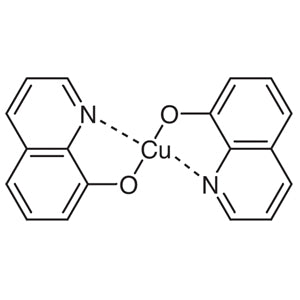
- TCI B3834 10380-28-6 Bis(8-quinolinolato)copper(II) (purified by sublimation)
- TCI B1677 10380-28-6 Bis(8-quinolinolato)copper(II)
- TCI Q0094 580-18-7 3-Quinolinol
- OLED Device Development: This compound is ideal for creating emissive layers in OLEDs due to its luminescent properties and stability.
- Material Stability Testing: It is used to evaluate the thermal and optical stability of organic materials under different conditions.
- Light Emission Efficiency Research: Its ability to emit bright light makes it suitable for studying the efficiency of light emission in OLEDs.
- Electronic Material Characterization: Researchers use it to analyze the electrical and optical behavior of organic compounds in electronic devices.
- Energy-Efficient Lighting Innovation: It supports the development of energy-efficient lighting solutions by optimizing light output and material performance.
| Brand | TCI |
|---|---|
| CAS number | 13978-85-3 |
| Molecular formula | — |
| Purity | — |
| Category | Materials Science > Electronic Materials > Organic Light-Emitting Diode (OLED) Materials |
| Pack sizes | Available in various quantities as per standard laboratory supply |
| Physical form | Solid powder |
| Storage | Store in a cool, dry place away from direct sunlight and moisture |
This compound should be stored in a cool, dry environment to maintain its chemical integrity and prevent degradation. It is recommended to use airtight containers to protect it from moisture and air exposure. Laboratory personnel should handle it with care, using appropriate personal protective equipment such as gloves and safety goggles. Due to its organic nature, it should be kept away from heat sources and incompatible materials. Regular monitoring of storage conditions ensures the material remains suitable for use in research applications. Proper labeling and storage practices help maintain safety and efficiency in laboratory operations.
—
Produk Terkait
-
Tris(8-quinolinolato)aluminum(purifiedbysublimation) TCI T2238
Regular price Rp 5.460.000,00Regular priceRp 3.833.550,00Sale price Rp 5.460.000,00 -
Tris(8-quinolinolato)aluminum TCI T1527
Regular price From Rp 822.150,00Regular priceRp 590.100,00Sale price From Rp 822.150,00 -
(8-Quinolinolato)lithium TCI Q0100
Regular price From Rp 1.643.250,00Regular priceRp 1.164.450,00Sale price From Rp 1.643.250,00 -
Bis(8-quinolinolato)copper(II)(purifiedbysublimation) TCI B3834
Regular price Rp 3.340.050,00Regular priceRp 2.350.950,00Sale price Rp 3.340.050,00 -
Bis(8-quinolinolato)copper(II) TCI B1677
Regular price Rp 1.618.050,00Regular priceRp 1.146.600,00Sale price Rp 1.618.050,00 -
3-Quinolinol TCI Q0094
Regular price From Rp 1.220.100,00Regular priceRp 868.350,00Sale price From Rp 1.220.100,00 -
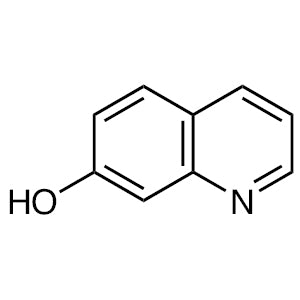
7-Quinolinol TCI Q0084
Regular price Rp 3.074.400,00Regular priceRp 2.165.100,00Sale price Rp 3.074.400,00 -
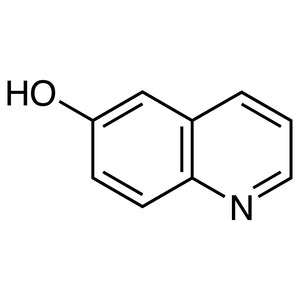
6-Quinolinol TCI Q0060
Regular price From Rp 1.723.050,00Regular priceRp 1.220.100,00Sale price From Rp 1.723.050,00