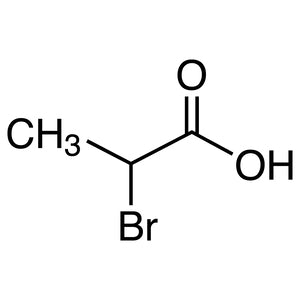
(S)-(-)-2-Bromopropionic Acid is a chiral compound widely used in asymmetric synthesis, playing a crucial role in the creation of molecules with specific stereochemistry. This compound serves as a chiral building block, enabling the synthesis of various biologically active compounds. Its importance in chemical laboratories lies in its ability to provide precise control over the stereochemical outcome of reactions, which is essential in pharmaceutical and organic chemistry research. As a key component in the development of new drugs, it supports the design of molecules with desired biological activity and selectivity.
The unique properties of (S)-(-)-2-Bromopropionic Acid make it a preferred choice for chemists. Its chiral configuration, specifically the (S)-(-) enantiomer, ensures that it can participate in enantioselective reactions, leading to the formation of specific stereoisomers. The compound's stability and reactivity allow it to undergo a variety of chemical transformations, including nucleophilic substitution and carbon-carbon bond formation. These characteristics make it ideal for applications requiring controlled stereochemistry, such as the synthesis of complex organic molecules.
In Indonesian laboratories, (S)-(-)-2-Bromopropionic Acid is commonly used in organic chemistry and pharmacological research. It is a valuable tool for scientists working on drug development and the study of biological activity. Its role in creating chiral compounds with specific functions supports the advancement of scientific knowledge and the discovery of new therapeutic agents. Researchers in various institutions rely on this compound to achieve precise chemical outcomes in their experiments.
TCI brochures (PDF)
- Chiral Building Blocks 2025-04-14 · p. 12
- Asymmetric Synthesis: This compound is ideal for creating chiral molecules with high stereocontrol, essential in drug development and organic chemistry.
- Pharmaceutical Research: Its use in synthesizing biologically active compounds supports the development of new therapeutic agents.
- Organic Chemistry Studies: It enables the preparation of complex molecules with specific stereochemical configurations, enhancing research accuracy.
- Chiral Compound Development: The compound's chiral nature allows for the creation of enantiomerically pure substances, crucial in pharmaceutical applications.
- Biomedical Investigations: It plays a role in studying the biological activity of chiral compounds, aiding in understanding molecular interactions.
| Brand | TCI |
|---|---|
| CAS number | 32644-15-8 |
| Molecular formula | — |
| Purity | — |
| Category | Chemistry > Asymmetric Synthesis > Chiral Building Blocks |
| Pack sizes | Available in various quantities as per standard chemical supply practices |
| Physical form | Solid, typically in crystalline or powder form |
| Storage | Store in a cool, dry place away from light and moisture |
(S)-(-)-2-Bromopropionic Acid should be stored in a cool, dry environment, away from direct light and moisture. It is recommended to keep the compound in a sealed container to prevent exposure to air and humidity. Proper ventilation is essential when handling this material to minimize inhalation risks. Due to its chemical nature, it should be stored separately from incompatible substances such as strong bases or reducing agents. Laboratory personnel should wear appropriate personal protective equipment, including gloves and safety goggles, when handling this compound. Regular inspection of storage conditions is advised to ensure the compound remains stable and safe for use.
—
Produk Terkait
-
(R)-(+)-2-BromopropionicAcid TCI B1756
Regular price From Rp 2.702.700,00Regular priceRp 1.905.750,00Sale price From Rp 2.702.700,00 -
3-BromopropionicAcid TCI B0645
Regular price From Rp 769.650,00Regular priceRp 553.350,00Sale price From Rp 769.650,00 -
2-BromopropionicAcid TCI B0644
Regular price From Rp 662.550,00Regular priceRp 478.800,00Sale price From Rp 662.550,00 -
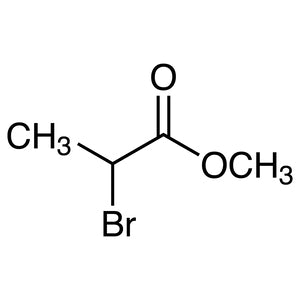
Methyl2-Bromopropionate TCI B1460
Regular price From Rp 822.150,00Regular priceRp 590.100,00Sale price From Rp 822.150,00 -
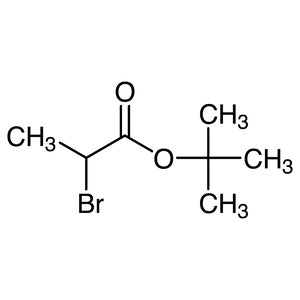
tert-Butyl2-Bromopropionate TCI B1277
Regular price From Rp 3.365.250,00Regular priceRp 2.368.800,00Sale price From Rp 3.365.250,00 -
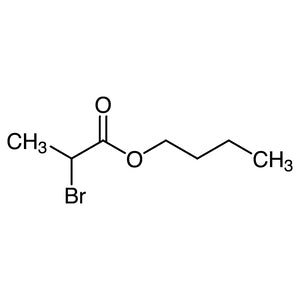
Butyl2-Bromopropionate TCI B1031
Regular price Rp 795.900,00Regular priceRp 572.250,00Sale price Rp 795.900,00 -
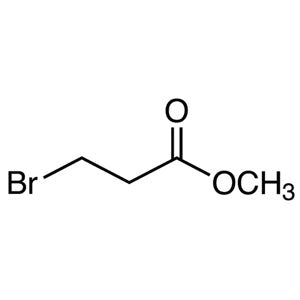
Methyl3-Bromopropionate TCI B0648
Regular price From Rp 1.538.250,00Regular priceRp 1.090.950,00Sale price From Rp 1.538.250,00 -
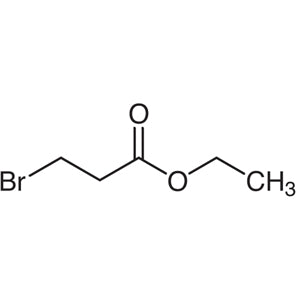
Ethyl3-Bromopropionate TCI B0647
Regular price From Rp 1.563.450,00Regular priceRp 1.108.800,00Sale price From Rp 1.563.450,00