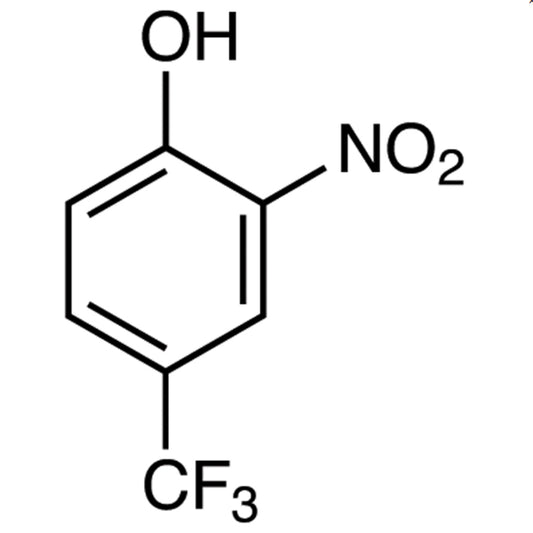
3,5-Bis(trifluoromethyl)phenol is a chemical compound widely used as a building block in the synthesis of organofluorine compounds. This compound plays a crucial role in laboratory settings where fluorine substitution on aromatic structures is required. Its unique molecular structure makes it an essential component in various chemical reactions, particularly those involving the introduction of fluorine atoms into organic frameworks. Due to its stability and reactivity, it is a key reagent in synthetic chemistry, supporting the development of complex molecules with tailored properties.
The compound’s stability and reactivity are key factors that make it a preferred choice in chemical research. Its fluorinated structure contributes to enhanced thermal stability and controlled reactivity, which are highly desirable in synthetic applications. These characteristics allow chemists to design molecules with specific functional properties, such as improved solubility or biological activity. The presence of multiple fluorine atoms also enhances the compound’s chemical inertness, making it suitable for a wide range of chemical transformations.
In Indonesian laboratories, 3,5-Bis(trifluoromethyl)phenol is commonly used by researchers in organic chemistry and pharmaceutical fields. It is particularly relevant in the development of bioactive compounds and specialty chemicals. Its availability in the local market supports ongoing research efforts in both academic and industrial settings, ensuring that scientists have access to this essential reagent for their experiments.
Related TCI products
- TCI T1983 2787-79-3 2,3,5,6-Tetrafluoro-4-(trifluoromethyl)phenol
- TCI B4494 320-49-0 4-Bromo-3-(trifluoromethyl)phenol
- TCI B4493 50824-04-9 4-Bromo-2-(trifluoromethyl)phenol
- TCI B4492 81107-97-3 2-Bromo-4-(trifluoromethyl)phenol
- TCI N0779 400-99-7 2-Nitro-4-(trifluoromethyl)phenol
- TCI N0279 88-30-2 4-Nitro-3-(trifluoromethyl)phenol
- Organic synthesis applications benefit from this compound due to its ability to introduce fluorine atoms into aromatic structures, enhancing molecular stability and reactivity.
- Pharmaceutical research utilizes this material to develop bioactive compounds with improved pharmacological properties and enhanced drug efficacy.
- Industrial chemical production relies on this compound for the creation of specialty chemicals with unique functional characteristics and high performance.
- Material science research employs this reagent to synthesize fluorinated polymers and advanced materials with tailored thermal and chemical properties.
- Environmental chemistry studies use this compound to investigate the behavior and fate of fluorinated compounds in various environmental matrices.
| Brand | TCI |
|---|---|
| CAS number | 349-58-6 |
| Molecular formula | — |
| Purity | — |
| Category | Chemistry > Building Blocks > Fluorinated Building Blocks |
| Pack sizes | Available in various quantities as per supplier specifications |
| Physical form | Solid, crystalline appearance |
| Storage | Store in a cool, dry, and well-ventilated area away from moisture and direct sunlight |
This compound should be stored in a cool, dry, and well-ventilated area to prevent degradation. It is recommended to use airtight containers made of materials compatible with fluorinated compounds, such as glass or high-density polyethylene. Due to its chemical stability, it does not require refrigeration but should be protected from moisture and light. Laboratory personnel should handle it with care, using appropriate personal protective equipment to ensure safety. Regular monitoring of storage conditions is advised to maintain the compound’s integrity and effectiveness in research applications.
—
Produk Terkait
-
2,3,5,6-Tetrafluoro-4-(trifluoromethyl)phenol TCI T1983
Regular price Rp 2.306.850,00Regular priceRp 1.612.800,00Sale price Rp 2.306.850,00 -
4-Bromo-3-(trifluoromethyl)phenol TCI B4494
Regular price From Rp 848.400,00Regular priceRp 593.250,00Sale price From Rp 848.400,00 -
4-Bromo-2-(trifluoromethyl)phenol TCI B4493
Regular price From Rp 1.908.900,00Regular priceRp 1.334.550,00Sale price From Rp 1.908.900,00 -
2-Bromo-4-(trifluoromethyl)phenol TCI B4492
Regular price From Rp 955.500,00Regular priceRp 667.800,00Sale price From Rp 955.500,00 -
2-Nitro-4-(trifluoromethyl)phenol TCI N0779
Regular price From Rp 743.400,00Regular priceRp 519.750,00Sale price From Rp 743.400,00 -
4-Nitro-3-(trifluoromethyl)phenol TCI N0279
Regular price From Rp 2.466.450,00Regular priceRp 1.724.100,00Sale price From Rp 2.466.450,00 -
2-Fluoro-5-(trifluoromethyl)phenol TCI F0780
Regular price From Rp 980.700,00Regular priceRp 685.650,00Sale price From Rp 980.700,00 -
4-Fluoro-3-(trifluoromethyl)phenol TCI F0754
Regular price From Rp 1.378.650,00Regular priceRp 963.900,00Sale price From Rp 1.378.650,00