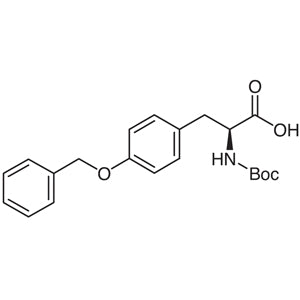
N-Benzoyl-L-tyrosine is a chemical compound widely used in chemical and biochemical experiments, particularly within the field of peptide chemistry. It plays a crucial role in laboratory settings where researchers are engaged in the synthesis of bioactive compounds and the study of peptide and protein interactions. This compound is essential for various synthetic processes due to its structural versatility and chemical reactivity. Its ability to participate in substitution and peptidation reactions makes it a valuable tool for chemists and biochemists working on complex molecular structures.
The compound is preferred for its stability and reactivity, which allow it to function effectively as a substrate or intermediate in chemical reactions. Its chemical properties enable it to be easily manipulated in synthetic pathways, making it a reliable choice for researchers. Additionally, its solubility in organic solvents such as ethyl acetate and acetone enhances its usability in a variety of experimental conditions. These characteristics contribute to its widespread use in both academic and industrial laboratory environments.
In Indonesian laboratories, N-Benzoyl-L-tyrosine is commonly used in research related to pure chemistry, biochemistry, and pharmacology. It is frequently found in studies aimed at developing new compounds and understanding molecular interactions. Many research institutions and universities in Indonesia rely on this compound for its reliability and effectiveness in supporting scientific investigations.
TCI brochures (PDF)
- Amino Acids and Peptide Synthesis Reagents 2025-08-14 · p. 16
Related TCI products
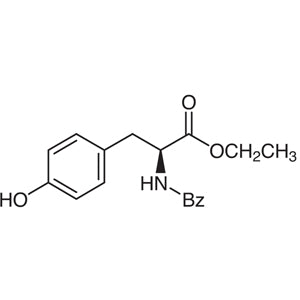
- TCI B1140 3483-82-7 N-Benzoyl-L-tyrosine Ethyl Ester
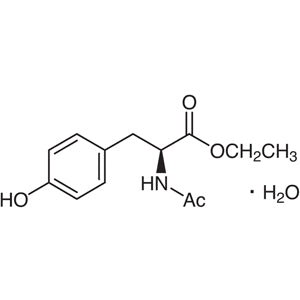
- TCI A0118 36546-50-6 N-Acetyl-L-tyrosine Ethyl Ester Monohydrate
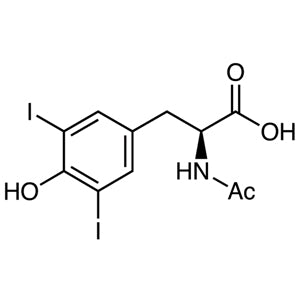
- TCI A0087 1027-28-7 N-Acetyl-3,5-diiodo-L-tyrosine
- TCI B3485 47375-34-8 N-(tert-Butoxycarbonyl)-O-tert-butyl-L-tyrosine
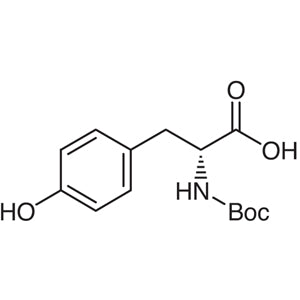
- TCI B2963 70642-86-3 N-(tert-Butoxycarbonyl)-D-tyrosine
- TCI B1640 3978-80-1 N-(tert-Butoxycarbonyl)-L-tyrosine
- Peptide Synthesis: N-Benzoyl-L-tyrosine is ideal for peptide synthesis due to its ability to participate in peptidation reactions, making it a key component in the creation of bioactive peptides.
- Biochemical Research: Its chemical stability and reactivity make it suitable for biochemical experiments involving protein and peptide interactions.
- Organic Chemistry Experiments: The compound’s solubility in organic solvents allows it to be used in a wide range of organic chemistry reactions.
- Drug Development Studies: It is often used in the synthesis of bioactive compounds, supporting research in pharmaceutical and pharmacological applications.
- Analytical Chemistry: Its predictable chemical behavior makes it useful in analytical procedures for identifying and characterizing complex molecular structures.
| Brand | TCI |
|---|---|
| CAS number | 2566-23-6 |
| Molecular formula | — |
| Purity | — |
| Category | Chemistry > Chemical Biology > Peptide Chemistry |
| Pack sizes | Available in various quantities as per supplier specifications |
| Physical form | Solid |
| Storage | Store in a cool, dry place away from light |
N-Benzoyl-L-tyrosine should be stored in a cool, dry place, away from direct light to maintain its chemical integrity. It is recommended to use airtight containers to prevent moisture absorption and contamination. Due to its chemical nature, it should be handled with appropriate personal protective equipment, such as gloves and safety goggles, to ensure laboratory safety. Proper ventilation is also important when working with this compound to minimize exposure. It is essential to follow standard laboratory safety protocols to prevent any potential hazards during handling and use.
—
Product Categories
Produk Terkait
-
N-Benzoyl-L-tyrosineEthylEster TCI B1140
Regular price Rp 557.550,00Regular priceRp 405.300,00Sale price Rp 557.550,00 -
N-Acetyl-L-tyrosineEthylEsterMonohydrate TCI A0118
Regular price From Rp 662.550,00Regular priceRp 478.800,00Sale price From Rp 662.550,00 -
N-Acetyl-3,5-diiodo-L-tyrosine TCI A0087
Regular price Rp 1.060.500,00Regular priceRp 757.050,00Sale price Rp 1.060.500,00 -
N-(tert-Butoxycarbonyl)-O-tert-butyl-L-tyrosine TCI B3485
Regular price From Rp 1.087.800,00Regular priceRp 775.950,00Sale price From Rp 1.087.800,00 -
N-(tert-Butoxycarbonyl)-D-tyrosine TCI B2963
Regular price From Rp 1.696.800,00Regular priceRp 1.202.250,00Sale price From Rp 1.696.800,00 -
N-(tert-Butoxycarbonyl)-L-tyrosine TCI B1640
Regular price From Rp 955.500,00Regular priceRp 683.550,00Sale price From Rp 955.500,00 -
N-(tert-Butoxycarbonyl)-O-benzyl-L-tyrosine TCI B1631
Regular price From Rp 900.900,00Regular priceRp 645.750,00Sale price From Rp 900.900,00 -
N-Acetyl-L-tyrosine TCI A1409
Regular price Rp 1.220.100,00Regular priceRp 868.350,00Sale price Rp 1.220.100,00