(2-Benzothiazolylthio)acetic Acid is a chemical compound widely used in laboratory settings for the synthesis of heterocyclic compounds and their derivatives. As a key building block in organic chemistry, it plays a crucial role in the development of complex molecular structures. This compound is particularly valued for its ability to act as a thiocyanate donor or a substrate in substitution reactions, making it indispensable in synthetic pathways that require functional group manipulation. Its unique molecular structure, combining a carboxylic acid group with a thiocyanate moiety derived from 2-benzothiazol, contributes to its versatility in chemical transformations.
The chemical properties and reactivity of (2-Benzothiazolylthio)acetic Acid make it a preferred choice in organic synthesis. Its high reactivity and structural complexity enable it to participate in a wide range of chemical reactions, including nucleophilic substitutions and condensation reactions. The presence of both polar and aromatic functionalities enhances its compatibility with various reaction conditions, allowing chemists to tailor synthetic routes with precision. This compound’s ability to modify heterocyclic frameworks makes it a valuable tool in the creation of bioactive molecules and advanced materials.
In Indonesian laboratories, (2-Benzothiazolylthio)acetic Acid is commonly used in organic chemistry research, especially in the synthesis of heterocyclic compounds with applications in pharmacology and chemical materials. It is a staple in academic and research institutions where accuracy and precision in synthetic processes are essential. Its role in complex molecular synthesis underscores its importance in both academic and industrial chemical research.
Related TCI products
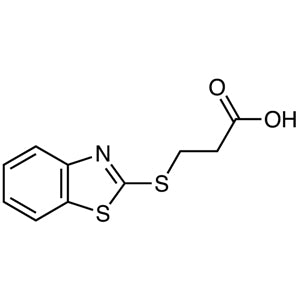
- TCI B1942 4767-00-4 3-(2-Benzothiazolylthio)propionic Acid
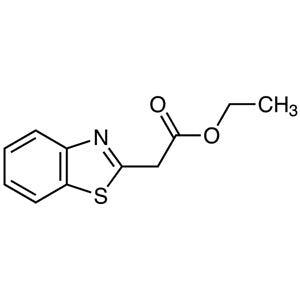
- TCI B2168 29182-42-1 Ethyl 2-(2-Benzothiazolyl)acetate
- TCI T2941 652-37-9 Theophylline-7-acetic Acid
- TCI T2737 21743-75-9 1H-Tetrazole-5-acetic Acid
- TCI B2912 4865-84-3 1,2-Benzisoxazole-3-acetic Acid
- TCI A2478 65872-41-5 (Z)-2-(2-Amino-4-thiazolyl)-2-(methoxyimino)acetic Acid
- Organic synthesis of heterocyclic compounds due to its reactivity and structural versatility.
- Development of pharmaceuticals and bioactive molecules through functional group modification.
- Creation of advanced chemical materials by modifying heterocyclic frameworks.
- Research in medicinal chemistry for the design of novel therapeutic agents.
- Academic studies focused on synthetic methodologies and molecular structure manipulation.
| Brand | TCI |
|---|---|
| CAS number | 6295-57-4 |
| Molecular formula | — |
| Purity | — |
| Category | Chemistry > Building Blocks > Heterocyclic Building Blocks |
| Pack sizes | Available in various quantities as per supplier specifications |
| Physical form | Solid or powder, depending on the specific product variant |
| Storage | Store in a cool, dry place away from light and moisture |
This compound should be stored in a cool, dry environment, away from direct sunlight and moisture. It is recommended to use airtight containers to prevent exposure to air and humidity. Due to its chemical reactivity, it should be handled with appropriate personal protective equipment, including gloves and safety goggles. Proper ventilation is essential when working with this material to minimize inhalation risks. It is important to keep the substance away from incompatible materials such as strong oxidizers or acids. Regular monitoring of storage conditions ensures the stability and integrity of the compound during long-term use.
—
Produk Terkait
-
3-(2-Benzothiazolylthio)propionicAcid TCI B1942
Regular price From Rp 1.008.000,00Regular priceRp 720.300,00Sale price From Rp 1.008.000,00 -
Ethyl2-(2-Benzothiazolyl)acetate TCI B2168
Regular price From Rp 1.749.300,00Regular priceRp 1.239.000,00Sale price From Rp 1.749.300,00 -
Theophylline-7-aceticAcid TCI T2941
Regular price Rp 1.087.800,00Regular priceRp 775.950,00Sale price Rp 1.087.800,00 -
1H-Tetrazole-5-aceticAcid TCI T2737
Regular price From Rp 5.672.100,00Regular priceRp 3.981.600,00Sale price From Rp 5.672.100,00 -
1,2-Benzisoxazole-3-aceticAcid TCI B2912
Regular price Rp 2.835.000,00Regular priceRp 1.998.150,00Sale price Rp 2.835.000,00 -
(Z)-2-(2-Amino-4-thiazolyl)-2-(methoxyimino)aceticAcid TCI A2478
Regular price From Rp 742.350,00Regular priceRp 534.450,00Sale price From Rp 742.350,00 -
(2-Amino-4-thiazolyl)aceticAcid TCI A0954
Regular price From Rp 1.378.650,00Regular priceRp 979.650,00Sale price From Rp 1.378.650,00 -
Thiophene-3-aceticAcid TCI T1152
Regular price From Rp 1.988.700,00Regular priceRp 1.405.950,00Sale price From Rp 1.988.700,00