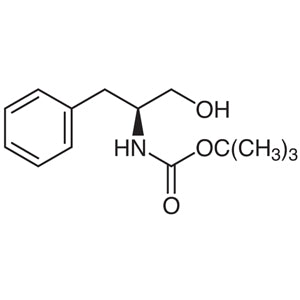
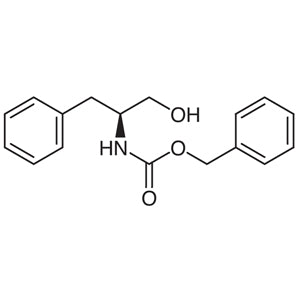
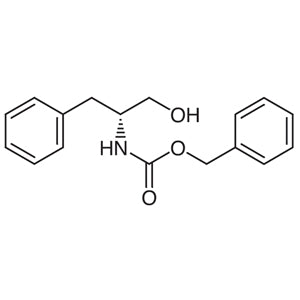
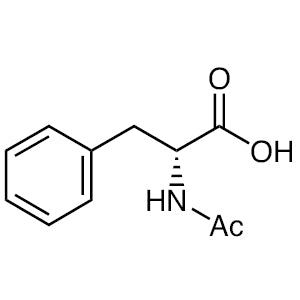
N-(tert-Butoxycarbonyl)-D-phenylalaninol is a chiral building block widely used in asymmetric synthesis to construct complex molecular structures. This compound plays a crucial role in the development of pharmaceuticals and specialty chemicals, particularly in the synthesis of optically active compounds. Its chiral nature allows it to participate in enantioselective reactions, making it an essential component in the creation of drugs with specific biological activity. It is commonly used in chemical and pharmaceutical laboratories for its ability to serve as a precursor in various synthetic pathways.
The compound is valued for its stable molecular structure and solubility in organic solvents, which facilitates its use in diverse laboratory conditions. Its ability to maintain its stereochemical integrity during chemical transformations ensures reliable results in synthetic processes. Additionally, its compatibility with a range of reagents and reaction conditions makes it a versatile tool for chemists. The compound’s high purity and consistent quality further enhance its reliability in research and industrial applications.
In Indonesian laboratories, N-(tert-Butoxycarbonyl)-D-phenylalaninol is extensively used in scientific research and pharmaceutical development. It is a key reagent in the study of asymmetric synthesis and the design of chiral molecules. Researchers and institutions rely on this compound to advance their understanding of molecular structure and function, contributing to the development of new drugs and chemical products.
TCI brochures (PDF)
- Chiral Building Blocks 2025-04-14 · p. 7
Related TCI products
- TCI B2604 66605-57-0 N-(tert-Butoxycarbonyl)-L-phenylalaninol
- TCI C1610 6372-14-1 N-Carbobenzoxy-L-phenylalaninol
- TCI C1609 58917-85-4 N-Carbobenzoxy-D-phenylalaninol
- TCI B3272 117049-14-6 N-(tert-Butoxycarbonyl)-L-2-phenylglycinol
- TCI B3270 102089-74-7 N-(tert-Butoxycarbonyl)-D-2-phenylglycinol
- TCI A0105 10172-89-1 N-Acetyl-D-phenylalanine
- Asymmetric Synthesis: This compound is ideal for creating chiral molecules with high enantioselectivity, essential in pharmaceutical research.
- Pharmaceutical Development: It supports the synthesis of optically active compounds, crucial for drug formulation and efficacy.
- Organic Chemistry Research: Its stability and solubility make it a preferred choice for complex molecular transformations in academic studies.
- Chiral Compound Synthesis: It serves as a building block for the preparation of various chiral intermediates in chemical processes.
- Drug Discovery Programs: It is used in the development of new therapeutic agents requiring precise stereochemical control.
| Brand | TCI |
|---|---|
| CAS number | 106454-69-7 |
| Molecular formula | — |
| Purity | — |
| Category | Chemistry > Asymmetric Synthesis > Chiral Building Blocks |
| Pack sizes | Available in various quantities as per supplier specifications |
| Physical form | Solid |
| Storage | Store in a cool, dry place away from moisture and direct sunlight |
This compound should be stored in a cool, dry environment to maintain its stability and prevent degradation. It is recommended to use airtight containers to protect it from moisture and air exposure. Due to its chemical nature, it should be handled with appropriate personal protective equipment such as gloves and safety goggles. It is important to store it away from incompatible substances to avoid any potential chemical reactions. Proper labeling of containers ensures safe handling and easy identification. Regular monitoring of storage conditions helps maintain the compound’s integrity and effectiveness in laboratory applications.
—
Product Categories
- Asymmetric SynthesisChiral Building BlocksChiral Non-Heterocyclic Building Blocks
- Building BlocksChiral Building BlocksChiral Non-Heterocyclic Building Blocks
- Chemical BiologyPeptide ChemistryAmino Acid Derivatives [Peptide Chemistry]
- Pharmaceutical Development and Drug Discovery Research ReagentsPeptide ChemistryAmino Acid Derivatives [Peptide Chemistry]
Produk Terkait
-
N-(tert-Butoxycarbonyl)-L-phenylalaninol TCI B2604
Regular price Rp 1.272.600,00Regular priceRp 905.100,00Sale price Rp 1.272.600,00 -
N-Carbobenzoxy-L-phenylalaninol TCI C1610
Regular price Rp 557.550,00Regular priceRp 405.300,00Sale price Rp 557.550,00 -
N-Carbobenzoxy-D-phenylalaninol TCI C1609
Regular price From Rp 822.150,00Regular priceRp 590.100,00Sale price From Rp 822.150,00 -
N-(tert-Butoxycarbonyl)-L-2-phenylglycinol TCI B3272
Regular price From Rp 557.550,00Regular priceRp 405.300,00Sale price From Rp 557.550,00 -
N-(tert-Butoxycarbonyl)-D-2-phenylglycinol TCI B3270
Regular price From Rp 742.350,00Regular priceRp 534.450,00Sale price From Rp 742.350,00 -
N-Acetyl-D-phenylalanine TCI A0105
Regular price From Rp 1.140.300,00Regular priceRp 812.700,00Sale price From Rp 1.140.300,00 -
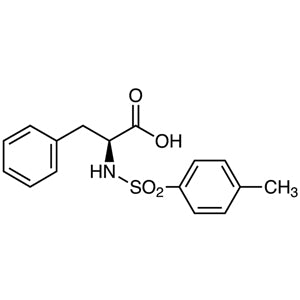
N-(p-Toluenesulfonyl)-L-phenylalanine TCI T1443
Regular price From Rp 900.900,00Regular priceRp 645.750,00Sale price From Rp 900.900,00 -
N-(tert-Butoxycarbonyl)-4-methoxy-D-phenylalanine TCI B5350
Regular price From Rp 1.723.050,00Regular priceRp 1.220.100,00Sale price From Rp 1.723.050,00