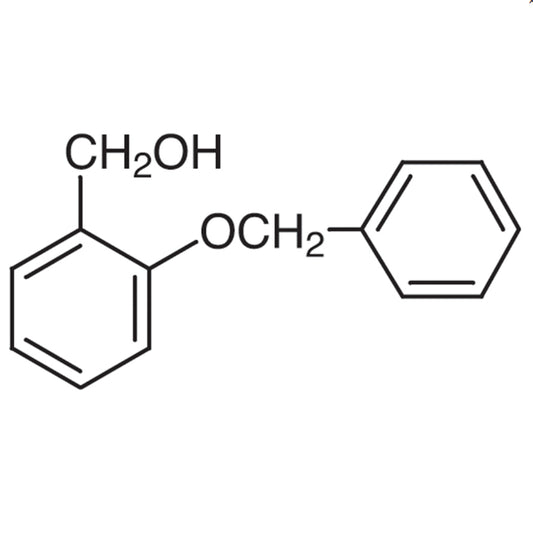
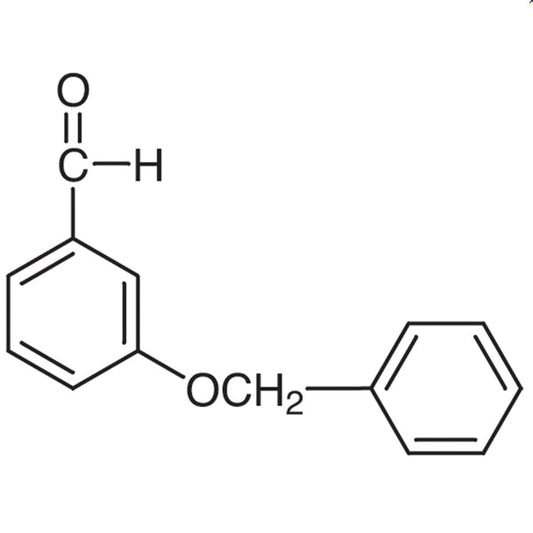
1,3-Dibenzyloxybenzene is an organic compound widely used in chemical reactions for the synthesis of complex molecules. As a building block, it serves as a fundamental component in the development of heterocyclic compounds and other structurally intricate substances. Its role in the laboratory is critical for researchers aiming to modify aromatic chains with precision. This compound is particularly valuable in organic chemistry research due to its stability and versatility in participating in various reaction types, including Friedel-Crafts, substitution, and coupling reactions.
The compound's non-heterocyclic nature and stable molecular structure make it a preferred choice for controlled chemical synthesis. Its moderate reactivity allows for precise manipulation without excessive side reactions, making it ideal for applications requiring fine-tuned chemical modifications. The compound's ability to undergo selective functionalization further enhances its utility in synthetic pathways. These properties make it a reliable and consistent material for laboratory use, especially in environments where accuracy and reproducibility are paramount.
In Indonesian laboratories, 1,3-Dibenzyloxybenzene is commonly used in organic chemistry research, particularly in academic and research institutions. It is a key reagent in projects involving aromatic structure modification and the synthesis of complex organic compounds. Its availability and reliability have made it a preferred choice for researchers seeking a stable and versatile building block for their synthetic work.
- Organic synthesis projects benefit from this compound due to its stability and ability to undergo selective functionalization.
- It is ideal for the development of heterocyclic compounds, as it provides a reliable aromatic core for further modification.
- In academic research settings, it supports the teaching and practice of advanced synthetic techniques in organic chemistry.
- It is used in the preparation of complex molecules requiring controlled substitution and coupling reactions.
- Its non-reactive nature makes it suitable for use in controlled environments where precision and reproducibility are essential.
| Brand | TCI |
|---|---|
| CAS number | 3769-42-4 |
| Molecular formula | — |
| Purity | — |
| Category | Chemistry > Building Blocks > Non-Heterocyclic Building Blocks |
| Pack sizes | Available in various quantities as per standard laboratory supply |
| Physical form | Solid |
| Storage | Store in a cool, dry place away from direct sunlight |
This compound should be stored in a cool, dry environment to maintain its stability and prevent degradation. It is recommended to use airtight containers to minimize exposure to moisture and air, which can affect its chemical integrity. As a solid, it should be kept in a well-ventilated area to ensure safe handling. Laboratory personnel should wear appropriate personal protective equipment, such as gloves and safety goggles, when handling the material. It is important to avoid direct contact with skin and eyes, and to ensure proper disposal according to local regulations. Regular inspection of storage conditions is advised to maintain the quality and safety of the compound in the laboratory setting.
—
Produk Terkait
-
1,4-Dibenzyloxybenzene TCI D0159
Regular price From Rp 1.538.250,00Regular priceRp 1.075.200,00Sale price From Rp 1.538.250,00 -
3,5-DibenzyloxybenzylAlcohol TCI D2651
Regular price From Rp 1.881.600,00Regular priceRp 1.331.400,00Sale price From Rp 1.881.600,00 -
3-BenzyloxybenzylAlcohol TCI B3857
Regular price Rp 2.227.050,00Regular priceRp 1.572.900,00Sale price Rp 2.227.050,00 -
2-BenzyloxybenzylAlcohol TCI B2943
Regular price From Rp 3.074.400,00Regular priceRp 2.165.100,00Sale price From Rp 3.074.400,00 -
4-BenzyloxybenzylAlcohol TCI B1602
Regular price From Rp 662.550,00Regular priceRp 478.800,00Sale price From Rp 662.550,00 -
2-BenzyloxybenzoicAcid TCI B4766
Regular price From Rp 1.378.650,00Regular priceRp 979.650,00Sale price From Rp 1.378.650,00 -
3-Benzyloxybenzaldehyde TCI B2400
Regular price Rp 1.856.400,00Regular priceRp 1.297.800,00Sale price Rp 1.856.400,00 -
4-BenzyloxybenzoicAcid TCI B1665
Regular price From Rp 1.538.250,00Regular priceRp 1.090.950,00Sale price From Rp 1.538.250,00