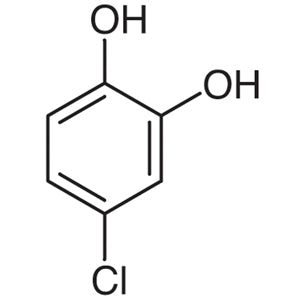
4-Bromocatechol is a chemical compound widely used in laboratory settings for the synthesis of complex molecules. It serves as a key building block in organic chemistry, particularly in the development of heterocyclic compounds and other organic derivatives. Its aromatic structure, with a bromo group at the 4-position, makes it a versatile reagent in various chemical reactions. This compound is commonly employed in substitution reactions and catalytic processes due to its reactivity and stability. Its ability to participate in multiple chemical transformations makes it a valuable tool for researchers aiming to create new compounds or modify molecular structures.
The chemical properties of 4-Bromocatechol, including its aromatic nature and bromo substitution, contribute to its effectiveness in laboratory applications. Its stability under controlled conditions allows it to be used in a variety of synthetic pathways. The compound's reactivity enables it to interact with different reagents, facilitating the formation of complex molecules. These characteristics make it a preferred choice for chemists working on organic synthesis and functional group modifications. Its reliability and consistent performance in chemical reactions further enhance its appeal in research environments.
In Indonesian laboratories, 4-Bromocatechol is frequently used in organic chemistry research, especially in the study of new compound synthesis and molecular structure modification. It is a reliable and accessible material that supports various scientific applications requiring high reactivity and chemical stability. Its solid form simplifies handling and usage, making it a practical choice for laboratory work. Its widespread use in research highlights its importance in advancing chemical studies in Indonesia.
- Organic synthesis of heterocyclic compounds due to its aromatic structure and bromo substitution.
- Catalytic reactions where stable and reactive intermediates are required for complex molecule formation.
- Substitution reactions involving electrophilic reagents for functional group modification.
- Molecular structure modification studies in chemical research for new compound development.
- Chemical reaction testing in laboratory settings requiring high reactivity and consistent performance.
| Brand | TCI |
|---|---|
| CAS number | 17345-77-6 |
| Molecular formula | — |
| Purity | — |
| Category | Chemistry > Building Blocks > Non-Heterocyclic Building Blocks |
| Pack sizes | Available in standard laboratory quantities |
| Physical form | Solid |
| Storage | Store in a cool, dry place away from light and moisture |
4-Bromocatechol should be stored in a cool, dry place, away from light and moisture to maintain its chemical stability. It is recommended to use airtight containers to prevent exposure to air and contaminants. Due to its reactivity, it should be handled with care in a well-ventilated laboratory environment. Proper personal protective equipment, such as gloves and safety goggles, should be worn during handling. The compound should be kept in a secure location to avoid accidental spills or exposure. Regular monitoring of storage conditions ensures the compound remains suitable for use in chemical reactions and research applications.
—
Produk Terkait
-
3-Bromocatechol TCI B3710
Regular price From Rp 1.776.600,00Regular priceRp 1.242.150,00Sale price From Rp 1.776.600,00 -
3,4,5,6-Tetrachlorocatechol TCI T3627
Regular price From Rp 1.829.100,00Regular priceRp 1.278.900,00Sale price From Rp 1.829.100,00 -
3-Chlorocatechol TCI C1246
Regular price Rp 5.539.800,00Regular priceRp 3.873.450,00Sale price Rp 5.539.800,00 -
4-Chlorocatechol TCI C0568
Regular price From Rp 4.213.650,00Regular priceRp 2.946.300,00Sale price From Rp 4.213.650,00 -
3-Methoxycatechol TCI M0524
Regular price From Rp 2.889.600,00Regular priceRp 2.035.950,00Sale price From Rp 2.889.600,00