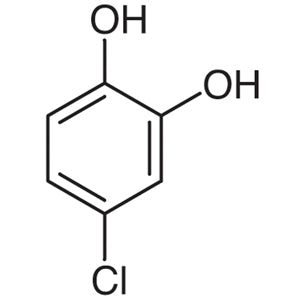
3-Bromocatechol is a chemical compound widely used in laboratory settings for its versatility in organic reactions and synthesis. As a building block in chemical synthesis, it plays a crucial role in creating complex molecules with high reactivity. Its aromatic structure, with a bromo group at the 3-position, makes it a valuable reagent in various synthetic pathways. This compound is essential for researchers aiming to develop new compounds or conduct advanced chemical experiments. Its unique reactivity and structural characteristics make it a key component in many chemical processes.
The compound's stability and reactivity are the main reasons it is preferred in laboratory applications. Its molecular structure allows for efficient participation in substitution and other chemical reactions, making it suitable for a wide range of experimental conditions. The consistent chemical and physical properties ensure reliable results in both academic and industrial research. Additionally, its ability to interact with various reagents enhances its applicability in diverse chemical experiments. These properties make 3-Bromocatechol a reliable and effective choice for organic chemists.
In Indonesian laboratories, 3-Bromocatechol is commonly used in organic chemistry research, the synthesis of new compounds, and the development of chemical products. It is a staple in research and industrial laboratories that require reactive and aromatic compounds. Its presence in these settings highlights its importance in both academic and applied chemical studies. The compound's role in these environments underscores its value as a fundamental reagent in chemical synthesis.
- Organic Chemistry Research: 3-Bromocatechol is widely used in organic chemistry research due to its reactivity and aromatic structure, enabling the synthesis of complex molecules.
- Synthesis of New Compounds: This compound is ideal for the synthesis of new compounds as it provides a stable and reactive platform for chemical transformations.
- Pharmaceutical Development: Its use in pharmaceutical development is due to its ability to participate in various synthetic reactions, aiding in the creation of drug molecules.
- Industrial Chemical Applications: In industrial settings, 3-Bromocatechol is used for the production of various chemical products due to its versatility and reactivity.
- Analytical Chemistry Experiments: It is a valuable reagent in analytical chemistry experiments where precise chemical reactions are required for accurate results.
| Brand | TCI |
|---|---|
| CAS number | 14381-51-2 |
| Molecular formula | — |
| Purity | — |
| Category | Chemistry > Building Blocks > Non-Heterocyclic Building Blocks |
| Pack sizes | Available in various pack sizes as per standard laboratory requirements |
| Physical form | Solid |
| Storage | Store in a cool, dry place away from light and moisture |
3-Bromocatechol should be stored in a cool, dry place away from light and moisture to maintain its stability and reactivity. It is recommended to use airtight containers to prevent exposure to air and humidity. Since it is a solid, it should be kept in a secure container to avoid contamination. Proper labeling of storage containers is essential for safety and identification. Laboratory personnel should handle the compound with care, using appropriate personal protective equipment when necessary. Regular monitoring of storage conditions ensures the compound remains in optimal condition for use in experiments.
—
Produk Terkait
-
4-Bromocatechol TCI B2173
Regular price Rp 1.458.450,00Regular priceRp 1.019.550,00Sale price Rp 1.458.450,00 -
3,4,5,6-Tetrachlorocatechol TCI T3627
Regular price From Rp 1.829.100,00Regular priceRp 1.278.900,00Sale price From Rp 1.829.100,00 -
3-Chlorocatechol TCI C1246
Regular price Rp 5.539.800,00Regular priceRp 3.873.450,00Sale price Rp 5.539.800,00 -
4-Chlorocatechol TCI C0568
Regular price From Rp 4.213.650,00Regular priceRp 2.946.300,00Sale price From Rp 4.213.650,00 -
3-Methoxycatechol TCI M0524
Regular price From Rp 2.889.600,00Regular priceRp 2.035.950,00Sale price From Rp 2.889.600,00