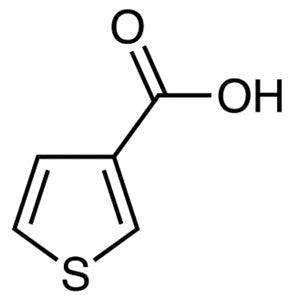
5-Bromo-2-thiophenecarboxylic Acid is a chemical compound widely used in laboratory settings as a building block for the synthesis of heterocyclic compounds. Its unique molecular structure, consisting of a thiophene ring linked to a carboxylic acid group and a bromo substituent, makes it a versatile reagent in organic chemistry. This compound plays a crucial role in the development of new materials, pharmaceuticals, and functional chemicals. Due to its reactivity and structural versatility, it is a key component in various synthetic pathways that require functional group modification and ring transformations.
The compound's reactivity is primarily attributed to its bromo group and thiophene ring, which are highly susceptible to substitution, reduction, and coupling reactions. These properties make it an ideal candidate for use in complex organic syntheses where precise control over molecular structure is essential. Its stability under controlled conditions further enhances its utility in laboratory environments, allowing for consistent results across multiple experiments. The compound’s ability to participate in a wide range of chemical transformations ensures its relevance in both academic and industrial research.
In Indonesian laboratories, 5-Bromo-2-thiophenecarboxylic Acid is commonly used in organic chemistry research, particularly in the development of new compounds with specific chemical properties. Its availability in solid form and ease of handling make it a practical choice for researchers working on synthetic projects. It is frequently employed in the synthesis of pharmaceutical intermediates and functional materials, contributing to advancements in various scientific fields.
TCI brochures (PDF)
- Thiophenes 2026-06-29 · p. 5
Related TCI products
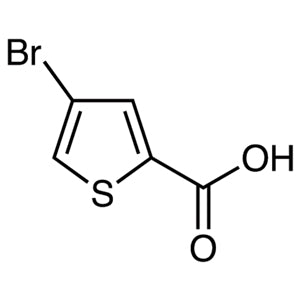
- TCI B3386 16694-18-1 4-Bromo-2-thiophenecarboxylic Acid
- TCI T1252 5813-89-8 2-Thiophenecarboxamide
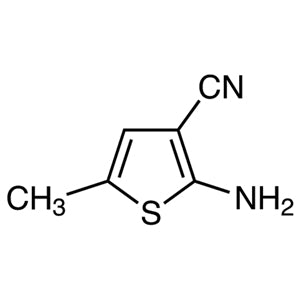
- TCI A2351 138564-58-6 2-Amino-5-methyl-3-thiophenecarbonitrile
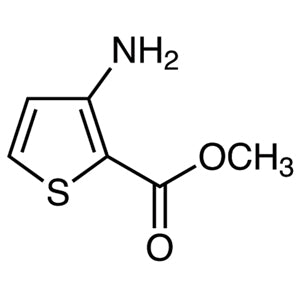
- TCI A1039 22288-78-4 Methyl 3-Amino-2-thiophenecarboxylate
- TCI T1140 2361-27-5 2-Thiophenecarboxylic Hydrazide
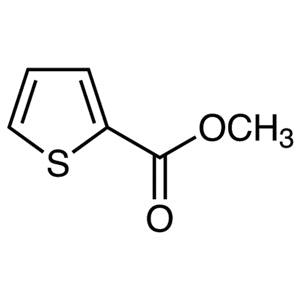
- TCI T1139 5380-42-7 Methyl 2-Thiophenecarboxylate
- Organic synthesis of heterocyclic compounds due to its reactive thiophene ring and bromo substituent.
- Development of pharmaceutical intermediates through substitution and coupling reactions.
- Preparation of functional materials by modifying molecular structures via chemical transformations.
- Research in material science for the creation of advanced polymers and nanomaterials.
- Investigation of chemical reactivity in academic and industrial research settings.
| Brand | TCI |
|---|---|
| CAS number | 7311-63-9 |
| Molecular formula | — |
| Purity | — |
| Category | Chemistry > Building Blocks > Heterocyclic Building Blocks |
| Pack sizes | Available in standard laboratory quantities |
| Physical form | Solid |
| Storage | Store in a cool, dry place away from light and moisture |
This compound should be stored in a cool, dry environment, away from direct light and moisture to maintain its chemical integrity. It is recommended to use airtight containers to prevent exposure to air and humidity, which may affect its reactivity. Due to its reactive nature, it should be handled with appropriate personal protective equipment, such as gloves and safety goggles, to ensure laboratory safety. The compound is not flammable but may react with strong oxidizing agents, so it should be stored separately from incompatible substances. Regular monitoring of storage conditions is advised to ensure long-term stability and usability in research applications.
—
Produk Terkait
-
4-Bromo-2-thiophenecarboxylicAcid TCI B3386
Regular price Rp 1.856.400,00Regular priceRp 1.313.550,00Sale price Rp 1.856.400,00 -
2-Thiophenecarboxamide TCI T1252
Regular price Rp 1.458.450,00Regular priceRp 1.035.300,00Sale price Rp 1.458.450,00 -
2-Amino-5-methyl-3-thiophenecarbonitrile TCI A2351
Regular price From Rp 980.700,00Regular priceRp 701.400,00Sale price From Rp 980.700,00 -
Methyl3-Amino-2-thiophenecarboxylate TCI A1039
Regular price From Rp 1.590.750,00Regular priceRp 1.127.700,00Sale price From Rp 1.590.750,00 -
2-ThiophenecarboxylicHydrazide TCI T1140
Regular price Rp 2.491.650,00Regular priceRp 1.757.700,00Sale price Rp 2.491.650,00 -
Methyl2-Thiophenecarboxylate TCI T1139
Regular price From Rp 900.900,00Regular priceRp 645.750,00Sale price From Rp 900.900,00 -
3-ThiophenecarboxylicAcid TCI T1084
Regular price From Rp 1.696.800,00Regular priceRp 1.202.250,00Sale price From Rp 1.696.800,00 -
Ethyl2-Thiophenecarboxylate TCI T0904
Regular price From Rp 1.087.800,00Regular priceRp 775.950,00Sale price From Rp 1.087.800,00