(4aS,8aR)-2-Benzoyloctahydro-6(2H)-isoquinolinone is a chiral building block widely used in asymmetric synthesis to construct molecules with specific stereochemical configurations. This compound plays a crucial role in organic chemistry research by enabling the creation of complex structures with defined chirality. Its unique molecular framework allows it to participate in various chemical reactions, making it an essential tool for chemists working on advanced synthesis projects. In the laboratory, it is particularly valuable for developing compounds with biological activity, as its stereochemistry can influence the pharmacological properties of the final product.
The compound’s chiral nature and structural complexity make it a preferred choice for researchers aiming to achieve high selectivity in synthetic pathways. Its stability under various reaction conditions ensures reliable performance in both academic and industrial settings. Additionally, its compatibility with a range of chemical transformations, such as reductions and substitutions, enhances its versatility. These properties make it an ideal candidate for applications requiring precise control over molecular architecture and stereochemistry.
In Indonesian laboratories, this compound is commonly used in organic chemistry research, especially in asymmetric synthesis and the development of bioactive compounds. Its ability to serve as a chiral building block supports the creation of molecules with specific structural requirements. As a result, it is a key component in studies focused on drug discovery and advanced chemical synthesis, where accuracy and reproducibility are paramount.
TCI brochures (PDF)
- Chiral Building Blocks 2025-04-14 · p. 5
Related TCI products
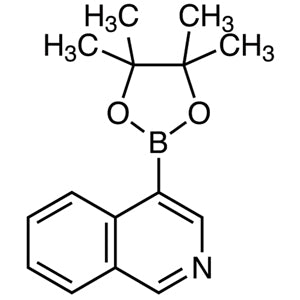
- TCI I0739 685103-98-4 4-(4,4,5,5-Tetramethyl-1,3,2-dioxaborolan-2-yl)isoquinoline
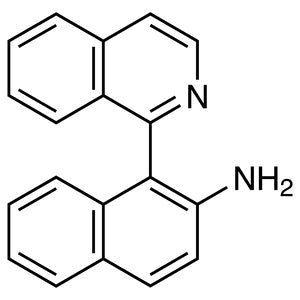
- TCI A2221 664302-70-9 1-(2-Amino-1-naphthyl)isoquinoline
- TCI I1246 6624-49-3 Isoquinoline-3-carboxylic Acid
- TCI I0942 80278-67-7 Isoquinoline-5-carboxaldehyde
- TCI I0671 486-73-7 Isoquinoline-1-carboxylic Acid
- TCI I0540 1532-72-5 Isoquinoline N-Oxide
- Asymmetric Synthesis: This compound is ideal for creating chiral molecules with precise stereochemistry, supporting advanced organic synthesis projects.
- Bioactive Compound Development: Its structural properties make it suitable for synthesizing compounds with potential pharmaceutical applications.
- Organic Chemistry Research: It is frequently used in academic and industrial research to explore new synthetic methodologies and molecular structures.
- Chiral Building Block Applications: Its unique stereochemistry enables the construction of complex molecules with specific spatial configurations.
- Drug Discovery Programs: It supports the development of new therapeutic agents by providing a foundation for stereocontrolled synthesis.
| Brand | TCI |
|---|---|
| CAS number | 52390-26-8 |
| Molecular formula | — |
| Purity | — |
| Category | Chemistry > Asymmetric Synthesis > Chiral Building Blocks |
| Pack sizes | Available in various quantities as per supplier specifications |
| Physical form | Solid (as per standard chemical specifications) |
| Storage | Store in a cool, dry place away from light and moisture |
This compound should be stored in a cool, dry environment, away from direct light and moisture to maintain its chemical integrity. It is recommended to use airtight containers to prevent exposure to air and humidity, which could affect its stability. Proper labeling of storage containers is essential for safety and traceability. In the laboratory, handling should be done with appropriate personal protective equipment, such as gloves and safety goggles, to minimize direct contact. The compound is generally stable under standard laboratory conditions, but it should be kept in a secure location to prevent accidental exposure or contamination. Regular inspection of storage conditions ensures optimal preservation of the material for research use.
—
Produk Terkait
-
4-(4,4,5,5-Tetramethyl-1,3,2-dioxaborolan-2-yl)isoquinoline TCI I0739
Regular price From Rp 2.439.150,00Regular priceRp 1.720.950,00Sale price From Rp 2.439.150,00 -
1-(2-Amino-1-naphthyl)isoquinoline TCI A2221
Regular price Rp 7.499.100,00Regular priceRp 5.259.450,00Sale price Rp 7.499.100,00 -
Isoquinoline-3-carboxylicAcid TCI I1246
Regular price From Rp 2.862.300,00Regular priceRp 2.017.050,00Sale price From Rp 2.862.300,00 -
Isoquinoline-5-carboxaldehyde TCI I0942
Regular price From Rp 3.843.000,00Regular priceRp 2.702.700,00Sale price From Rp 3.843.000,00 -
Isoquinoline-1-carboxylicAcid TCI I0671
Regular price From Rp 1.643.250,00Regular priceRp 1.164.450,00Sale price From Rp 1.643.250,00 -
IsoquinolineN-Oxide TCI I0540
Regular price Rp 2.702.700,00Regular priceRp 1.905.750,00Sale price Rp 2.702.700,00 -
Isoquinoline-3-carboxylicAcidMonohydrate TCI I0509
Regular price From Rp 2.121.000,00Regular priceRp 1.498.350,00Sale price From Rp 2.121.000,00 -
Isoquinoline-5-sulfonicAcid TCI I0470
Regular price From Rp 2.147.250,00Regular priceRp 1.517.250,00Sale price From Rp 2.147.250,00