This material, known as 1,2-Bis(2,4-dimethyl-5-phenyl-3-thienyl)-3,3,4,4,5,5-hexafluoro-1-cyclopentene, is a photochromic compound widely used in laboratory settings for its unique optical properties. As a key component in the field of photonic materials, it plays a crucial role in research involving light-responsive substances. Its ability to change color upon exposure to light makes it an essential tool for scientists working on optical and photonic applications. This compound is particularly valuable for developing materials that can interact with various light sources, enabling innovative solutions in optical engineering and material science.
The compound’s photochromic behavior is driven by its molecular structure, which allows it to undergo reversible structural changes when exposed to different wavelengths of light. This property makes it highly responsive to both ultraviolet and visible light, ensuring consistent and reliable performance in controlled environments. Its chemical stability and reactivity under light exposure further enhance its suitability for use in advanced material development. These characteristics make it a preferred choice for researchers aiming to create materials with precise optical responses and long-term durability.
In Indonesian laboratories, this compound is commonly used in research related to optical materials, photonic devices, and sensor development. Its versatility and performance under controlled light conditions make it an ideal component for experiments focused on light-responsive materials. Researchers in Indonesia rely on this compound to explore new applications in optical engineering, material science, and sensor technology, contributing to the advancement of scientific innovation in the region.
TCI brochures (PDF)
- Diarylethene Building Blocks with Photochromic Properties 2026-09-03 · p. 1
Related TCI products
- TCI B2287 137814-07-4 1,2-Bis[2-methylbenzo[b]thiophen-3-yl]-3,3,4,4,5,5-hexafluoro-1-cyclopentene
- TCI B5623 137814-07-4 1,2-Bis[2-methylbenzo[b]thiophen-3-yl]-3,3,4,4,5,5-hexafluoro-1-cyclopentene (purified by sublimation)
- TCI B5604 172612-67-8 1,2-Bis(2,4-dimethyl-5-phenyl-3-thienyl)-3,3,4,4,5,5-hexafluoro-1-cyclopentene (purified by sublimation)
- TCI B1536 112440-46-7 cis-1,2-Dicyano-1,2-bis(2,4,5-trimethyl-3-thienyl)ethene
- TCI B1535 220191-36-6 2,3-Bis(2,4,5-trimethyl-3-thienyl)maleimide
- TCI B1534 112440-47-8 2,3-Bis(2,4,5-trimethyl-3-thienyl)maleic Anhydride
- Photochromic Material Development: This compound is ideal for creating light-responsive materials that change color upon exposure to light, making it suitable for use in optical sensors and smart lenses.
- Optical Sensor Fabrication: Its ability to respond to different wavelengths of light makes it a valuable component in the development of optical sensors used in various scientific and industrial applications.
- Photonic Device Research: The compound’s unique optical properties are leveraged in the study of photonic materials, enabling the creation of advanced optical components and devices.
- Material Science Experiments: It is frequently used in experiments aimed at understanding the behavior of photochromic compounds under different light conditions, aiding in the development of new materials.
- Light-Responsive Coatings: Its structural responsiveness to light makes it a candidate for developing coatings that change properties in response to environmental light exposure, useful in various industrial applications.
| Brand | TCI |
|---|---|
| CAS number | 172612-67-8 |
| Molecular formula | — |
| Purity | — |
| Category | Materials Science > Photonic Materials and Optical Materials > Photochromic Dyes |
| Pack sizes | — |
| Physical form | — |
| Storage | Store in a cool, dark place away from direct light and moisture |
This compound should be stored in a cool, dark environment to prevent degradation due to light exposure. It is recommended to use airtight containers to minimize exposure to moisture and air, which can affect its stability. Due to its photochromic nature, it is essential to handle the compound in a controlled setting to maintain its optical properties. Laboratory personnel should wear appropriate personal protective equipment, such as gloves and safety goggles, when handling the material. Proper labeling of storage containers is crucial to ensure safe handling and prevent accidental exposure. Maintaining a clean and organized workspace further reduces the risk of contamination and ensures the compound remains in optimal condition for research use.
—
Produk Terkait
-
1,2-Bis[2-methylbenzo[b]thiophen-3-yl]-3,3,4,4,5,5-hexafluoro-1-cyclopentene TCI B2287
Regular price From Rp 2.121.000,00Regular priceRp 1.498.350,00Sale price From Rp 2.121.000,00 -
1,2-Bis[2-methylbenzo[b]thiophen-3-yl]-3,3,4,4,5,5-hexafluoro-1-cyclopentene(purifiedbysublimation) TCI B5623
Regular price Rp 3.551.100,00Regular priceRp 2.499.000,00Sale price Rp 3.551.100,00 -
1,2-Bis(2,4-dimethyl-5-phenyl-3-thienyl)-3,3,4,4,5,5-hexafluoro-1-cyclopentene(purifiedbysublimation) TCI B5604
Regular price Rp 3.312.750,00Regular priceRp 2.332.050,00Sale price Rp 3.312.750,00 -
cis-1,2-Dicyano-1,2-bis(2,4,5-trimethyl-3-thienyl)ethene TCI B1536
Regular price Rp 7.023.450,00Regular priceRp 4.926.600,00Sale price Rp 7.023.450,00 -
2,3-Bis(2,4,5-trimethyl-3-thienyl)maleimide TCI B1535
Regular price From Rp 2.862.300,00Regular priceRp 2.017.050,00Sale price From Rp 2.862.300,00 -
2,3-Bis(2,4,5-trimethyl-3-thienyl)maleicAnhydride TCI B1534
Regular price From Rp 5.141.850,00Regular priceRp 3.610.950,00Sale price From Rp 5.141.850,00 -
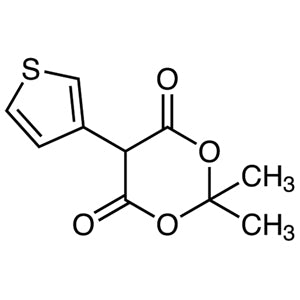
2,2-Dimethyl-5-(3-thienyl)-1,3-dioxane-4,6-dione TCI D3759
Regular price Rp 4.849.950,00Regular priceRp 3.407.250,00Sale price Rp 4.849.950,00 -
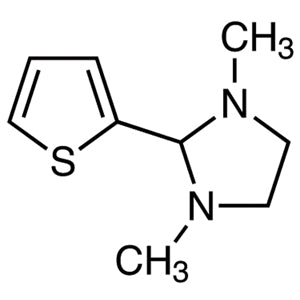
1,3-Dimethyl-2-(2-thienyl)imidazolidine TCI D2289
Regular price Rp 2.411.850,00Regular priceRp 1.702.050,00Sale price Rp 2.411.850,00