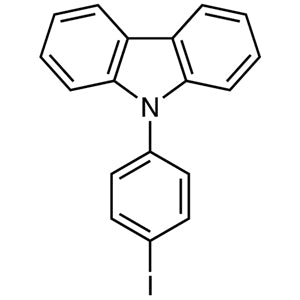
Bis(4-iodophenyl)amine (BIPAM) is an organic compound widely used in scientific research, particularly in the fields of semiconductor materials and optical technologies. As a key building block in the development of advanced materials, BIPAM plays a crucial role in laboratories where researchers are exploring new electronic and optoelectronic properties. Its unique chemical structure enables it to be a versatile component in the synthesis of organic semiconductors and light-responsive molecules. This compound is essential for creating materials with tailored electronic behaviors, making it a valuable resource for innovation in material science.
The chemical and electronic properties of BIPAM make it a preferred choice for researchers. Its stable nature and ability to interact with various ligands allow for the formation of complex molecular structures. The presence of two iodophenyl groups attached to an amine center provides unique reactivity and electronic characteristics. These features enable BIPAM to be used in the development of materials with specific conductive or light-sensitive properties. Its reliability and adaptability in synthetic processes make it a go-to compound for advanced material synthesis.
In Indonesian laboratories, BIPAM is commonly used in research related to organic semiconductor materials. It is an integral part of projects focused on optoelectronic devices and light-sensitive sensors. Scientists in Indonesia rely on BIPAM to develop new materials with enhanced performance in electronic and optical applications. Its role in supporting cutting-edge research underscores its importance in the scientific community.
TCI brochures (PDF)
- Building Blocks for Organic Semiconductor 2026-03-24 · p. 29
Related TCI products
- TCI B2684 16292-17-4 Bis(4-bromophenyl)amine
- TCI D5801 1263001-82-6 9,9-Dimethyl-N-(naphthalen-2-yl)-9H-fluoren-2-amine
- TCI D5567 894791-43-6 N,9-Diphenyl-9H-carbazol-3-amine
- TCI B6972 67242-17-5 Bis(2-bromophenyl)amine
- TCI B5752 1448185-87-2 N-([1,1'-Biphenyl]-4-yl)dibenzo[b,d]thiophen-4-amine
- TCI B5676 167218-39-5 N,N-Bis(4'-diphenylamino-4-biphenylyl)amine
- Organic Semiconductor Development: BIPAM is used to synthesize organic semiconductors with tailored electronic properties, enabling the creation of advanced optoelectronic devices.
- Light-Responsive Molecule Synthesis: Its chemical structure allows for the development of molecules that respond to light, making it ideal for photovoltaic and optical sensor applications.
- Material Innovation Research: BIPAM supports the development of new materials with unique electronic behaviors, contributing to advancements in nanotechnology and material science.
- Sensor Technology Development: Its ability to interact with various ligands makes it suitable for creating sensitive optical and electronic sensors.
- Photovoltaic Device Fabrication: BIPAM is used in the production of solar cells and other photovoltaic devices due to its light-responsive properties.
| Brand | TCI |
|---|---|
| CAS number | 20255-70-3 |
| Molecular formula | — |
| Purity | — |
| Category | Materials Science > Material Building Blocks > Small Molecule Semiconductor Building Blocks |
| Pack sizes | Available in various quantities as per standard laboratory supply |
| Physical form | Solid |
| Storage | Store in a cool, dry place away from light and moisture |
BIPAM should be stored in a cool, dry environment, away from direct light and moisture to maintain its chemical stability. It is recommended to use airtight containers to prevent exposure to air and humidity. Due to its organic nature, it is important to handle BIPAM with appropriate personal protective equipment, such as gloves and safety goggles, to ensure laboratory safety. Proper ventilation should be maintained in the workspace to minimize inhalation risks. BIPAM is generally non-hazardous under normal conditions but should be handled with care to avoid any potential chemical interactions. Always follow standard laboratory safety protocols when working with this compound.
—
Produk Terkait
-
Bis(4-bromophenyl)amine TCI B2684
Regular price From Rp 637.350,00Regular priceRp 445.200,00Sale price From Rp 637.350,00 -
9,9-Dimethyl-N-(naphthalen-2-yl)-9H-fluoren-2-amine TCI D5801
Regular price From Rp 980.700,00Regular priceRp 685.650,00Sale price From Rp 980.700,00 -
N,9-Diphenyl-9H-carbazol-3-amine TCI D5567
Regular price From Rp 2.411.850,00Regular priceRp 1.702.050,00Sale price From Rp 2.411.850,00 -
Bis(2-bromophenyl)amine TCI B6972
Regular price From Rp 1.087.800,00Regular priceRp 760.200,00Sale price From Rp 1.087.800,00 -
N-([1,1'-Biphenyl]-4-yl)dibenzo[b,d]thiophen-4-amine TCI B5752
Regular price From Rp 2.384.550,00Regular priceRp 1.683.150,00Sale price From Rp 2.384.550,00 -
N,N-Bis(4'-diphenylamino-4-biphenylyl)amine TCI B5676
Regular price From Rp 1.643.250,00Regular priceRp 1.164.450,00Sale price From Rp 1.643.250,00 -
2-(4-Iodophenyl)-1-phenylbenzimidazole TCI I0983
Regular price From Rp 1.961.400,00Regular priceRp 1.387.050,00Sale price From Rp 1.961.400,00 -
9-(4-Iodophenyl)carbazole TCI I0961
Regular price From Rp 3.232.950,00Regular priceRp 2.276.400,00Sale price From Rp 3.232.950,00