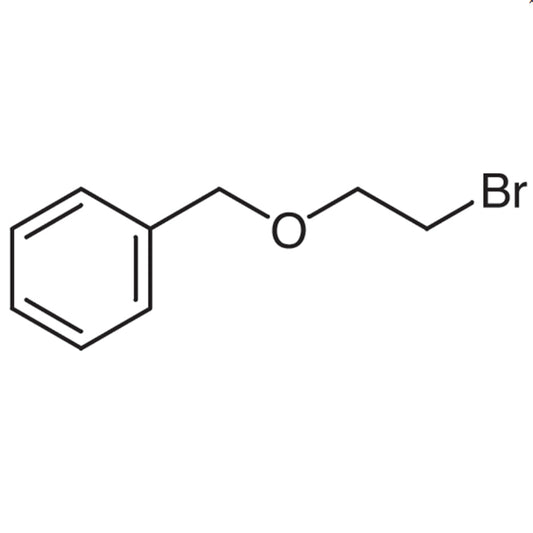
Benzyl 3-Bromopropyl Ether is a chemical compound widely used in organic reactions for the synthesis of complex molecules. As a building block in chemical synthesis, it plays a crucial role in laboratories where researchers aim to create new compounds through various reaction mechanisms. Its unique chemical structure allows for substitution reactions and other chemical transformations, making it an essential reagent in synthetic chemistry. This compound is particularly valuable for its ability to participate in reactions that involve bromo groups, contributing to the development of more intricate organic structures.
The compound is chemically stable under certain conditions but exhibits high reactivity towards bases, alkali metals, and elevated temperatures. These properties make it a preferred choice for substitution reactions and other synthetic processes that require controlled chemical interactions. The presence of the benzyl group further enhances its utility by enabling substitution reactions at specific positions, offering greater flexibility in the design of organic molecules. Its reactivity and structural versatility make it a key component in the toolkit of organic chemists.
In Indonesian laboratories, Benzyl 3-Bromopropyl Ether is commonly used in organic chemistry research, especially in academic institutions and research centers. It is a fundamental material for experimental work and the development of new chemical compounds. Its availability and chemical properties make it a standard item in laboratories focused on synthetic chemistry and molecular innovation.
- Organic synthesis applications benefit from its reactivity and structural versatility, enabling the creation of complex molecules.
- It is ideal for substitution reactions involving bromo groups, providing a reliable reagent for synthetic pathways.
- In academic research settings, it supports the development of new chemical compounds through controlled experimental conditions.
- It is used in the preparation of functionalized organic molecules, offering flexibility in molecular design.
- Laboratories focusing on chemical innovation rely on it for the synthesis of diverse chemical structures and compounds.
| Brand | TCI |
|---|---|
| CAS number | 54314-84-0 |
| Molecular formula | — |
| Purity | — |
| Category | Chemistry > Building Blocks > Non-Heterocyclic Building Blocks |
| Pack sizes | Available in standard laboratory quantities |
| Physical form | Liquid |
| Storage | Store in a cool, dry place away from moisture and direct sunlight |
Benzyl 3-Bromopropyl Ether should be stored in a cool, dry place, away from moisture and direct sunlight. It is recommended to use airtight containers made of materials that are chemically inert to prevent any unwanted reactions. Due to its reactivity, it should be handled in a well-ventilated area, and appropriate personal protective equipment should be worn. Avoid exposure to strong bases, alkali metals, and high temperatures to maintain its stability. Proper storage and handling ensure the compound remains effective for use in laboratory applications.
—
Produk Terkait
-
Benzyl6-BromohexylEther TCI B2820
Regular price From Rp 4.559.100,00Regular priceRp 3.187.800,00Sale price From Rp 4.559.100,00 -
Benzyl5-BromoamylEther TCI B2819
Regular price Rp 3.896.550,00Regular priceRp 2.724.750,00Sale price Rp 3.896.550,00 -
Benzyl2-BromoethylEther TCI B2817
Regular price From Rp 2.174.550,00Regular priceRp 1.520.400,00Sale price From Rp 2.174.550,00 -
Benzyl4-BromobutylEther TCI B2802
Regular price From Rp 3.683.400,00Regular priceRp 2.575.650,00Sale price From Rp 3.683.400,00 -
Benzyl2-ChloroethylEther TCI B2712
Regular price From Rp 1.298.850,00Regular priceRp 908.250,00Sale price From Rp 1.298.850,00 -
BenzylGlycidylEther TCI B2108
Regular price From Rp 1.510.950,00Regular priceRp 1.056.300,00Sale price From Rp 1.510.950,00 -
Benzyl2-NaphthylEther TCI B1619
Regular price From Rp 1.856.400,00Regular priceRp 1.297.800,00Sale price From Rp 1.856.400,00 -
BenzylIsopropenylEther[Hydroxyl-ProtectingAgent] TCI B1257
Regular price From Rp 3.976.350,00Regular priceRp 2.780.400,00Sale price From Rp 3.976.350,00