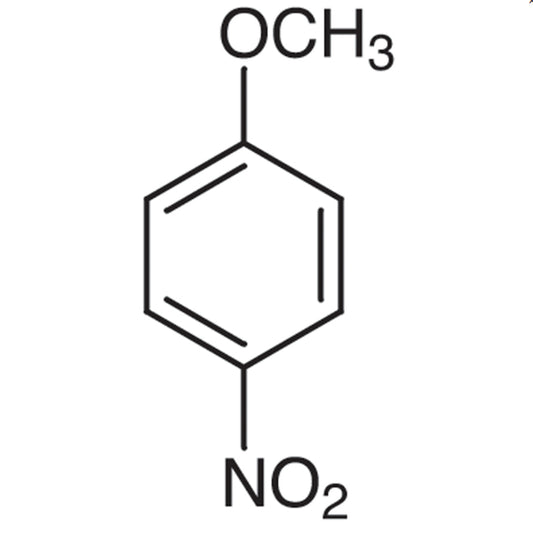
2-Bromo-4-nitroanisole is a chemical compound widely used as a building block in the synthesis of complex molecules. It plays a crucial role in laboratory settings where researchers aim to create new compounds with specific chemical properties. This compound is particularly valuable in organic chemistry due to its ability to participate in various reaction mechanisms, such as electrophilic substitution and nitration. Its presence in chemical synthesis allows for the development of pharmaceuticals, materials, and other advanced chemical products.
The compound's unique structure, featuring both bromo and nitro substituents, contributes to its high reactivity. These functional groups make it suitable for a range of chemical transformations, including Friedel-Crafts reactions and nitration processes. Its aromatic ring provides stability, ensuring predictable chemical behavior during reactions. These properties make it a preferred choice for scientists working on synthetic pathways that require controlled reactivity and structural versatility.
In Indonesian laboratories, 2-Bromo-4-nitroanisole is commonly used by chemists, pharmacologists, and material scientists. It is integral to research focused on developing new drugs, functional materials, and chemical intermediates. Its role in both academic and industrial research underscores its importance in advancing chemical innovation within the region.
- Pharmaceutical research utilizes 2-Bromo-4-nitroanisole for synthesizing compounds with potential therapeutic applications due to its reactivity and structural versatility.
- Organic synthesis projects benefit from this compound as a key intermediate in the creation of complex molecules through electrophilic substitution and nitration reactions.
- Material science applications leverage its aromatic stability and functional groups to develop new polymers and functional materials with tailored properties.
- Analytical chemistry laboratories use it as a reference standard for testing reaction mechanisms and evaluating chemical behavior under various conditions.
- Environmental studies incorporate it to model chemical transformations in industrial waste and assess the fate of synthetic compounds in ecosystems.
| Brand | TCI |
|---|---|
| CAS number | 5197-28-4 |
| Molecular formula | — |
| Purity | — |
| Category | Chemistry > Building Blocks > Non-Heterocyclic Building Blocks |
| Pack sizes | Available in standard laboratory quantities as per supplier specifications |
| Physical form | Solid, typically in crystalline or powder form |
| Storage | Store in a cool, dry place away from light and incompatible materials |
This compound should be stored in a cool, dry environment, away from direct sunlight and sources of heat. It is recommended to keep it in a sealed container to prevent moisture absorption and contamination. Due to its reactivity, it should be stored separately from strong oxidizing agents and incompatible substances. Laboratory personnel should handle it with appropriate personal protective equipment, including gloves and safety goggles, to ensure safety during handling. Proper ventilation should be maintained in the workspace to minimize exposure to vapors. Regular monitoring of storage conditions is essential to maintain the compound's stability and effectiveness in research applications.
—
Produk Terkait
-
3-Bromo-5-nitroanisole TCI B4973
Regular price From Rp 1.590.750,00Regular priceRp 1.111.950,00Sale price From Rp 1.590.750,00 -
4-Bromo-2-nitroanisole TCI B4010
Regular price Rp 1.167.600,00Regular priceRp 815.850,00Sale price Rp 1.167.600,00 -
3-Bromo-2-nitroanisole TCI B3486
Regular price From Rp 1.405.950,00Regular priceRp 982.800,00Sale price From Rp 1.405.950,00 -
4-Bromo-3-nitroanisole TCI B3420
Regular price From Rp 795.900,00Regular priceRp 556.500,00Sale price From Rp 795.900,00 -
2-Bromo-5-nitroanisole TCI B3418
Regular price Rp 1.565.550,00Regular priceRp 1.094.100,00Sale price Rp 1.565.550,00 -
4-Nitroanisole TCI N0126
Regular price From Rp 769.650,00Regular priceRp 537.600,00Sale price From Rp 769.650,00 -
2-Nitroanisole TCI N0125
Regular price From Rp 689.850,00Regular priceRp 481.950,00Sale price From Rp 689.850,00 -
3-Nitroanisole TCI N0124
Regular price Rp 4.957.050,00Regular priceRp 3.466.050,00Sale price Rp 4.957.050,00