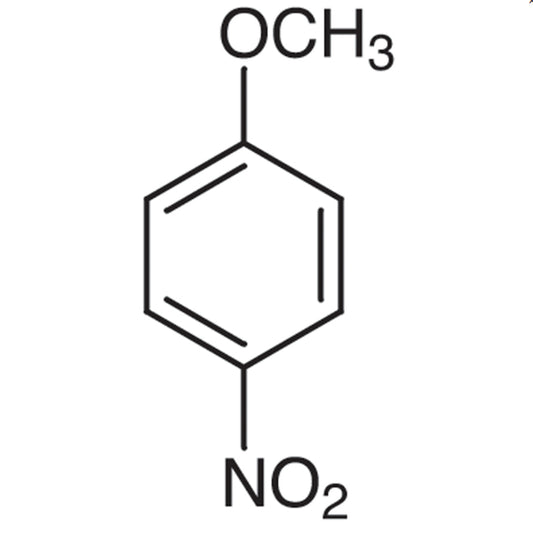
2-Bromo-5-nitroanisole is a chemical compound widely used as a foundational building block in the synthesis of complex molecules. It plays a crucial role in organic laboratory settings, where it serves as a key reagent for substitution reactions involving bromo and nitro groups on aromatic structures. Its versatility makes it an essential component in the development of new compounds, including pharmaceuticals, industrial chemicals, and various chemical intermediates. This compound is particularly valuable for its ability to participate in both substitution and electrophilic reactions, offering researchers a reliable tool for molecular modification.
The compound's stable aromatic structure and good solubility in organic solvents make it a preferred choice for laboratory applications. These properties allow it to be easily manipulated and integrated into a wide range of synthetic pathways. Its chemical stability under certain conditions further enhances its usability, ensuring consistent performance during experiments. These characteristics contribute to its reliability and effectiveness in both academic and industrial research environments.
In Indonesian laboratories, 2-Bromo-5-nitroanisole is extensively used in organic chemistry research, particularly in higher education institutions and research organizations. Its availability supports the development of new compounds with diverse applications, ranging from pharmaceuticals to chemical materials. Researchers rely on this compound to advance their work in drug synthesis and material science, making it an indispensable resource in the chemical research landscape.
- Synthesis of pharmaceutical compounds through bromo and nitro substitution reactions, enabling the creation of complex drug molecules.
- Organic reaction studies focusing on electrophilic substitution mechanisms, providing insights into reaction pathways and kinetics.
- Development of industrial chemical intermediates, supporting the production of various chemical products and materials.
- Research in medicinal chemistry for the design of new therapeutic agents with targeted biological activity.
- Educational purposes in chemical synthesis courses, offering students hands-on experience with fundamental organic reactions.
| Brand | TCI |
|---|---|
| CAS number | 77337-82-7 |
| Molecular formula | — |
| Purity | — |
| Category | Chemistry > Building Blocks > Non-Heterocyclic Building Blocks |
| Pack sizes | Available in various quantities as per standard chemical supply practices |
| Physical form | Solid (as per typical chemical compound presentation) |
| Storage | Store in a cool, dry place away from light and incompatible substances |
This compound should be stored in a cool, dry environment, away from direct sunlight and sources of heat. It is recommended to use sealed containers to prevent moisture absorption and contamination. Due to its chemical stability, it does not require refrigeration but should be kept in a well-ventilated area. Proper personal protective equipment, such as gloves and safety goggles, should be worn when handling to ensure laboratory safety. Avoid contact with incompatible materials and ensure adequate ventilation during use to maintain a safe working environment.
—
Produk Terkait
-
3-Bromo-5-nitroanisole TCI B4973
Regular price From Rp 1.590.750,00Regular priceRp 1.111.950,00Sale price From Rp 1.590.750,00 -
4-Bromo-2-nitroanisole TCI B4010
Regular price Rp 1.167.600,00Regular priceRp 815.850,00Sale price Rp 1.167.600,00 -
3-Bromo-2-nitroanisole TCI B3486
Regular price From Rp 1.405.950,00Regular priceRp 982.800,00Sale price From Rp 1.405.950,00 -
4-Bromo-3-nitroanisole TCI B3420
Regular price From Rp 795.900,00Regular priceRp 556.500,00Sale price From Rp 795.900,00 -
2-Bromo-4-nitroanisole TCI B2830
Regular price Rp 2.094.750,00Regular priceRp 1.464.750,00Sale price Rp 2.094.750,00 -
4-Nitroanisole TCI N0126
Regular price From Rp 769.650,00Regular priceRp 537.600,00Sale price From Rp 769.650,00 -
2-Nitroanisole TCI N0125
Regular price From Rp 689.850,00Regular priceRp 481.950,00Sale price From Rp 689.850,00 -
3-Nitroanisole TCI N0124
Regular price Rp 4.957.050,00Regular priceRp 3.466.050,00Sale price Rp 4.957.050,00