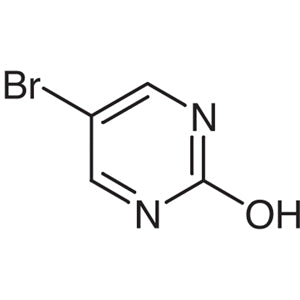
5-Bromo-2-hydroxypyrimidine is a chemical compound widely used as a building block in the synthesis of heterocyclic compounds. It plays a crucial role in organic chemistry laboratories, where it serves as a versatile intermediate for creating complex molecular structures. This compound is particularly valuable in the development of new substances with specific functional properties, making it an essential tool for researchers working in various scientific fields. Its unique chemical structure allows it to participate in a range of chemical reactions, contributing to the advancement of both academic and industrial research.
The compound's reactivity is enhanced by the presence of bromo and hydroxyl groups, which provide multiple sites for chemical modification. These functional groups enable it to engage in substitution and coupling reactions, making it a preferred choice for synthetic chemists. Its stability under controlled conditions further supports its use in laboratory settings, where precise control over reaction parameters is essential. The combination of reactivity and stability makes 5-Bromo-2-hydroxypyrimidine a reliable and effective reagent for a wide range of chemical applications.
In Indonesian laboratories, 5-Bromo-2-hydroxypyrimidine is commonly utilized in both fundamental and applied chemical research. It is particularly relevant for studies involving the synthesis of heterocyclic compounds, including pharmaceuticals and industrial chemicals. Its availability in the local market ensures that researchers have access to this important compound, facilitating ongoing scientific investigations and innovation in the field of chemistry.
Related TCI products
- Used in the synthesis of heterocyclic compounds due to its reactive bromo and hydroxyl groups, enabling versatile chemical modifications.
- Applied in pharmaceutical research for the development of new drugs, as it can serve as a key intermediate in complex molecule synthesis.
- Employed in industrial chemistry for the production of specialty chemicals, where its structural features support the creation of functional compounds.
- Utilized in organic chemistry experiments for substitution and coupling reactions, offering a reliable building block for molecular design.
- Integrated into academic research projects focusing on the exploration of new chemical structures and reaction mechanisms.
| Brand | TCI |
|---|---|
| CAS number | 38353-06-9 |
| Molecular formula | — |
| Purity | — |
| Category | Chemistry > Building Blocks > Heterocyclic Building Blocks |
| Pack sizes | Available in various quantities as per supplier specifications |
| Physical form | Solid, crystalline powder |
| Storage | Store in a cool, dry place away from light and moisture |
5-Bromo-2-hydroxypyrimidine should be stored in a cool, dry environment, away from direct sunlight and sources of moisture. It is recommended to keep the compound in a tightly sealed container to prevent exposure to air and humidity. Due to its chemical reactivity, it should be handled in a well-ventilated laboratory setting, with appropriate personal protective equipment such as gloves and safety goggles. Avoid contact with incompatible materials, and ensure that storage conditions are consistent with standard chemical safety protocols. Proper labeling and storage practices help maintain the integrity and safety of the compound in laboratory environments.
—
Produk Terkait
-
2-Amino-4-chloro-6-hydroxypyrimidine TCI A1109
Regular price Rp 1.829.100,00Regular priceRp 1.294.650,00Sale price Rp 1.829.100,00 -
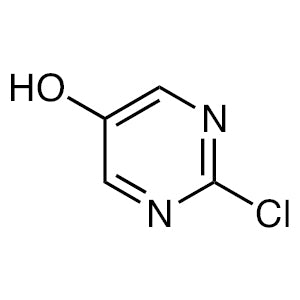
2-Chloro-5-hydroxypyrimidine TCI C3685
Regular price Rp 1.008.000,00Regular priceRp 720.300,00Sale price Rp 1.008.000,00 -
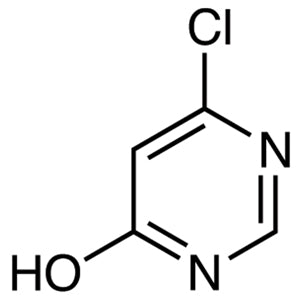
4-Chloro-6-hydroxypyrimidine TCI C2368
Regular price Rp 1.140.300,00Regular priceRp 812.700,00Sale price Rp 1.140.300,00 -
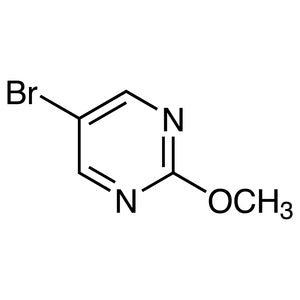
5-Bromo-2-methoxypyrimidine TCI B3521
Regular price Rp 689.850,00Regular priceRp 497.700,00Sale price Rp 689.850,00 -
5-Bromo-2,4-dimethoxypyrimidine TCI B1920
Regular price Rp 557.550,00Regular priceRp 405.300,00Sale price Rp 557.550,00 -
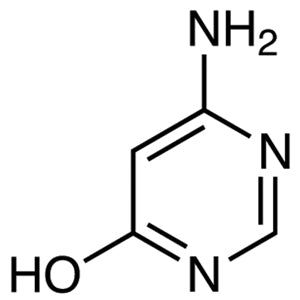
4-Amino-6-hydroxypyrimidine TCI A2439
Regular price Rp 822.150,00Regular priceRp 590.100,00Sale price Rp 822.150,00 -
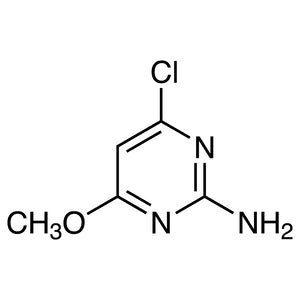
2-Amino-4-chloro-6-methoxypyrimidine TCI A1520
Regular price Rp 530.250,00Regular priceRp 386.400,00Sale price Rp 530.250,00 -
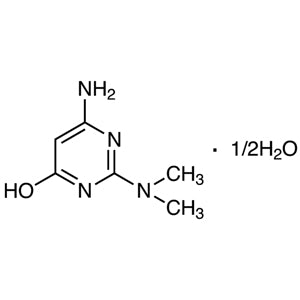
4-Amino-2-dimethylamino-6-hydroxypyrimidineHemihydrate TCI A1469
Regular price Rp 2.571.450,00Regular priceRp 1.813.350,00Sale price Rp 2.571.450,00