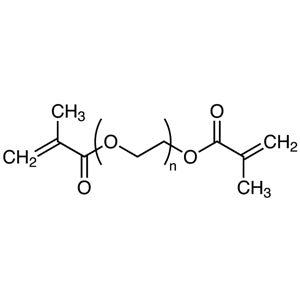
Glycerol Dimethacrylate (mixture of 1,2- and 1,3-form), with CAS number 1830-78-0, is a key chemical compound used in polymer and macromolecule synthesis. It serves as a monomer in the production of various polymers, resins, and composite materials. Its chemical structure enables efficient polymerization reactions, making it a versatile reagent in material science. In laboratory settings, it is essential for creating epoxy resins, adhesives, and coating materials. Its role is critical in both research and industrial applications where polymer-based products are required.
This compound is preferred due to its consistent chemical and physical properties, which ensure reliable results in experiments. The inclusion of MEHQ (methyl ethyl glycol hydroquinone) as a stabilizer enhances its shelf life by reducing oxidation and degradation. Its suitable viscosity and consistency make it easy to handle and mix in laboratory processes. These characteristics make it a reliable choice for both small-scale experiments and larger production processes.
In Indonesian laboratories, Glycerol Dimethacrylate is commonly used in material research, organic chemistry, and polymer technology. It is a staple in academic and industrial settings where polymer synthesis and composite development are required. Researchers and technicians rely on its stability and performance to achieve accurate and reproducible results in their experiments.
TCI brochures (PDF)
- Dental Materials Research Reagents 2026-07-23 · p. 1
- Biomaterials Research Reagents 2025-02-19 · p. 12
- Monomers 2025-05-28 · p. 8
Related TCI products
- TCI T0948 109-16-0 Triethylene Glycol Dimethacrylate (stabilized with MEHQ)
- TCI T3488 2082-81-7 Tetramethylene Glycol Dimethacrylate (stabilized with MEHQ)
- TCI T3486 109-17-1 Tetraethylene Glycol Dimethacrylate (stabilized with HQ)
- TCI T1352 25852-47-5 Polyethylene Glycol Dimethacrylate (n=approx 4) (stabilized with MEHQ)
- TCI B1065 1189-08-8 1,3-Butanediol Dimethacrylate (stabilized with MEHQ)
- TCI P2760 25852-47-5 Polyethylene Glycol Dimethacrylate (n=approx 14) (stabilized with MEHQ)
- Polymer synthesis and composite material development due to its ability to undergo efficient polymerization reactions.
- Epoxy resin formulation as a key monomer component for creating durable and flexible materials.
- Adhesive and coating formulation for its compatibility with various chemical systems and its solidifying properties.
- Organic chemistry research for its role in creating complex macromolecular structures.
- Material science experiments requiring stable and reliable monomer sources for polymerization processes.
| Brand | TCI |
|---|---|
| CAS number | 1830-78-0 |
| Molecular formula | — |
| Purity | — |
| Category | Materials Science > Polymer/Macromolecule Reagents > Monomers |
| Pack sizes | Available in standard laboratory quantities as per supplier specifications |
| Physical form | Liquid |
| Storage | Store in a cool, dark place away from heat and direct sunlight |
Data from the TCI brochure
| Bentuk isomer | mixture of 1,2- and 1,3-form |
|---|
Source: TCI brochure FF145 (2026-07-23)
Glycerol Dimethacrylate should be stored in a cool, dark place, away from heat and direct sunlight to maintain its stability. It is recommended to use airtight containers to prevent moisture absorption and contamination. As a reactive chemical, it should be handled in a well-ventilated area, preferably with appropriate personal protective equipment. Avoid contact with skin and eyes, and ensure proper disposal of any unused material. Keep the material away from incompatible substances such as strong oxidizers to prevent unwanted reactions. Regular monitoring of storage conditions ensures the compound remains effective for laboratory use.
—
Product Categories
- Polymer/Macromolecule ReagentsMonomersAcrylic Monomers
- Biomaterials/Biocompatible Materials Research ReagentsDental Materials Research Reagents
- Biomaterials/Biocompatible Materials Research ReagentsMonomers and Macromonomers [Biomaterials/Biocompatible Materials Research Reagents]Acrylic Monomers [Biomaterials/Biocompatible Materials Research Reagents]
Produk Terkait
-
TriethyleneGlycolDimethacrylate(stabilizedwithMEHQ) TCI T0948
Regular price From Rp 505.050,00Regular priceRp 352.800,00Sale price From Rp 505.050,00 -
TetramethyleneGlycolDimethacrylate(stabilizedwithMEHQ) TCI T3488
Regular price Rp 3.763.200,00Regular priceRp 2.631.300,00Sale price Rp 3.763.200,00 -
TetraethyleneGlycolDimethacrylate(stabilizedwithHQ) TCI T3486
Regular price From Rp 1.298.850,00Regular priceRp 908.250,00Sale price From Rp 1.298.850,00 -
PolyethyleneGlycolDimethacrylate(n=approx4)(stabilizedwithMEHQ) TCI T1352
Regular price From Rp 505.050,00Regular priceRp 352.800,00Sale price From Rp 505.050,00 -
1,3-ButanediolDimethacrylate(stabilizedwithMEHQ) TCI B1065
Regular price From Rp 505.050,00Regular priceRp 352.800,00Sale price From Rp 505.050,00 -
PolyethyleneGlycolDimethacrylate(n=approx14)(stabilizedwithMEHQ) TCI P2760
Regular price From Rp 610.050,00Regular priceRp 426.300,00Sale price From Rp 610.050,00 -
PolyethyleneGlycolDimethacrylate(n=approx9)(stabilizedwithMEHQ) TCI P2709
Regular price From Rp 610.050,00Regular priceRp 426.300,00Sale price From Rp 610.050,00 -
NeopentylGlycolDimethacrylate(stabilizedwithMEHQ) TCI N0780
Regular price From Rp 717.150,00Regular priceRp 500.850,00Sale price From Rp 717.150,00