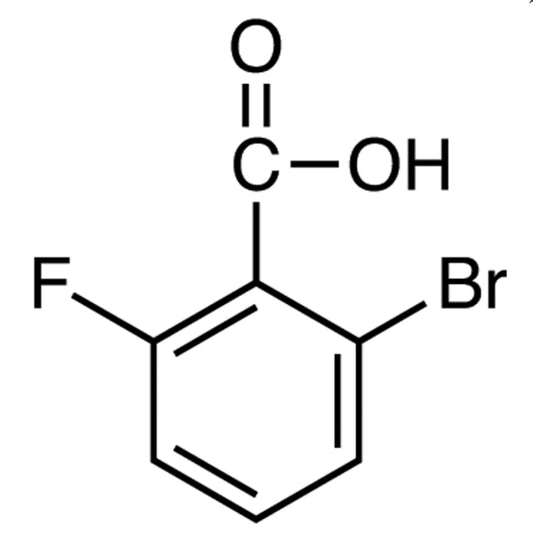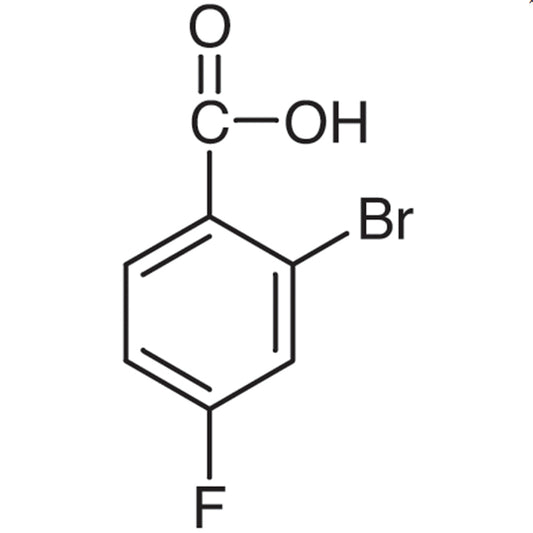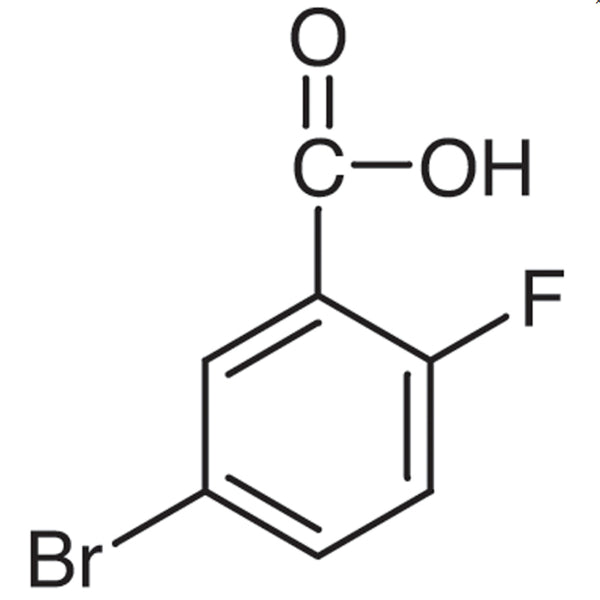
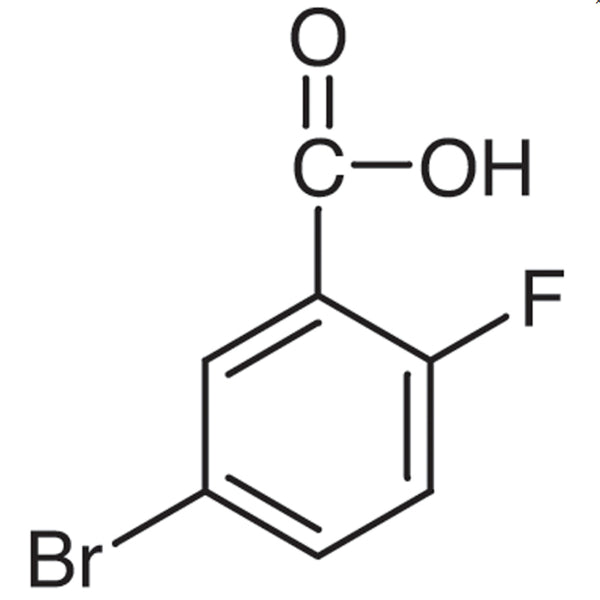
5-Bromo-2-fluorobenzoic Acid is a versatile chemical compound widely used in organic reactions for the synthesis of complex molecules. As a fluorinated building block, it plays a crucial role in the development of pharmaceuticals, industrial chemicals, and advanced materials. Its unique structure allows for multiple functional group modifications, making it an essential tool in synthetic chemistry. This compound is particularly valuable for its ability to participate in substitution reactions, enabling the creation of a wide range of derivatives with tailored properties.
The compound's reactivity stems from its bromo and fluoro substituents, which provide both electrophilic and nucleophilic characteristics. These properties make it ideal for a variety of synthetic pathways, including electrophilic substitution and nucleophilic attack. Its stability under controlled conditions further enhances its utility in laboratory settings. The presence of both halogen atoms also contributes to its potential in drug discovery, where precise molecular modifications are required to achieve desired biological activity.
In Indonesian laboratories, 5-Bromo-2-fluorobenzoic Acid is commonly used in pharmacological research, organic chemistry experiments, and the development of new materials. Local researchers and educational institutions rely on this compound for experiments requiring specific halogen substitution patterns. Its availability in various packaging options ensures ease of use for both small-scale and mid-sized laboratory operations, supporting a wide range of research activities.
TCI brochures (PDF)
- Fluorination Reagents, Fluorinated Building Blocks 2026-03-18 · p. 18
Related TCI products
- Synthesis of complex pharmaceutical compounds requiring bromo and fluoro substitutions for enhanced biological activity and molecular specificity.
- Development of new materials with tailored chemical properties through controlled functional group modifications and molecular engineering.
- Organic chemistry research focused on halogenated aromatic compounds for studying reaction mechanisms and synthetic pathways.
- Pharmaceutical research and drug discovery projects that require precise molecular modifications for improved efficacy and selectivity.
- Educational experiments in chemistry laboratories to demonstrate halogen substitution reactions and fluorinated building block applications.
| Brand | TCI |
|---|---|
| CAS number | 146328-85-0 |
| Molecular formula | — |
| Purity | — |
| Category | Chemistry > Building Blocks > Fluorinated Building Blocks |
| Pack sizes | Available in various packaging options for laboratory use |
| Physical form | Solid (exact form may vary depending on supplier) |
| Storage | Store in a cool, dry place away from light and moisture |
5-Bromo-2-fluorobenzoic Acid should be stored in a cool, dry environment, away from direct sunlight and sources of moisture. It is recommended to keep the compound in a sealed container to prevent exposure to air and humidity, which may affect its stability. Proper ventilation should be maintained in the laboratory when handling this material to minimize inhalation risks. Due to its reactivity, it should be handled with care, using appropriate personal protective equipment such as gloves and safety goggles. Avoid contact with incompatible substances, and ensure that spillage is promptly cleaned up to prevent contamination or exposure. Always follow standard laboratory safety protocols when working with this compound.
—
Produk Terkait
-
2-Bromo-6-fluorobenzoicAcid TCI B4017
Regular price From Rp 955.500,00Regular priceRp 683.550,00Sale price From Rp 955.500,00 -
3-Bromo-2-fluorobenzoicAcid TCI B3929
Regular price From Rp 900.900,00Regular priceRp 645.750,00Sale price From Rp 900.900,00 -
3-Bromo-5-fluorobenzoicAcid TCI B3782
Regular price From Rp 1.298.850,00Regular priceRp 924.000,00Sale price From Rp 1.298.850,00 -
2-Bromo-3-fluorobenzoicAcid TCI B3722
Regular price From Rp 955.500,00Regular priceRp 683.550,00Sale price From Rp 955.500,00 -
2-Bromo-4-fluorobenzoicAcid TCI B2887
Regular price From Rp 1.113.000,00Regular priceRp 793.800,00Sale price From Rp 1.113.000,00 -
2-Bromo-5-fluorobenzoicAcid TCI B2722
Regular price From Rp 1.192.800,00Regular priceRp 849.450,00Sale price From Rp 1.192.800,00 -
3-Bromo-4-fluorobenzoicAcid TCI B2133
Regular price From Rp 1.351.350,00Regular priceRp 960.750,00Sale price From Rp 1.351.350,00 -
4-Bromo-2-fluorobenzoicAcid TCI B1950
Regular price Rp 1.033.200,00Regular priceRp 738.150,00Sale price Rp 1.033.200,00