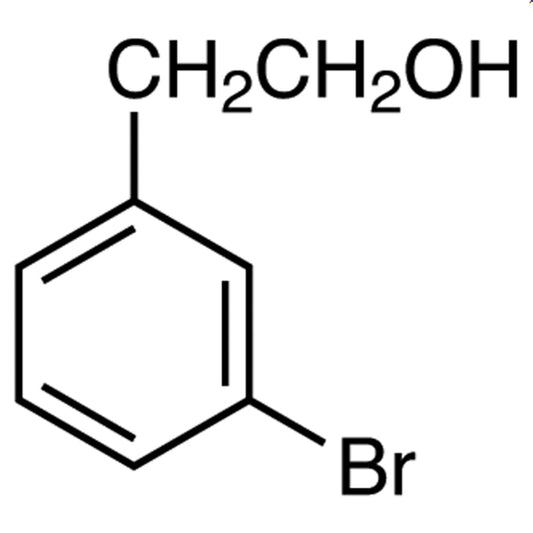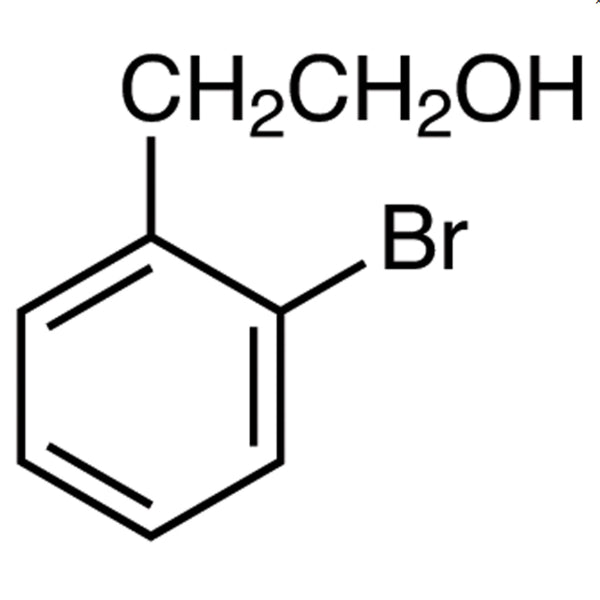
2-(2-Bromophenyl)ethyl Alcohol is a chemical compound widely used as a foundational building block in the synthesis of complex organic compounds. Its unique molecular structure, featuring a bromo group on an aromatic ring and a hydroxyl group on an alkyl chain, makes it a versatile reagent in organic chemistry. In laboratory settings, this compound plays a crucial role in the development of intermediates for pharmaceutical, industrial, and organic chemical applications. It is particularly valuable in reactions that require the introduction of bromo functionalities into aromatic structures.
The compound’s reactivity stems from its molecular design, which allows it to participate in various chemical transformations such as substitution, reduction, and electrophilic reactions. Its bromo group is highly reactive, making it suitable for a wide range of synthetic pathways. The presence of the hydroxyl group further enhances its utility by enabling additional functional group manipulations. This combination of reactivity and structural versatility makes it a preferred choice for chemists working on complex molecule synthesis.
In Indonesian laboratories, 2-(2-Bromophenyl)ethyl Alcohol is commonly used in organic chemistry research, especially in academic and research institutions focused on the synthesis of new compounds. Its reliability and availability make it a go-to material for experiments requiring a reactive building block with specific functional groups. It is particularly favored in studies related to drug development and industrial chemical production.
- Organic synthesis of pharmaceutical intermediates due to its bromo and hydroxyl functional groups enabling diverse chemical transformations.
- Development of industrial chemicals where bromo-substituted aromatic compounds are essential for structural diversity and reactivity.
- Research in medicinal chemistry for the creation of novel drug molecules requiring bromo-functionalized aromatic scaffolds.
- Educational experiments in undergraduate and graduate organic chemistry courses to demonstrate bromo substitution and functional group manipulation.
- Custom synthesis projects in research laboratories requiring a reliable and reactive building block for complex molecule construction.
| Brand | TCI |
|---|---|
| CAS number | 1074-16-4 |
| Molecular formula | — |
| Purity | — |
| Category | Chemistry > Building Blocks > Non-Heterocyclic Building Blocks |
| Pack sizes | Available in various quantities as per supplier specifications |
| Physical form | Liquid |
| Storage | Store in a cool, dry place away from light and incompatible materials |
This compound should be stored in a cool, dry environment, away from direct sunlight and sources of heat. It is recommended to keep it in a tightly sealed container to prevent exposure to air and moisture. Due to its reactivity, it should be stored separately from strong oxidizing agents and incompatible substances. Proper ventilation is essential when handling the material to minimize inhalation risks. Laboratory personnel should wear appropriate personal protective equipment, including gloves and safety goggles, to ensure safe handling. The compound is not classified as hazardous under standard safety classifications but should still be treated with care due to its chemical reactivity.
—
Produk Terkait
-
2-(3-Bromophenyl)ethylAlcohol TCI B3517
Regular price From Rp 2.677.500,00Regular priceRp 1.872.150,00Sale price From Rp 2.677.500,00 -
2-(4-Bromophenyl)ethylAlcohol TCI B1918
Regular price From Rp 1.273.650,00Regular priceRp 890.400,00Sale price From Rp 1.273.650,00 -
2-(4-Bromophenyl)-2-propanol TCI B5274
Regular price From Rp 1.353.450,00Regular priceRp 946.050,00Sale price From Rp 1.353.450,00 -
3-(4-Bromophenyl)-1-propanol TCI B4657
Regular price From Rp 848.400,00Regular priceRp 593.250,00Sale price From Rp 848.400,00 -
Bis(4-bromophenyl)Ether TCI B0834
Regular price Rp 1.829.100,00Regular priceRp 1.278.900,00Sale price Rp 1.829.100,00