


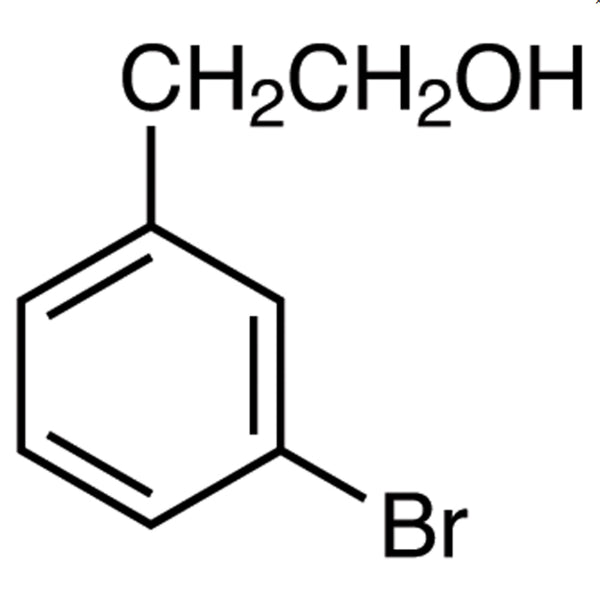
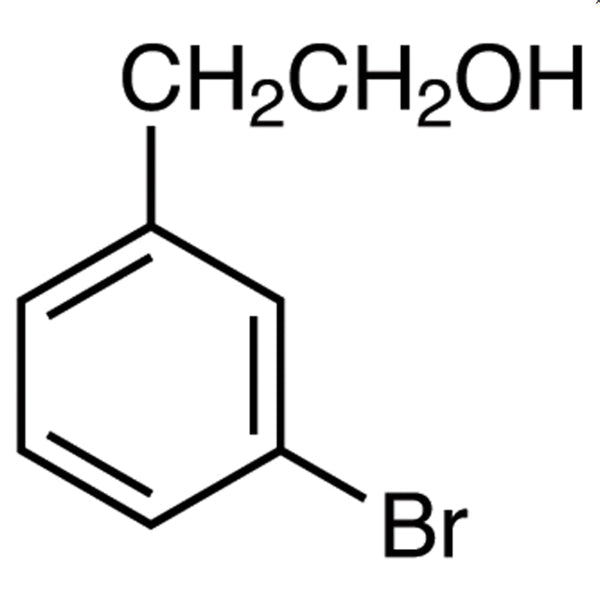
2-(3-Bromophenyl)ethyl Alcohol is a chemical compound widely used as a foundational building block in the synthesis of complex organic compounds. This compound features an ethanol group attached to a brominated phenyl ring, making it a versatile intermediate in various chemical reactions. In the laboratory, it plays a crucial role in organic chemistry, particularly in the development of pharmaceuticals, industrial chemicals, and heterocyclic compounds. Its structural simplicity and reactivity make it an essential component in synthetic pathways that require precise molecular manipulation.
The compound's polar nature allows it to dissolve in organic solvents such as ethyl acetate and ethanol, enhancing its utility in reaction systems. Its high reactivity enables it to participate in nucleophilic substitution and halogen replacement reactions, making it a preferred choice for chemists seeking efficient synthetic routes. The compound’s stability under controlled conditions further supports its use in a wide range of laboratory applications. Its ability to interact with reagents like alkali metals, acids, and bases contributes to its effectiveness in diverse chemical transformations.
In Indonesian laboratories, 2-(3-Bromophenyl)ethyl Alcohol is commonly utilized in organic chemistry research, especially in projects focused on the synthesis of pharmacological compounds and industrial chemicals. Its availability and reactivity make it a go-to material for researchers working on complex molecular structures. The compound is frequently employed in academic and industrial settings where high reactivity and structural versatility are required. Its role in advancing chemical research in Indonesia underscores its importance in the scientific community.
- Organic Synthesis: This compound is ideal for synthesizing complex organic molecules due to its reactivity and structural versatility.
- Pharmaceutical Development: It serves as a key intermediate in the creation of pharmaceutical compounds, supporting drug discovery efforts.
- Industrial Chemistry: Its use in industrial applications is widespread, particularly in the production of specialty chemicals and polymers.
- Heterocyclic Compound Formation: It is frequently used in reactions that lead to the formation of heterocyclic structures, which are common in medicinal chemistry.
- Research and Development: Its role in academic and industrial R&D makes it a valuable tool for exploring new chemical pathways and reactions.
| Brand | TCI |
|---|---|
| CAS number | 28229-69-8 |
| Molecular formula | — |
| Purity | — |
| Category | Chemistry > Building Blocks > Non-Heterocyclic Building Blocks |
| Pack sizes | Available in various quantities as per supplier specifications |
| Physical form | Liquid |
| Storage | Store in a cool, dry place away from light and incompatible materials |
This compound should be stored in a cool, dry environment, away from direct sunlight and sources of heat. It is recommended to use airtight containers made of materials compatible with organic solvents to prevent contamination and evaporation. Due to its reactivity, it should be handled in a well-ventilated area, preferably under a fume hood, to minimize exposure. Avoid contact with strong acids, bases, and reactive metals to prevent unintended chemical reactions. Always wear appropriate personal protective equipment, including gloves, goggles, and a lab coat, when handling this substance. Proper storage and handling ensure the compound remains stable and safe for use in laboratory settings.
—
Produk Terkait
-
2-(2-Bromophenyl)ethylAlcohol TCI B3516
Regular price From Rp 1.988.700,00Regular priceRp 1.390.200,00Sale price From Rp 1.988.700,00 -
2-(4-Bromophenyl)ethylAlcohol TCI B1918
Regular price From Rp 1.273.650,00Regular priceRp 890.400,00Sale price From Rp 1.273.650,00 -
2-(4-Bromophenyl)-2-propanol TCI B5274
Regular price From Rp 1.353.450,00Regular priceRp 946.050,00Sale price From Rp 1.353.450,00 -
3-(4-Bromophenyl)-1-propanol TCI B4657
Regular price From Rp 848.400,00Regular priceRp 593.250,00Sale price From Rp 848.400,00 -
Bis(4-bromophenyl)Ether TCI B0834
Regular price Rp 1.829.100,00Regular priceRp 1.278.900,00Sale price Rp 1.829.100,00


