Bromomethyl Acetate (BCA), with the CAS number 590-97-6, is a chemical compound widely used as a building block in organic synthesis. It serves as a versatile reagent in laboratory settings, enabling the creation of complex molecular structures through various chemical reactions. This compound is particularly valuable for researchers and students engaged in synthetic chemistry, as it facilitates the development of heterocyclic and other intricate compounds. Its role in the laboratory extends beyond basic synthesis, supporting advanced research in molecular modification and functional group transformations.
The chemical properties of Bromomethyl Acetate make it a preferred choice for many applications. It exhibits reactivity towards water and other chemical substances, which makes it suitable for substitution and nucleophilic reactions. Its molecular structure is simple yet highly adaptable, allowing it to participate in a wide range of chemical processes. The stability of BCA under certain conditions also contributes to its reliability in laboratory experiments, ensuring consistent results when used appropriately.
In Indonesian laboratories, Bromomethyl Acetate is commonly utilized in organic chemistry research, especially in academic institutions and research centers. Its availability and quality make it a go-to reagent for both educational and industrial applications. The compound's flexibility in various reaction conditions supports its widespread use in both teaching and advanced research settings.
Related TCI products
- TCI B4048 72707-66-5 2-(Bromomethyl)acrylic Acid
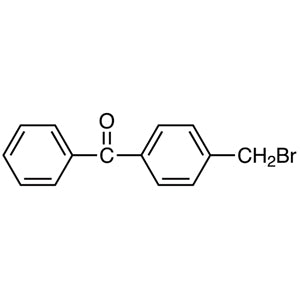
- TCI B3840 32752-54-8 4-(Bromomethyl)benzophenone
- TCI B2224 1129-28-8 Methyl 3-(Bromomethyl)benzoate
- TCI B2101 111128-12-2 2-[4-(Bromomethyl)phenyl]propionic Acid
- TCI B2053 2417-72-3 Methyl 4-(Bromomethyl)benzoate
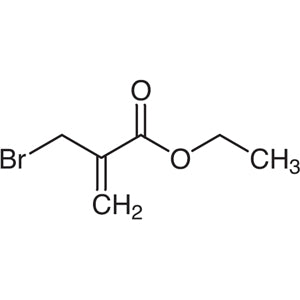
- TCI B1820 17435-72-2 Ethyl 2-(Bromomethyl)acrylate (stabilized with HQ)
- Organic synthesis is a primary application where Bromomethyl Acetate is used to create complex molecular structures through substitution and nucleophilic reactions.
- Heterocyclic compound formation benefits from BCA's reactivity, allowing the synthesis of ring structures essential in pharmaceutical and chemical research.
- Molecular modification processes often employ BCA due to its ability to introduce functional groups into organic molecules efficiently.
- Educational experiments in chemistry laboratories use BCA to teach students about synthetic pathways and reaction mechanisms.
- Industrial research applications rely on BCA for the development of new chemical products and materials through controlled chemical reactions.
| Brand | TCI |
|---|---|
| CAS number | 590-97-6 |
| Molecular formula | — |
| Purity | — |
| Category | Chemistry > Building Blocks > Non-Heterocyclic Building Blocks |
| Pack sizes | Available in various sizes to suit different experimental needs |
| Physical form | Liquid |
| Storage | Store in a cool, dry place away from moisture and incompatible substances |
Bromomethyl Acetate should be stored in a cool, dry environment to maintain its chemical stability. It is recommended to keep the compound in a sealed container to prevent exposure to moisture and air, which can affect its reactivity. Suitable storage containers should be made of materials that do not react with the compound, such as glass or high-density polyethylene. In laboratory settings, it is important to handle BCA with care, using appropriate personal protective equipment to ensure safety. The compound should be kept away from incompatible substances like strong bases and oxidizing agents to prevent unwanted reactions. Proper labeling and storage conditions are essential to maintain the integrity and usability of the material for research purposes.
—
Produk Terkait
-
2-(Bromomethyl)acrylicAcid TCI B4048
Regular price From Rp 3.870.300,00Regular priceRp 2.721.600,00Sale price From Rp 3.870.300,00 -
4-(Bromomethyl)benzophenone TCI B3840
Regular price Rp 5.855.850,00Regular priceRp 4.110.750,00Sale price Rp 5.855.850,00 -
Methyl3-(Bromomethyl)benzoate TCI B2224
Regular price From Rp 1.908.900,00Regular priceRp 1.350.300,00Sale price From Rp 1.908.900,00 -
2-[4-(Bromomethyl)phenyl]propionicAcid TCI B2101
Regular price From Rp 557.550,00Regular priceRp 405.300,00Sale price From Rp 557.550,00 -
Methyl4-(Bromomethyl)benzoate TCI B2053
Regular price From Rp 1.405.950,00Regular priceRp 998.550,00Sale price From Rp 1.405.950,00 -
Ethyl2-(Bromomethyl)acrylate(stabilizedwithHQ) TCI B1820
Regular price From Rp 2.068.500,00Regular priceRp 1.461.600,00Sale price From Rp 2.068.500,00 -
4-(Bromomethyl)phenylaceticAcid TCI B1351
Regular price From Rp 1.934.100,00Regular priceRp 1.368.150,00Sale price From Rp 1.934.100,00