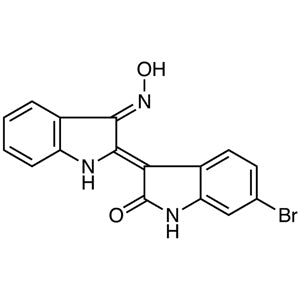
(2’Z,3’E)-6-Bromoindirubin-3’-oxime is a chemical compound widely used in life science research, particularly in cell biology and neuroscience. This compound plays a crucial role in laboratory settings by enabling the study of cellular signaling pathways and neurobiological processes. Its unique molecular structure allows it to interact with specific target proteins, making it a valuable tool for investigating the mechanisms behind various physiological and pathological conditions. Researchers rely on this compound to explore the molecular basis of diseases and to develop new therapeutic strategies.
The compound is preferred due to its high purity and chemical stability, which ensure consistent performance across different experimental conditions. Its ability to maintain biological activity under controlled environments makes it reliable for reproducible results. Additionally, the compound’s specific chemical structure allows for precise applications in high-precision research. These properties make it a trusted choice for scientists working in both academic and industrial research environments.
In Indonesian laboratories, (2’Z,3’E)-6-Bromoindirubin-3’-oxime is commonly used in studies related to neurodegenerative diseases, cancer treatment, and drug development. Its role in understanding complex biological processes has made it an essential component of biomedical and pharmacological research in the region.
TCI brochures (PDF)
- Regenerative Medicine Research Reagents 2016-03-18 · p. 1
- Reagents for Biological Research 2025-03-11 · p. 39
Related TCI products
- TCI B4436 327036-89-5 4-Benzyl-2-methyl-1,2,4-thiadiazolidine-3,5-dione
- TCI A3324 909910-43-6 A 83-01
- TCI A2940 40045-50-9 2-Amino-5-[(5-nitro-2-thiazolyl)thio]-1,3,4-thiadiazole
- TCI A2528 2627-69-2 5-Aminoimidazole-4-carboxamide 1-beta-D-Ribofuranoside
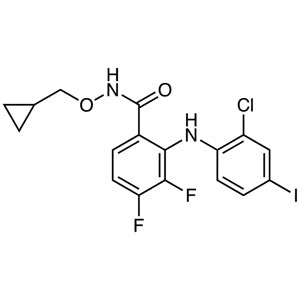
- TCI P2174 212631-79-3 PD 184352
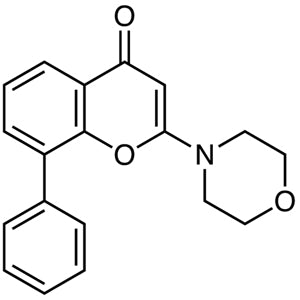
- TCI M2410 154447-36-6 2-Morpholino-8-phenylchromone
- Neurodegenerative disease research benefits from this compound's ability to modulate signaling pathways linked to neuronal health and function.
- Cancer research utilizes this compound to study the molecular mechanisms involved in cell proliferation and apoptosis.
- Drug development projects leverage its specificity to identify potential therapeutic targets and evaluate compound efficacy.
- Cellular signaling studies rely on its interaction with key proteins to investigate intracellular communication pathways.
- Pharmacological research employs this compound to assess its effects on various biological systems and its potential as a therapeutic agent.
| Brand | TCI |
|---|---|
| CAS number | 667463-62-9 |
| Molecular formula | — |
| Purity | — |
| Category | Life Science > Cell Biology > Cell Signaling and Neuroscience |
| Pack sizes | Available in standard laboratory quantities as per supplier specifications |
| Physical form | Solid, crystalline powder |
| Storage | Store in a cool, dry place away from light and moisture |
This compound should be stored in a cool, dry environment to maintain its chemical stability and biological activity. It is recommended to use airtight containers to prevent exposure to moisture and air, which may affect its integrity. Due to its chemical nature, it should be handled with appropriate personal protective equipment, such as gloves and safety goggles, to ensure laboratory safety. Avoid direct contact with skin or inhalation of vapors. Keep the compound away from incompatible substances and ensure proper ventilation in the work area. Regular monitoring of storage conditions is advised to maintain optimal performance in research applications.
—
Produk Terkait
-
4-Benzyl-2-methyl-1,2,4-thiadiazolidine-3,5-dione TCI B4436
Regular price From Rp 1.829.100,00Regular priceRp 1.294.650,00Sale price From Rp 1.829.100,00 -
A83-01 TCI A3324
Regular price Rp 9.937.200,00Regular priceRp 6.964.650,00Sale price Rp 9.937.200,00 -
2-Amino-5-[(5-nitro-2-thiazolyl)thio]-1,3,4-thiadiazole TCI A2940
Regular price From Rp 3.524.850,00Regular priceRp 2.480.100,00Sale price From Rp 3.524.850,00 -
5-Aminoimidazole-4-carboxamide1-beta-D-Ribofuranoside TCI A2528
Regular price Rp 2.597.700,00Regular priceRp 1.832.250,00Sale price Rp 2.597.700,00 -
PD184352 TCI P2174
Regular price From Rp 6.438.600,00Regular priceRp 4.518.150,00Sale price From Rp 6.438.600,00 -
2-Morpholino-8-phenylchromone TCI M2410
Regular price Rp 6.518.400,00Regular priceRp 4.573.800,00Sale price Rp 6.518.400,00 -
MetforminHydrochloride TCI M2009
Regular price From Rp 1.988.700,00Regular priceRp 1.405.950,00Sale price From Rp 1.988.700,00