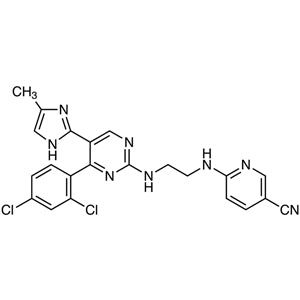
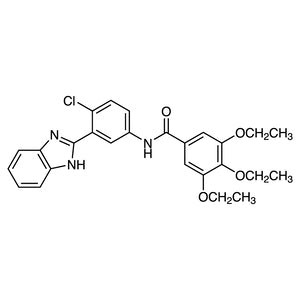
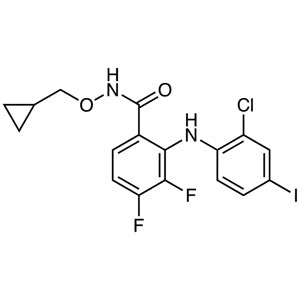
TCI A3324 909910-43-6 A 83-01 is a chemical compound widely used in biomedical and life sciences research. It plays a crucial role in organoid culture, supporting the development and maintenance of cells that closely resemble human organ tissues. This compound is essential for studying cellular mechanisms, disease progression, and therapeutic applications. Its presence in laboratory settings enables researchers to explore regenerative medicine and cellular differentiation with greater precision.
The compound is preferred due to its high purity and excellent chemical stability, which ensure reliable results in sensitive experiments. Its controlled reactivity minimizes the risk of unintended side reactions, making it suitable for use in rigorous laboratory environments. Additionally, its solid form and ease of solubility enhance its practicality across various research applications. These characteristics make it a trusted choice for scientists seeking consistent and reproducible outcomes.
In Indonesian laboratories, this compound is highly relevant for biomedical, pharmacological, and biotechnology research. It is frequently used to accelerate drug development, disease understanding, and the testing of new therapies. Its availability in the local market supports ongoing scientific efforts, contributing to the advancement of research in the region.
TCI brochures (PDF)
- Organoid Research Reagents 2025-09-11 · p. 7
- Cancer Research Reagents 2025-04-01 · p. 4
Related TCI products
- TCI C2943 252917-06-9 CHIR 99021
- TCI B4436 327036-89-5 4-Benzyl-2-methyl-1,2,4-thiadiazolidine-3,5-dione
- TCI B4006 667463-62-9 (2'Z,3'E)-6-Bromoindirubin-3'-oxime
- TCI A3537 329196-48-7 SANT-2
- TCI A2940 40045-50-9 2-Amino-5-[(5-nitro-2-thiazolyl)thio]-1,3,4-thiadiazole
- TCI A2529 167869-21-8 2-(2-Amino-3-methoxyphenyl)chromone
- Organoid Culture: This compound supports the growth and maintenance of organoid cultures, which are used to model human tissues and study disease mechanisms.
- Regenerative Medicine Research: It aids in the development of therapies that aim to repair or replace damaged tissues, making it essential for stem cell and tissue engineering studies.
- Cellular Differentiation Studies: The compound facilitates the investigation of how cells specialize into different tissue types, providing insights into developmental biology and disease.
- Disease Modeling: It is used to create in vitro models of diseases, enabling researchers to study pathogenesis and test potential treatments under controlled conditions.
- Drug Screening and Development: Its role in maintaining viable cell cultures makes it valuable for evaluating the efficacy and safety of new pharmaceutical compounds.
From the TCI brochure
- Niche factor in organoid culture (Table 1); ALK4/5/7 inhibitor
| Brand | TCI |
|---|---|
| CAS number | 909910-43-6 |
| Molecular formula | — |
| Purity | — |
| Category | Life Science > Cell Culture > Organoid Culture |
| Pack sizes | — |
| Physical form | Solid |
| Storage | Store in a cool, dry place away from direct sunlight |
This compound should be stored in a cool, dry environment, away from direct sunlight and sources of heat. It is recommended to keep it in a sealed container to prevent moisture absorption and contamination. Due to its controlled reactivity, it should be handled with appropriate personal protective equipment, such as gloves and safety goggles, to ensure laboratory safety. The compound is stable under normal storage conditions, making it suitable for long-term use in research settings. Proper labeling and storage are essential to maintain its integrity and ensure safe handling in the laboratory.
—
Produk Terkait
-
CHIR99021 TCI C2943
Regular price From Rp 8.638.350,00Regular priceRp 6.056.400,00Sale price From Rp 8.638.350,00 -
4-Benzyl-2-methyl-1,2,4-thiadiazolidine-3,5-dione TCI B4436
Regular price From Rp 1.829.100,00Regular priceRp 1.294.650,00Sale price From Rp 1.829.100,00 -
(2'Z,3'E)-6-Bromoindirubin-3'-oxime TCI B4006
Regular price From Rp 4.399.500,00Regular priceRp 3.092.250,00Sale price From Rp 4.399.500,00 -
SANT-2 TCI A3537
Regular price Rp 6.095.250,00Regular priceRp 4.277.700,00Sale price Rp 6.095.250,00 -
2-Amino-5-[(5-nitro-2-thiazolyl)thio]-1,3,4-thiadiazole TCI A2940
Regular price From Rp 3.524.850,00Regular priceRp 2.480.100,00Sale price From Rp 3.524.850,00 -
2-(2-Amino-3-methoxyphenyl)chromone TCI A2529
Regular price Rp 3.392.550,00Regular priceRp 2.387.700,00Sale price Rp 3.392.550,00 -
5-Aminoimidazole-4-carboxamide1-beta-D-Ribofuranoside TCI A2528
Regular price Rp 2.597.700,00Regular priceRp 1.832.250,00Sale price Rp 2.597.700,00 -
PD184352 TCI P2174
Regular price From Rp 6.438.600,00Regular priceRp 4.518.150,00Sale price From Rp 6.438.600,00