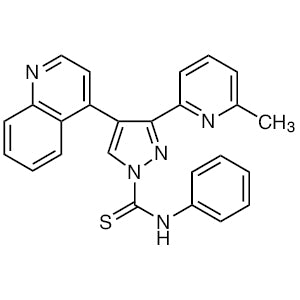
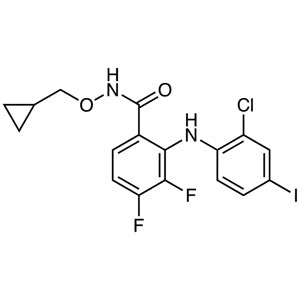
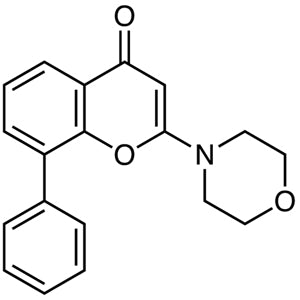
4-Benzyl-2-methyl-1,2,4-thiadiazolidine-3,5-dione is a chemical compound widely used in life science research, particularly in cell biology and neuroscience. This compound plays a crucial role in laboratory settings by serving as a modulator in studies related to cellular signaling and neurobiological mechanisms. Its ability to interact with specific proteins and enzymes makes it valuable for investigating intracellular pathways and signal transduction processes. Researchers utilize this compound to study how cells respond to various stimuli and to explore the molecular basis of neurological functions.
The compound's chemical structure and stability contribute to its effectiveness as a research tool. Its solubility in organic solvents simplifies handling and application in diverse experimental conditions. The compound’s molecular properties allow for targeted interactions with biological systems, making it a reliable choice for both basic and applied research. These characteristics ensure that it remains a key component in the toolkit of scientists working in life sciences.
In Indonesian laboratories, this compound is frequently used by researchers in cell biology, pharmacology, and neuroscience. It supports ongoing studies in academic and research institutions, contributing to advancements in understanding cellular and neurological processes. Its availability and reliability make it an essential resource for scientific inquiry in the region.
Related TCI products
- TCI A2940 40045-50-9 2-Amino-5-[(5-nitro-2-thiazolyl)thio]-1,3,4-thiadiazole
- TCI B4006 667463-62-9 (2'Z,3'E)-6-Bromoindirubin-3'-oxime
- TCI A3324 909910-43-6 A 83-01
- TCI A2529 167869-21-8 2-(2-Amino-3-methoxyphenyl)chromone
- TCI A2528 2627-69-2 5-Aminoimidazole-4-carboxamide 1-beta-D-Ribofuranoside
- TCI P2174 212631-79-3 PD 184352
- Cellular signaling studies benefit from this compound as it modulates key pathways involved in intracellular communication.
- Neurological research utilizes it to investigate the molecular mechanisms underlying brain function and disease.
- Pharmacological experiments use it to assess the effects of chemical modulators on cellular responses and enzyme activity.
- Drug development projects incorporate it to test the efficacy and specificity of compounds in target biological systems.
- Biochemical assays employ it as a reagent to study enzyme interactions and protein binding properties in controlled environments.
| Brand | TCI |
|---|---|
| CAS number | 327036-89-5 |
| Molecular formula | — |
| Purity | — |
| Category | Life Science > Cell Biology > Cell Signaling and Neuroscience |
| Pack sizes | Available in various quantities as per standard laboratory supply |
| Physical form | Solid |
| Storage | Store in a cool, dry place away from light and moisture |
This compound should be stored in a cool, dry environment, away from direct light and moisture to maintain its stability and effectiveness. It is recommended to use airtight containers to prevent exposure to air and contaminants. Laboratory personnel should handle the compound with appropriate personal protective equipment, including gloves and safety goggles, to ensure safe handling. Due to its chemical nature, it should be kept away from incompatible substances such as strong oxidizers or acids. Proper labeling and storage conditions are essential to prevent accidental exposure and ensure the integrity of the compound during experimental use.
—
Produk Terkait
-
2-Amino-5-[(5-nitro-2-thiazolyl)thio]-1,3,4-thiadiazole TCI A2940
Regular price From Rp 3.524.850,00Regular priceRp 2.480.100,00Sale price From Rp 3.524.850,00 -
(2'Z,3'E)-6-Bromoindirubin-3'-oxime TCI B4006
Regular price From Rp 4.399.500,00Regular priceRp 3.092.250,00Sale price From Rp 4.399.500,00 -
A83-01 TCI A3324
Regular price Rp 9.937.200,00Regular priceRp 6.964.650,00Sale price Rp 9.937.200,00 -
2-(2-Amino-3-methoxyphenyl)chromone TCI A2529
Regular price Rp 3.392.550,00Regular priceRp 2.387.700,00Sale price Rp 3.392.550,00 -
5-Aminoimidazole-4-carboxamide1-beta-D-Ribofuranoside TCI A2528
Regular price Rp 2.597.700,00Regular priceRp 1.832.250,00Sale price Rp 2.597.700,00 -
PD184352 TCI P2174
Regular price From Rp 6.438.600,00Regular priceRp 4.518.150,00Sale price From Rp 6.438.600,00 -
2-Morpholino-8-phenylchromone TCI M2410
Regular price Rp 6.518.400,00Regular priceRp 4.573.800,00Sale price Rp 6.518.400,00 -
MetforminHydrochloride TCI M2009
Regular price From Rp 1.988.700,00Regular priceRp 1.405.950,00Sale price From Rp 1.988.700,00