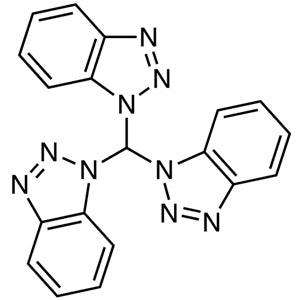
[(1H-Benzotriazol-1-yl)methyl]triphenylphosphonium Chloride is a synthetic reagent widely used in chemical laboratories for its role in carbon-carbon bond formation reactions. This compound is essential in organic synthesis, where it acts as a catalyst or reagent in various synthetic processes. Its unique chemical structure enables it to participate in complex reactions, making it a valuable tool for researchers and chemists. Due to its reactivity and stability, it is commonly used in laboratory settings where precision and efficiency are critical.
The compound's high reactivity and stability make it a preferred choice for synthetic applications. Its molecular structure combines a benzotriazole group with a triphenylphosphonium chloride moiety, which enhances its ability to participate in coupling and activation reactions. This combination provides the necessary functionality for effective chemical transformations. The compound’s ability to remain stable under various reaction conditions ensures reliable performance, making it a trusted reagent in both academic and industrial research environments.
In Indonesian laboratories, this reagent is frequently used in organic chemistry research, particularly in synthesis processes that require efficient and reliable reagents. It is commonly found in research settings where complex chemical reactions are being explored. Its role in enhancing reaction efficiency and yield makes it a popular choice among researchers and students working in chemical laboratories across Indonesia.
TCI brochures (PDF)
- Wittig Reagents 2026-01-09 · p. 1
- Titanium Reagents Julia-Kocienski Olefination Reagents Peterson Reaction Reagents Z-Selective Horner-Wadsworth-Emmons Reagents 2025-03-28 · p. 7
Related TCI products
- Organic synthesis reactions benefit from this reagent’s ability to facilitate carbon-carbon bond formation, enhancing reaction efficiency and yield.
- Coupling reactions often require reagents with high reactivity, making this compound ideal for promoting bond formation between different molecular structures.
- Activation processes in synthetic chemistry rely on compounds that can stabilize reactive intermediates, and this reagent excels in this role.
- Complex reaction systems demand reagents with both stability and reactivity, which this compound provides in a controlled and predictable manner.
- Research in catalytic chemistry benefits from the compound’s ability to act as a catalyst, improving reaction rates and reducing byproduct formation.
| Brand | TCI |
|---|---|
| CAS number | 111198-09-5 |
| Molecular formula | — |
| Purity | — |
| Category | Chemistry > Synthetic Reagents > C-C Bond Formation [Synthetic Reagents] |
| Pack sizes | Available in various sizes as per supplier specifications |
| Physical form | Solid or liquid, depending on the specific product formulation |
| Storage | Store in a cool, dry place away from moisture and direct sunlight |
This compound should be stored in a cool, dry environment, away from moisture and direct sunlight to maintain its chemical integrity. It is recommended to use airtight containers to prevent exposure to air and humidity, which could affect its stability. Proper labeling of storage containers is essential for safety and identification. In laboratory settings, it should be handled with appropriate personal protective equipment, such as gloves and safety goggles, to ensure safe handling. While it is generally stable under normal storage conditions, it should be kept in a secure location to prevent accidental spills or contamination. Regular inspection of storage conditions ensures that the compound remains effective for its intended applications.
—
Produk Terkait
-
[1,2-Bis(ethoxycarbonyl)hydrazineyl]triphenylphosphoniumTrifluoromethanesulfonate TCI B7082
Regular price From Rp 822.150,00Regular priceRp 590.100,00Sale price From Rp 822.150,00 -
Tris(1H-benzotriazol-1-yl)methane TCI T3141
Regular price From Rp 2.227.050,00Regular priceRp 1.572.900,00Sale price From Rp 2.227.050,00 -
9-(1H-Benzotriazol-1-ylmethyl)-9H-carbazole TCI B1967
Regular price From Rp 1.378.650,00Regular priceRp 979.650,00Sale price From Rp 1.378.650,00 -
2-(2H-Benzotriazol-2-yl)-4-methyl-6-(2-propenyl)phenol TCI B5709
Regular price From Rp 2.147.250,00Regular priceRp 1.517.250,00Sale price From Rp 2.147.250,00