2-Bromo-3-(2-ethylhexyl)thiophene is an organic compound widely used in semiconductor material research. It plays a crucial role in the development of advanced electronic and optical materials due to its unique molecular structure. This compound features a thiophene ring substituted with a bromo group and a long alkyl chain, making it a versatile building block for organic semiconductors. Its chemical structure allows for precise tuning of electronic properties, which is essential in the design of next-generation electronic devices.
The compound's stability under controlled conditions and its ability to maintain chemical integrity during synthesis make it a preferred choice for researchers. Its sensitivity to moisture and light necessitates careful handling, but when properly managed, it offers consistent performance in experimental settings. The combination of its structural complexity and functional versatility makes it a key component in the field of organic electronics and optoelectronics.
In Indonesian laboratories, 2-Bromo-3-(2-ethylhexyl)thiophene is commonly used in material science and information technology research. It is a fundamental material for developing organic semiconductor devices, including thin-film transistors and photovoltaic cells. Its application supports innovation in electronic technologies, contributing to the advancement of scientific research in the region.
TCI brochures (PDF)
- Thiophenes 2026-06-29 · p. 2
- Building Blocks for Organic Semiconductor 2026-03-24 · p. 25
Related TCI products
- TCI B5475 925899-21-4 2-Bromo-5-(2-ethylhexyl)thiophene
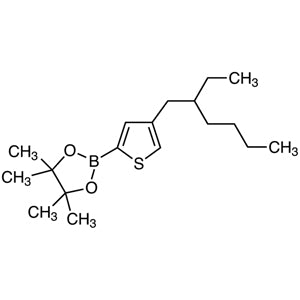
- TCI E1355 1224430-50-5 4-(2-Ethylhexyl)-2-(4,4,5,5-tetramethyl-1,3,2-dioxaborolan-2-yl)thiophene
- TCI E1294 4891-44-5 2-(2-Ethylhexyl)thiophene
- TCI B5456 1308671-90-0 3-(5-Bromo-2-thienyl)-2,5-bis(2-ethylhexyl)-6-(2-thienyl)pyrrolo[3,4-c]pyrrole-1,4-dione
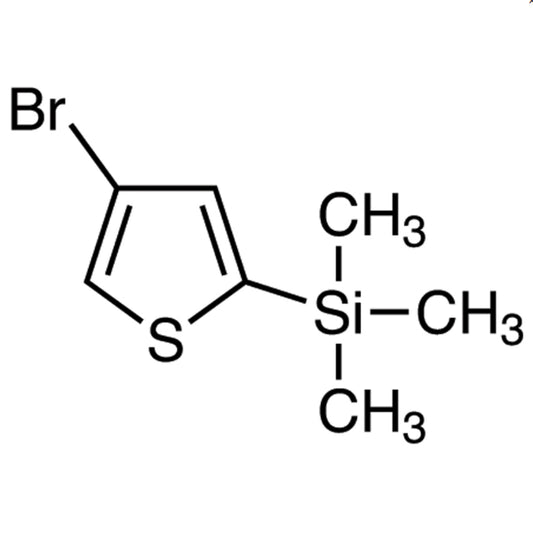
- TCI B4856 77998-61-9 4-Bromo-2-(trimethylsilyl)thiophene
- TCI B4855 18246-28-1 2-Bromo-5-(trimethylsilyl)thiophene
- Organic Semiconductor Development: This compound is ideal for creating organic semiconductors due to its tunable electronic properties and structural flexibility.
- Thin-Film Transistor Fabrication: Its molecular structure enables efficient charge transport, making it suitable for use in thin-film transistor applications.
- Photovoltaic Cell Research: The compound's optical and electronic characteristics are beneficial in the development of solar cell materials.
- Material Characterization Studies: Its chemical stability and known properties make it a valuable reference material for analytical testing.
- Electronic Device Prototyping: It is used in the synthesis of novel electronic materials for prototyping advanced device technologies.
| Brand | TCI |
|---|---|
| CAS number | 303734-52-3 |
| Molecular formula | — |
| Purity | — |
| Category | Materials Science > Material Building Blocks > Small Molecule Semiconductor Building Blocks |
| Pack sizes | 500 mg, 1 g, 5 g |
| Physical form | Crystalline solid |
| Storage | Store in a cool, dry place away from light and moisture |
This compound should be stored in a cool, dry environment, away from direct light and moisture to maintain its chemical stability. It is recommended to use airtight containers made of glass or high-density polyethylene to prevent exposure to humidity. Due to its sensitivity to light, it is best kept in a dark storage cabinet or under a light-protective cover. Proper ventilation should be maintained in the laboratory to ensure safe handling. Always wear appropriate personal protective equipment, including gloves and safety goggles, when working with this compound to minimize any potential risks.
—
Produk Terkait
-
2-Bromo-5-(2-ethylhexyl)thiophene TCI B5475
Regular price From Rp 3.180.450,00Regular priceRp 2.239.650,00Sale price From Rp 3.180.450,00 -
4-(2-Ethylhexyl)-2-(4,4,5,5-tetramethyl-1,3,2-dioxaborolan-2-yl)thiophene TCI E1355
Regular price From Rp 3.419.850,00Regular priceRp 2.406.600,00Sale price From Rp 3.419.850,00 -
2-(2-Ethylhexyl)thiophene TCI E1294
Regular price From Rp 1.776.600,00Regular priceRp 1.257.900,00Sale price From Rp 1.776.600,00 -
3-(5-Bromo-2-thienyl)-2,5-bis(2-ethylhexyl)-6-(2-thienyl)pyrrolo[3,4-c]pyrrole-1,4-dione TCI B5456
Regular price Rp 7.075.950,00Regular priceRp 4.963.350,00Sale price Rp 7.075.950,00 -
4-Bromo-2-(trimethylsilyl)thiophene TCI B4856
Regular price From Rp 2.571.450,00Regular priceRp 1.813.350,00Sale price From Rp 2.571.450,00 -
2-Bromo-5-(trimethylsilyl)thiophene TCI B4855
Regular price Rp 3.630.900,00Regular priceRp 2.554.650,00Sale price Rp 3.630.900,00 -
2-Bromo-5-(4-hexylphenyl)thiophene TCI B5553
Regular price Rp 3.260.250,00Regular priceRp 2.295.300,00Sale price Rp 3.260.250,00 -
5-(2-Ethylhexyl)-4H-thieno[3,4-c]pyrrole-4,6(5H)-dione TCI E1397
Regular price Rp 7.684.950,00Regular priceRp 5.389.650,00Sale price Rp 7.684.950,00