1,4-Bis[2-(9-ethylcarbazol-3-yl)vinyl]benzene is an organic compound widely utilized in optoelectronic material research, particularly in the development of Organic Light-Emitting Diodes (OLEDs). This compound plays a crucial role in laboratory settings where researchers are focused on creating advanced display technologies and lighting solutions. Its unique molecular structure enables it to emit light within specific spectral ranges, making it an essential component in the design and optimization of OLED devices. Due to its versatility, it is frequently employed in both academic and industrial research environments to explore new material properties and applications.
The compound is preferred for its excellent chemical stability, high light emission efficiency, and its ability to function as a conductor or charge transport material within OLED structures. These properties make it ideal for applications requiring precise control over light output and device performance. Additionally, its molecular structure allows for modification to tailor its optical characteristics, enabling researchers to adjust the color of emitted light or enhance the longevity of the devices. This adaptability makes it a valuable tool in the field of electronic materials.
In Indonesian laboratories, this compound is commonly used in applied material research, especially in the development of OLED devices for display and lighting applications. Researchers from various educational and research institutions rely on it for experiments aimed at improving the performance and efficiency of optoelectronic devices. Its use is widespread in both fundamental and applied research, contributing to advancements in the field of electronic materials.
TCI brochures (PDF)
- Organic Light-Emitting Diode (OLED) Materials 2026-08-18 · p. 7
- Carbazoles 2025-06-27 · p. 4
Related TCI products
- TCI B2080 55035-43-3 1,4-Bis[4-(di-p-tolylamino)styryl]benzene
- TCI B5820 55035-42-2 1,4-Bis[4-(N,N-diphenylamino)styryl]benzene
- TCI D5497 2056254-18-1 1,3,5-Tris[4-[(E)-2-(2,6-di-tert-butylpyrylium-4-yl)vinyl]phenyl]benzene Tetrafluoroborate
- TCI E0574 75238-79-8 9-Ethylcarbazole-3-carboxaldehyde N-Benzyl-N-phenylhydrazone
- TCI E0571 73276-70-7 9-Ethylcarbazole-3-carboxaldehyde Diphenylhydrazone
- TCI E0570 75232-44-9 9-Ethylcarbazole-3-carboxaldehyde N-Methyl-N-phenylhydrazone
- OLED Device Development: This compound is used to create the emissive layers in OLEDs, enabling efficient light emission and color tuning.
- Material Characterization Studies: It serves as a key material for analyzing optical and electronic properties under various experimental conditions.
- Display Technology Research: It is essential in the development of next-generation display technologies, including flexible and transparent OLEDs.
- Light Emitting Diode Optimization: It helps in fine-tuning the spectral output and efficiency of light-emitting devices for industrial and consumer applications.
- Electronic Material Innovation: It supports the creation of new materials with enhanced conductivity and stability for use in electronic devices.
| Brand | TCI |
|---|---|
| CAS number | 62608-15-5 |
| Molecular formula | — |
| Purity | — |
| Category | Materials Science > Electronic Materials > Organic Light-Emitting Diode (OLED) Materials |
| Pack sizes | As per supplier specifications |
| Physical form | Solid (as per standard chemical properties) |
| Storage | Store in a cool, dry place away from light and moisture |
This compound should be stored in a cool, dry environment, away from direct light and moisture to maintain its chemical stability. It is recommended to use airtight containers made of materials such as glass or high-density polyethylene to prevent contamination and degradation. Due to its organic nature, it is important to handle it with appropriate personal protective equipment, including gloves and safety goggles, to avoid skin contact or inhalation. In laboratory settings, it should be kept in a well-ventilated area to minimize exposure. Regular monitoring of storage conditions is advised to ensure the integrity of the material remains unaffected over time. Always follow standard safety protocols when handling organic compounds to ensure a safe working environment.
—
Produk Terkait
-
1,4-Bis[4-(di-p-tolylamino)styryl]benzene TCI B2080
Regular price Rp 7.949.550,00Regular priceRp 5.574.450,00Sale price Rp 7.949.550,00 -
1,4-Bis[4-(N,N-diphenylamino)styryl]benzene TCI B5820
Regular price Rp 2.942.100,00Regular priceRp 2.072.700,00Sale price Rp 2.942.100,00 -
1,3,5-Tris[4-[(E)-2-(2,6-di-tert-butylpyrylium-4-yl)vinyl]phenyl]benzeneTetrafluoroborate TCI D5497
Regular price From Rp 2.013.900,00Regular priceRp 1.423.800,00Sale price From Rp 2.013.900,00 -
9-Ethylcarbazole-3-carboxaldehydeN-Benzyl-N-phenylhydrazone TCI E0574
Regular price Rp 2.677.500,00Regular priceRp 1.887.900,00Sale price Rp 2.677.500,00 -
9-Ethylcarbazole-3-carboxaldehydeDiphenylhydrazone TCI E0571
Regular price Rp 1.881.600,00Regular priceRp 1.331.400,00Sale price Rp 1.881.600,00 -
9-Ethylcarbazole-3-carboxaldehydeN-Methyl-N-phenylhydrazone TCI E0570
Regular price Rp 2.121.000,00Regular priceRp 1.498.350,00Sale price Rp 2.121.000,00 -
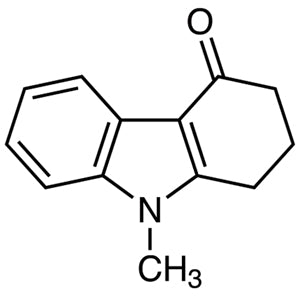
1,2,3,4-Tetrahydro-9-methylcarbazol-4-one TCI T2942
Regular price From Rp 822.150,00Regular priceRp 590.100,00Sale price From Rp 822.150,00 -
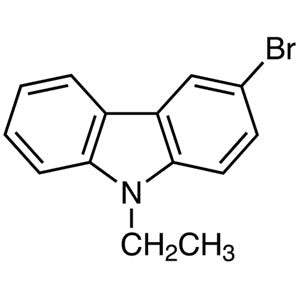
3-Bromo-9-ethylcarbazole TCI B3459
Regular price From Rp 2.544.150,00Regular priceRp 1.794.450,00Sale price From Rp 2.544.150,00