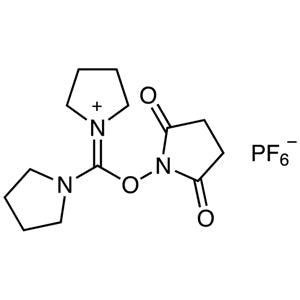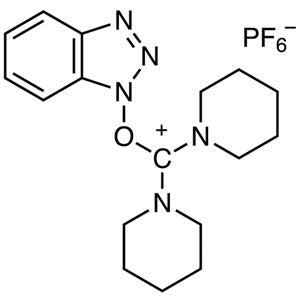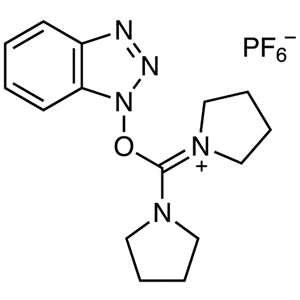
TCI B4805, also known as O-(Benzotriazol-1-yl)-N,N,N',N'-bis(tetramethylene)uronium Hexafluorophosphate, is a specialized chemical compound used extensively in peptide chemistry. This reagent plays a crucial role in peptide bond formation during synthetic processes, acting as an efficient coupling agent. Its ability to facilitate strong and stable peptide bonds makes it indispensable in biochemical and pharmaceutical research. In laboratory settings, it is widely employed to accelerate the synthesis of proteins and peptides, which are fundamental to many scientific investigations.
The compound is known for its high reactivity and specificity, which are essential for achieving precise chemical reactions. Its complex molecular structure allows it to function effectively as a catalyst in specific reaction environments. These properties make it a preferred choice for applications requiring accuracy and consistency. Additionally, its stability under certain conditions ensures reliable performance and ease of storage, making it a valuable tool for researchers.
In Indonesian laboratories, TCI B4805 is commonly used in biochemistry, pharmacology, and medical research. Its role in protein synthesis and drug development makes it highly relevant to studies focused on therapeutic applications and biological processes. The compound supports a wide range of experimental needs, contributing to the advancement of scientific knowledge in various fields.
TCI brochures (PDF)
- Condensing Agents 2025-11-18 · p. 7
- Amino Acids and Peptide Synthesis Reagents 2025-08-14 · p. 39
Related TCI products
- TCI T2929 265651-18-1 N,N,N',N'-Tetramethyl-O-(N-succinimidyl)uronium Hexafluorophosphate
- TCI B3817 207683-26-9 N,N,N',N'-Bis(tetramethylene)-O-(N-succinimidyl)uronium Hexafluorophosphate
- TCI B3816 206752-41-2 O-(Benzotriazol-1-yl)-N,N,N',N'-bis(pentamethylene)uronium Hexafluorophosphate
- TCI B1774 128625-52-5 1H-Benzotriazol-1-yloxytripyrrolidinophosphonium Hexafluorophosphate [Coupling Reagent for Peptide]
- TCI B1651 56602-33-6 1H-Benzotriazol-1-yloxytris(dimethylamino)phosphonium Hexafluorophosphate [Coupling Reagent for Peptide]
- TCI T2224 105832-38-0 N,N,N',N'-Tetramethyl-O-(N-succinimidyl)uronium Tetrafluoroborate
- Peptide Synthesis: TCI B4805 is ideal for peptide synthesis due to its ability to activate and facilitate peptide bond formation efficiently.
- Biochemical Research: Its high reactivity and specificity make it suitable for complex biochemical reactions requiring precise control.
- Pharmaceutical Development: The compound is used in drug development to support the synthesis of therapeutic peptides and proteins.
- Medical Research: It is applied in medical studies to investigate biological processes and potential therapeutic targets.
- Analytical Chemistry: Its stability and reactivity make it a valuable tool for analytical procedures requiring accurate chemical reactions.
| Brand | TCI |
|---|---|
| CAS number | 105379-24-6 |
| Molecular formula | — |
| Purity | — |
| Category | Chemistry > Chemical Biology > Peptide Chemistry |
| Pack sizes | — |
| Physical form | — |
| Storage | Store in a cool, dry place away from moisture and light |
TCI B4805 should be stored in a cool, dry environment to maintain its stability and effectiveness. It is recommended to keep the compound in a sealed container to prevent exposure to moisture and air, which could affect its reactivity. Proper labeling and storage in a designated chemical storage area are essential for safety. Laboratory personnel should wear appropriate personal protective equipment when handling this compound to minimize exposure. Regular inspection of storage conditions ensures the compound remains in optimal condition for use. The compound should not be stored near incompatible materials to avoid potential chemical interactions.
—
Product Categories
Produk Terkait
-
N,N,N',N'-Tetramethyl-O-(N-succinimidyl)uroniumHexafluorophosphate TCI T2929
Regular price From Rp 1.246.350,00Regular priceRp 887.250,00Sale price From Rp 1.246.350,00 -
N,N,N',N'-Bis(tetramethylene)-O-(N-succinimidyl)uroniumHexafluorophosphate TCI B3817
Regular price From Rp 1.351.350,00Regular priceRp 960.750,00Sale price From Rp 1.351.350,00 -
O-(Benzotriazol-1-yl)-N,N,N',N'-bis(pentamethylene)uroniumHexafluorophosphate TCI B3816
Regular price From Rp 875.700,00Regular priceRp 627.900,00Sale price From Rp 875.700,00 -
1H-Benzotriazol-1-yloxytripyrrolidinophosphoniumHexafluorophosphate[CouplingReagentforPeptide] TCI B1774
Regular price From Rp 1.033.200,00Regular priceRp 738.150,00Sale price From Rp 1.033.200,00 -
1H-Benzotriazol-1-yloxytris(dimethylamino)phosphoniumHexafluorophosphate[CouplingReagentforPeptide] TCI B1651
Regular price From Rp 848.400,00Regular priceRp 609.000,00Sale price From Rp 848.400,00 -
N,N,N',N'-Tetramethyl-O-(N-succinimidyl)uroniumTetrafluoroborate TCI T2224
Regular price From Rp 848.400,00Regular priceRp 609.000,00Sale price From Rp 848.400,00 -
O-(6-Chlorobenzotriazol-1-yl)-N,N,N',N'-tetramethyluroniumHexafluorophosphate TCI C1988
Regular price Rp 557.550,00Regular priceRp 405.300,00Sale price Rp 557.550,00 -
BromotripyrrolidinophosphoniumHexafluorophosphate TCI B2680
Regular price From Rp 1.510.950,00Regular priceRp 1.072.050,00Sale price From Rp 1.510.950,00