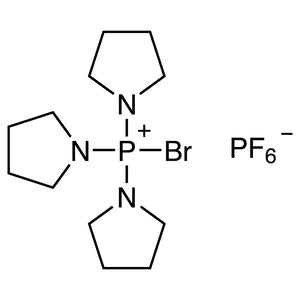
Bromotripyrrolidinophosphonium Hexafluorophosphate (BTPHP), also known as TCI B2680, is a chemical compound widely used in laboratory settings, particularly in peptide chemistry. As a key reagent in peptidilation reactions, BTPHP plays a crucial role in the formation of peptide bonds, which are essential in the synthesis of complex biomolecules. Its application spans across biochemical and pharmacological research, where it is employed to produce biologically active compounds. Due to its chemical stability and reactivity under controlled conditions, BTPHP is a reliable choice for researchers aiming to achieve precise and reproducible results in their experiments.
The chemical properties of BTPHP make it a preferred choice for laboratory use. It exhibits high reactivity in specific environments, allowing it to interact effectively with various substrates. Its molecular structure enables it to participate in a wide range of chemical reactions, making it versatile for different synthetic pathways. Additionally, BTPHP is known for its stability, which ensures consistent performance across multiple experimental runs. These characteristics make it an essential component in the development of complex organic molecules and bioactive compounds.
In Indonesian laboratories, BTPHP is commonly used in research related to peptides and biological compounds. It is frequently found in chemical and biochemical laboratories, especially in academic and research institutions. Its availability in solid form facilitates accurate weighing and handling, making it suitable for both small-scale and larger laboratory applications. The compound's reliability and effectiveness have made it a standard reagent in peptide synthesis and related biochemical studies.
Advantages (TCI brochure)
- Additives such as HOBt are not necessary
- Low rate of epimerization
- Applicable to N-methyl amino acid derivatives
TCI brochures (PDF)
- Condensing Agents 2025-11-18 · p. 3
- Amino Acids and Peptide Synthesis Reagents 2025-08-14 · p. 39
- Reagents for Biological Research 2025-03-11 · p. 59
Related TCI products
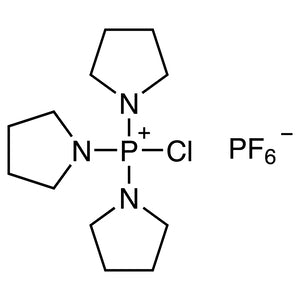
- TCI C2551 133894-48-1 Chlorotripyrrolidinophosphonium Hexafluorophosphate
- TCI B1774 128625-52-5 1H-Benzotriazol-1-yloxytripyrrolidinophosphonium Hexafluorophosphate [Coupling Reagent for Peptide]
- TCI T2929 265651-18-1 N,N,N',N'-Tetramethyl-O-(N-succinimidyl)uronium Hexafluorophosphate
- TCI B4805 105379-24-6 O-(Benzotriazol-1-yl)-N,N,N',N'-bis(tetramethylene)uronium Hexafluorophosphate
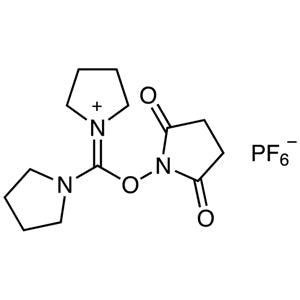
- TCI B3817 207683-26-9 N,N,N',N'-Bis(tetramethylene)-O-(N-succinimidyl)uronium Hexafluorophosphate
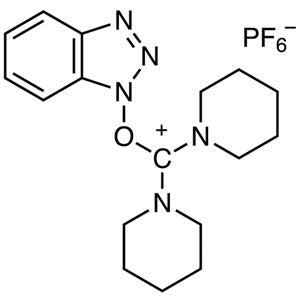
- TCI B3816 206752-41-2 O-(Benzotriazol-1-yl)-N,N,N',N'-bis(pentamethylene)uronium Hexafluorophosphate
- Peptide Synthesis: BTPHP is ideal for peptide synthesis due to its role in forming peptide bonds, enabling the creation of complex biomolecules.
- Biochemical Research: It supports the development of biologically active compounds, making it valuable in biochemical studies.
- Pharmacological Studies: BTPHP is used to produce compounds that can be tested for their biological and pharmacological effects.
- Organic Chemistry Experiments: Its reactivity and stability make it a preferred reagent for various organic synthesis reactions.
- Analytical Chemistry: It is used in analytical processes to study the behavior of chemical compounds under different conditions.
From the TCI brochure
- Condensation reactions
| Brand | TCI |
|---|---|
| CAS number | 132705-51-2 |
| Molecular formula | — |
| Purity | — |
| Category | Chemistry > Chemical Biology > Peptide Chemistry |
| Pack sizes | Available in various quantities as per standard laboratory supply |
| Physical form | Solid |
| Storage | Store in a cool, dry place away from moisture and direct sunlight |
Data from the TCI brochure
| Yield | Y. 96% (+ 0.5% of its epimer) (DIEA (D1599), CH2Cl2) |
|---|
Source: TCI brochure R5113 (2025-11-18)
BTPHP should be stored in a cool, dry environment, away from moisture and direct sunlight to maintain its chemical stability. It is recommended to use airtight containers to prevent exposure to air and humidity, which could affect its reactivity. Due to its chemical nature, it should be handled with appropriate personal protective equipment, such as gloves and safety goggles, to ensure laboratory safety. The compound is generally stable under normal storage conditions, but care should be taken to avoid contamination. Proper labeling and storage practices are essential to ensure the integrity of the material and the safety of laboratory personnel.
—
Product Categories
Produk Terkait
-
ChlorotripyrrolidinophosphoniumHexafluorophosphate TCI C2551
Regular price Rp 2.121.000,00Regular priceRp 1.498.350,00Sale price Rp 2.121.000,00 -
1H-Benzotriazol-1-yloxytripyrrolidinophosphoniumHexafluorophosphate[CouplingReagentforPeptide] TCI B1774
Regular price From Rp 1.033.200,00Regular priceRp 738.150,00Sale price From Rp 1.033.200,00 -
N,N,N',N'-Tetramethyl-O-(N-succinimidyl)uroniumHexafluorophosphate TCI T2929
Regular price From Rp 1.246.350,00Regular priceRp 887.250,00Sale price From Rp 1.246.350,00 -
O-(Benzotriazol-1-yl)-N,N,N',N'-bis(tetramethylene)uroniumHexafluorophosphate TCI B4805
Regular price From Rp 1.220.100,00Regular priceRp 868.350,00Sale price From Rp 1.220.100,00 -
N,N,N',N'-Bis(tetramethylene)-O-(N-succinimidyl)uroniumHexafluorophosphate TCI B3817
Regular price From Rp 1.351.350,00Regular priceRp 960.750,00Sale price From Rp 1.351.350,00 -
O-(Benzotriazol-1-yl)-N,N,N',N'-bis(pentamethylene)uroniumHexafluorophosphate TCI B3816
Regular price From Rp 875.700,00Regular priceRp 627.900,00Sale price From Rp 875.700,00 -
1H-Benzotriazol-1-yloxytris(dimethylamino)phosphoniumHexafluorophosphate[CouplingReagentforPeptide] TCI B1651
Regular price From Rp 848.400,00Regular priceRp 609.000,00Sale price From Rp 848.400,00 -
Fluoro-N,N,N',N'-tetramethylformamidiniumHexafluorophosphate TCI F0726
Regular price From Rp 1.618.050,00Regular priceRp 1.146.600,00Sale price From Rp 1.618.050,00