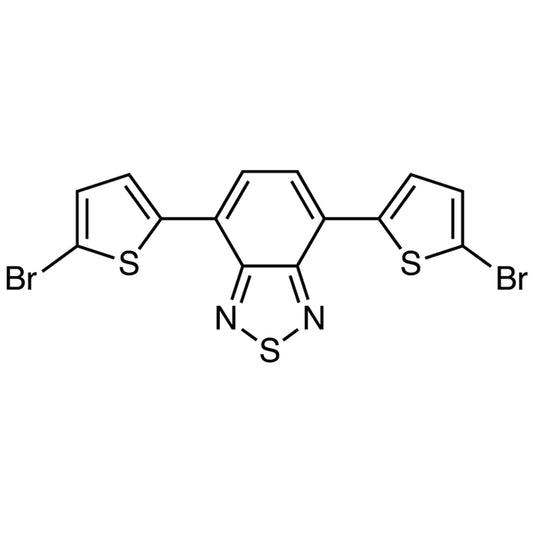
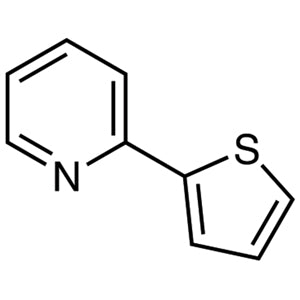
5-Bromo-2-(5-bromo-2-thienyl)pyridine is a complex organic compound widely used in material science and chemical research. It serves as a foundational building block for the synthesis of advanced semiconductor materials and organic compounds with specific electronic properties. This compound plays a crucial role in laboratories where researchers are developing new materials for optoelectronic and electrochemical applications. Its unique molecular structure allows for precise manipulation in chemical reactions, making it a key component in the creation of functional materials.
The compound is valued for its chemical stability under controlled conditions and its ability to interact effectively with various reagents during synthesis processes. These properties make it a preferred choice for researchers requiring high precision and control in their experiments. Its versatility in chemical reactions and compatibility with a range of synthetic methodologies further enhance its appeal in both academic and industrial research settings. The compound's predictable behavior and consistent performance contribute to its reliability in laboratory applications.
In Indonesian laboratories, 5-Bromo-2-(5-bromo-2-thienyl)pyridine is commonly used in research focused on material science and energy technologies. It is particularly relevant in the development of organic semiconductors and advanced electronic materials. Its availability through AMI Scientific ensures that local researchers can access this essential compound for their studies, supporting innovation in the field of materials and energy research.
TCI brochures (PDF)
- Thiophenes 2026-06-29 · p. 6
- Building Blocks for Organic Semiconductor 2026-03-24 · p. 25
Related TCI products
- TCI B4885 91891-74-6 5-Bromo-2-(2-thienyl)pyridine
- TCI B5456 1308671-90-0 3-(5-Bromo-2-thienyl)-2,5-bis(2-ethylhexyl)-6-(2-thienyl)pyrrolo[3,4-c]pyrrole-1,4-dione
- TCI P2210 499793-84-9 1-(4-Propylphenyl)-2,5-di(2-thienyl)-1H-pyrrole
- TCI H1680 154717-22-3 (4-Hexyl-2-thienyl)trimethylstannane
- TCI E1295 1390584-88-9 2-[5-(2-Ethylhexyl)-2-thienyl]-4,4,5,5-tetramethyl-1,3,2-dioxaborolane
- TCI D5544 211181-63-4 (4-Dodecyl-2-thienyl)trimethylstannane
- Organic semiconductor development: This compound is ideal for creating organic semiconductors due to its molecular structure that supports electronic conductivity.
- Electrochemical research: Its stability and reactivity make it suitable for electrochemical experiments requiring controlled chemical interactions.
- Optoelectronic material synthesis: The compound's ability to form complex structures is essential in the development of optoelectronic devices.
- Advanced material fabrication: It serves as a key building block in the synthesis of novel materials with tailored electronic properties.
- Research in energy technologies: Its use in material science supports the development of new energy solutions through innovative chemical synthesis.
| Brand | TCI |
|---|---|
| CAS number | 136902-53-9 |
| Molecular formula | — |
| Purity | — |
| Category | Materials Science > Material Building Blocks > Small Molecule Semiconductor Building Blocks |
| Pack sizes | — |
| Physical form | Solid |
| Storage | Store in a cool, dry place away from light |
This compound should be stored in a cool, dry environment, away from direct light to maintain its chemical stability. It is recommended to use airtight containers to prevent moisture absorption and contamination. Due to its organic nature, it should be handled in a well-ventilated area to minimize exposure. Researchers should wear appropriate personal protective equipment, such as gloves and safety goggles, when handling the material. Proper labeling of containers is essential for safe storage and handling. The compound is not known to be hazardous under normal storage conditions, but standard laboratory safety protocols should always be followed.
—
Produk Terkait
-
5-Bromo-2-(2-thienyl)pyridine TCI B4885
Regular price From Rp 1.881.600,00Regular priceRp 1.331.400,00Sale price From Rp 1.881.600,00 -
3-(5-Bromo-2-thienyl)-2,5-bis(2-ethylhexyl)-6-(2-thienyl)pyrrolo[3,4-c]pyrrole-1,4-dione TCI B5456
Regular price Rp 7.075.950,00Regular priceRp 4.963.350,00Sale price Rp 7.075.950,00 -
1-(4-Propylphenyl)-2,5-di(2-thienyl)-1H-pyrrole TCI P2210
Regular price Rp 3.949.050,00Regular priceRp 2.777.250,00Sale price Rp 3.949.050,00 -
(4-Hexyl-2-thienyl)trimethylstannane TCI H1680
Regular price Rp 3.207.750,00Regular priceRp 2.258.550,00Sale price Rp 3.207.750,00 -
2-[5-(2-Ethylhexyl)-2-thienyl]-4,4,5,5-tetramethyl-1,3,2-dioxaborolane TCI E1295
Regular price Rp 5.592.300,00Regular priceRp 3.925.950,00Sale price Rp 5.592.300,00 -
(4-Dodecyl-2-thienyl)trimethylstannane TCI D5544
Regular price Rp 3.419.850,00Regular priceRp 2.406.600,00Sale price Rp 3.419.850,00 -
4,7-Bis(5-bromo-2-thienyl)-2,1,3-benzothiadiazole TCI B3886
Regular price From Rp 1.749.300,00Regular priceRp 1.239.000,00Sale price From Rp 1.749.300,00 -
2-(2-Thienyl)pyridine TCI T2936
Regular price From Rp 2.279.550,00Regular priceRp 1.609.650,00Sale price From Rp 2.279.550,00