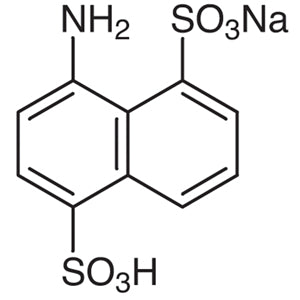
1,3-Benzenedisulfonamide is a chemical compound widely used as a building block in the synthesis of complex organic compounds. It is a versatile reagent that plays a crucial role in organic chemistry laboratories, particularly in the development of heterocyclic structures and other intricate molecular frameworks. Its molecular structure consists of two sulfonamide groups attached to a benzene ring, making it a valuable tool for chemical modifications and functional group transformations. This compound is essential for researchers aiming to design and synthesize new molecules with specific properties and applications.
The chemical properties of 1,3-benzenedisulfonamide make it a preferred choice in synthetic chemistry. It exhibits stable chemical behavior under normal conditions, yet it remains reactive enough to participate in various chemical reactions, such as substitution and coupling reactions. Its controlled reactivity allows chemists to manipulate its structure effectively, making it suitable for a wide range of synthetic strategies. The compound’s predictable behavior and compatibility with common reagents like amines, acids, and bases further enhance its utility in laboratory settings.
In Indonesian laboratories, 1,3-benzenedisulfonamide is extensively used in organic chemistry research, especially in the pharmaceutical and food chemistry industries. It is a key component in the development of new drugs and food additives, supporting both academic and industrial research. Its clear chemical structure and ease of manipulation make it a popular choice among scientists and researchers working in these fields.
Related TCI products
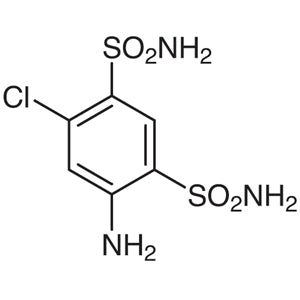
- TCI A1362 121-30-2 4-Amino-6-chloro-1,3-benzenedisulfonamide
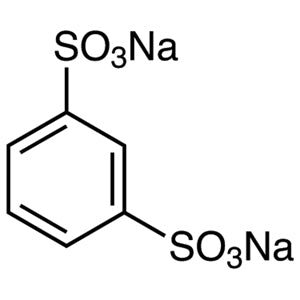
- TCI B0023 831-59-4 Disodium 1,3-Benzenedisulfonate
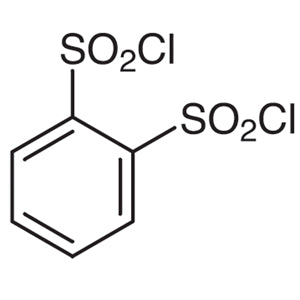
- TCI B1128 6461-76-3 1,2-Benzenedisulfonyl Dichloride
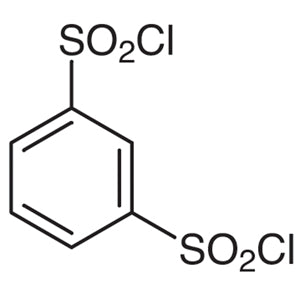
- TCI B0848 585-47-7 1,3-Benzenedisulfonyl Chloride
- TCI A0337 842-15-9 Monopotassium 7-Amino-1,3-naphthalenedisulfonate Hydrate
- TCI A0342 85328-80-9 Sodium 4-Amino-1,5-naphthalenedisulfonate
- Organic synthesis of heterocyclic compounds due to its ability to form stable sulfonamide linkages.
- Development of pharmaceutical intermediates through controlled substitution reactions.
- Creation of complex molecular structures in food chemistry applications for flavor and aroma compounds.
- Research in polymer chemistry for the synthesis of functionalized polymers.
- Use in academic research for teaching and experimental studies on chemical reactivity and structure.
| Brand | TCI |
|---|---|
| CAS number | 3701-01-7 |
| Molecular formula | — |
| Purity | — |
| Category | Chemistry > Building Blocks > Non-Heterocyclic Building Blocks |
| Pack sizes | Available in various quantities as per standard laboratory supply sizes. |
| Physical form | Solid, crystalline powder. |
| Storage | Store in a cool, dry place away from direct sunlight. |
1,3-Benzenedisulfonamide should be stored in a cool, dry environment to maintain its chemical stability. It is recommended to keep the compound in a sealed container to prevent moisture absorption and contamination. Due to its potential reactivity with moisture and certain reagents, it should be handled in a well-ventilated laboratory setting. Appropriate personal protective equipment, such as gloves and safety goggles, should be worn during handling. The compound should not be exposed to heat or direct sunlight, as this may affect its chemical integrity. Regular inspection of storage conditions is advised to ensure the compound remains in optimal condition for use in laboratory applications.
—
Produk Terkait
-
4-Amino-6-chloro-1,3-benzenedisulfonamide TCI A1362
Regular price Rp 848.400,00Regular priceRp 609.000,00Sale price Rp 848.400,00 -
Disodium1,3-Benzenedisulfonate TCI B0023
Regular price From Rp 505.050,00Regular priceRp 352.800,00Sale price From Rp 505.050,00 -
1,2-BenzenedisulfonylDichloride TCI B1128
Regular price From Rp 2.889.600,00Regular priceRp 2.020.200,00Sale price From Rp 2.889.600,00 -
1,3-BenzenedisulfonylChloride TCI B0848
Regular price From Rp 1.565.550,00Regular priceRp 1.094.100,00Sale price From Rp 1.565.550,00 -
Monopotassium7-Amino-1,3-naphthalenedisulfonateHydrate TCI A0337
Regular price From Rp 903.000,00Regular priceRp 631.050,00Sale price From Rp 903.000,00 -
Sodium4-Amino-1,5-naphthalenedisulfonate TCI A0342
Regular price Rp 1.298.850,00Regular priceRp 908.250,00Sale price Rp 1.298.850,00