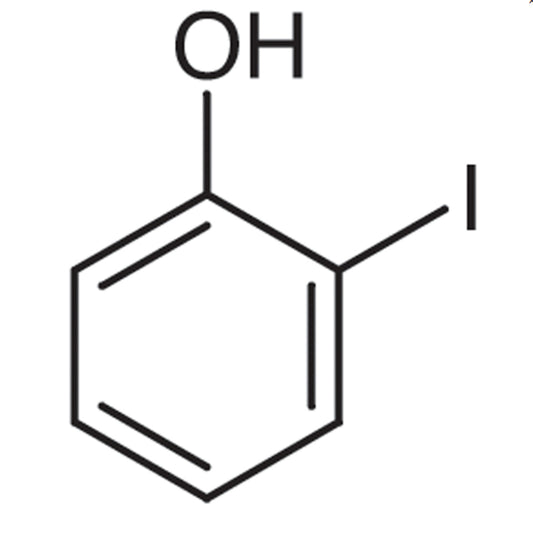
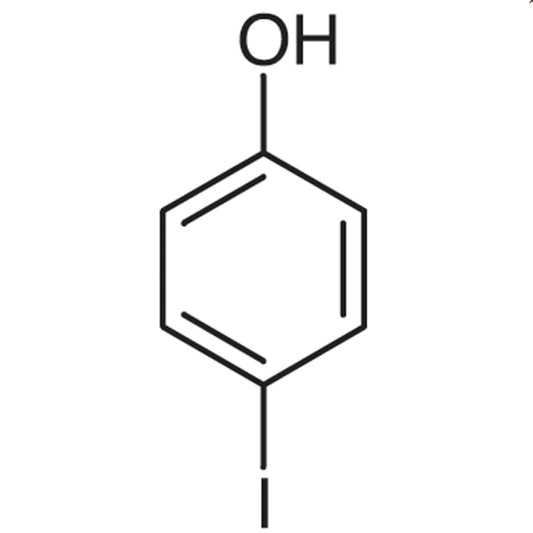
4-Bromo-2-iodophenol is a versatile organic compound widely used in laboratory settings for its reactivity and structural complexity. This chemical contains both bromo and iodo substituents on a benzene ring, making it a valuable building block in synthetic chemistry. Its aromatic structure and halogen atoms enable it to participate in various chemical reactions, making it essential for the development of complex molecules. In research environments, it serves as a key reagent for the synthesis of heterocyclic compounds, pharmaceuticals, and industrial chemicals. Due to its functional group diversity, it is frequently used in organic synthesis to create new compounds with specific properties.
The compound’s reactivity stems from its halogen atoms, which make it highly suitable for electrophilic substitution and coupling reactions. Its chemical stability under controlled conditions allows for reliable use in laboratory experiments, although it is sensitive to moisture and air exposure. The presence of bromo and iodo groups enhances its reactivity with a wide range of reagents, enabling the formation of diverse chemical structures. These properties make it a preferred choice for chemists working on synthetic pathways that require functional group manipulation and molecular modification.
In Indonesian laboratories, 4-Bromo-2-iodophenol is commonly used in organic chemistry research, particularly in pharmaceutical and material science applications. It is a popular reagent among researchers due to its ability to participate in multiple reaction types. Its unique molecular structure and reactivity make it a valuable resource for the development of new compounds and the exploration of chemical synthesis techniques. Its widespread use in both academic and industrial research highlights its importance in modern chemical studies.
- Organic synthesis is a primary application where 4-Bromo-2-iodophenol is used to create complex molecules through electrophilic substitution and coupling reactions.
- Pharmaceutical research benefits from this compound as it is used in the development of new drugs due to its reactivity and structural versatility.
- Material science applications rely on its halogen atoms to form functional groups that contribute to the properties of new materials.
- Analytical chemistry uses it as a reference standard for identifying and quantifying compounds in various samples.
- Industrial chemical production utilizes it as a building block for the synthesis of specialty chemicals and intermediates.
| Brand | TCI |
|---|---|
| CAS number | 207115-22-8 |
| Molecular formula | — |
| Purity | — |
| Category | Chemistry > Building Blocks > Non-Heterocyclic Building Blocks |
| Pack sizes | Available in various sizes as per supplier specifications |
| Physical form | Solid |
| Storage | Store in a cool, dry place away from moisture and air exposure |
4-Bromo-2-iodophenol should be stored in a cool, dry environment to prevent degradation due to moisture and air exposure. It is recommended to use airtight containers to minimize contact with atmospheric moisture. The compound is sensitive to humidity, so maintaining a controlled storage environment is essential. Laboratory personnel should handle it with care, using appropriate personal protective equipment. It is advisable to store it in a well-ventilated area to ensure safety. Proper labeling and storage conditions help maintain its chemical integrity and ensure safe handling in the laboratory.
—
Produk Terkait
-
4-Iodophenol[forBiochemicalResearch] TCI I0840
Regular price From Rp 848.400,00Regular priceRp 593.250,00Sale price From Rp 848.400,00 -
3-Iodophenol TCI I0495
Regular price From Rp 1.776.600,00Regular priceRp 1.242.150,00Sale price From Rp 1.776.600,00 -
2-Iodophenol TCI I0460
Regular price From Rp 1.378.650,00Regular priceRp 963.900,00Sale price From Rp 1.378.650,00 -
4-Iodophenol TCI I0311
Regular price From Rp 1.298.850,00Regular priceRp 908.250,00Sale price From Rp 1.298.850,00 -
4-Chloro-2-iodophenol TCI C3172
Regular price Rp 1.856.400,00Regular priceRp 1.297.800,00Sale price Rp 1.856.400,00 -
2,4,6-Triiodophenol TCI T0452
Regular price From Rp 2.782.500,00Regular priceRp 1.945.650,00Sale price From Rp 2.782.500,00 -
2-Bromo-4,5-dimethylphenol TCI B5394
Regular price From Rp 3.127.950,00Regular priceRp 2.187.150,00Sale price From Rp 3.127.950,00